x





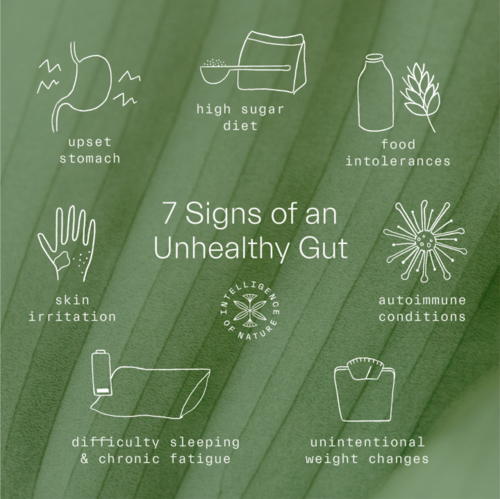
Gut health can be a mysterious world, but here are some observable items to help you identify if your gut is unhealthy!
An upset stomach, which leads to gas, bloating, constipation, diarrhea, and heartburn, will not happen frequently in a healthy gut as it has an easier time digesting food and processing waste.
A high sugar and processed food diet can decrease good bacteria in your gut and lead to higher inflammation, which is a precursor to many diseases and cancers.
Unintentional weight changes, up or down, can be a sign of an imbalanced gut, which impairs your body’s ability to absorb nutrients, regulate blood sugar, and store fat.
Difficulty falling or staying asleep can be a sign of low serotonin levels. Serotonin, a hormone that affects mood and sleep, is actually produced in your gut!
Inflammation from a poor diet can cause the gut to leak certain proteins out into the body, which can irritate the skin and even lead to eczema.
Autoimmune conditions may be caused by an unhealthy gut which increases inflammation and disrupts proper immune system functioning.
Food intolerances may be caused by poor quality gut bacteria. This can lead to difficulty digesting certain trigger foods which lead to bloating, gas, diarrhea, abdominal pain, and nausea.