x





The deeper you look at healthcare economics, the more uncomfortable the question becomes. There is a sentence circulating in the health world that makes people uncomfortable.
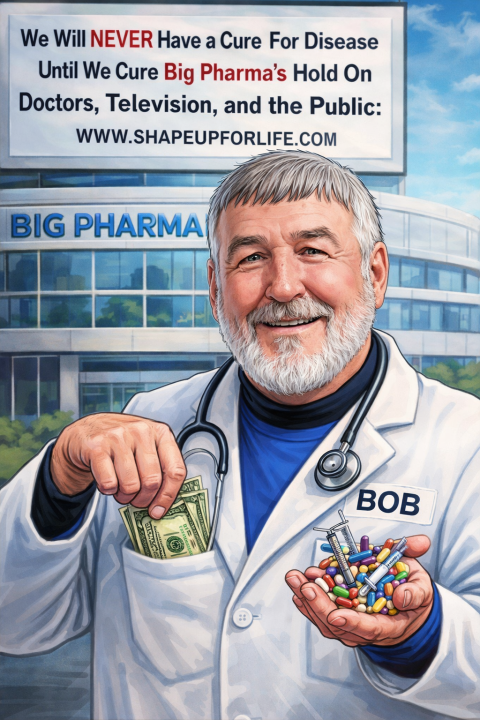
It goes like this: "We'll never have a cure for disease until we cure Big Pharma's hold on doctors, television, and the public."
Whether someone agrees with it or not, it raises a question that deserves honest attention. Because if you step back and look at modern healthcare, a strange pattern appears. Most of the largest pharmaceutical products in history are not cures. They are maintenance drugs. Blood pressure drugs taken for decades.
Blood sugar drugs taken for decades. Cholesterol drugs taken for decades. Entire industries built around lifelong treatment. Now think about what a real cure would mean. A cure ends the customer relationship. A cure eliminates the prescription. A cure shuts down an entire revenue stream. This does not mean doctors are corrupt.
Most physicians genuinely want their patients to be healthy.
But the system surrounding them is enormous. Pharmaceutical advertising dominates television. Medical education is often funded by industry. Clinical guidelines frequently involve financial conflicts.
And slowly, almost invisibly, the culture of medicine shifts.
We become experts at managing disease. But far less focused on eliminating the conditions that create it. Which is why conversations about food, lifestyle, sleep, and metabolic health sometimes feel strangely secondary inside the medical system. They don't fit the economic engine. But they fit human biology perfectly.
Real health rarely starts in a prescription bottle.
It usually starts with removing the things that were harming the body in the first place. Learn more today about taking care of your health at www.shapeupforlife.com
.png)