x





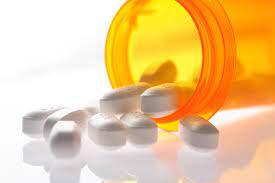
The supply chain that brings pharmaceutical drugs from the factory to the pharmacy is long, complex, and many experts say, opaque. Congress and several state legislatures have proposed or enacted laws to bring more transparency and curb soaring drug prices. As Special Correspondent Fred de Sam Lazaro reports, many small or independent pharmacies complain that those high prices in many cases actually hurt them.
This story began on a personal note. I recently went to refill a prescription at my neighborhood pharmacy. I assumed my drug's 500 dollars copay was bringing a reasonable profit to the store. But much to my surprise, a few months ago the folks at St. Paul Cornered Drug asked if I could take my business elsewhere because they were losing money filling this prescription, if you pay 500 and 78 dollars for something and you only take in 500, that's not a sustainable model, and that's kind of where we're at right now. John Hessian owns the Drugstore, a Norman rockwell-like fixture that's been here for 100 and one years, complete with a soda fountain until the pandemic. He's not sure how long he'll be able to hang on. They're literally sucking the financial life out of my business. The day he's referring to are three principal links in a complex supply chain drug manufacturers, wholesale distributors. And he says his most immediate existential threat. PBS or pharmacy benefit managers.
So-called middlemen companies that determine what drugs are covered by insurance, the price he has paid, and the cop-ayya required of patients. Pbs began to grow rapidly in the 1980 S and 90 S as the pharmaceutical pipeline began swelling with new drugs. Statins to lower cholesterol antidepressants, acid reducers, eltonsurers scrambled to keep up. It didn't take very long for the insurance side of life to say. Hey, if you want to manage this stuff for us, great, it was a reasonable thing who simplified the claims management of prescription drugs. Pbs were hired by insurance companies to manage the growing drug benefit costs by establishing and maintaining formularies, a list of what drugs will and will not be covered. Over time, they've evolved into a multibillion door business themselves. They literally.
Are taking money from every aspect of pharmacy distribution.
They demand extensive documentation, tie reimbursements to elaborate metrics of quality. And yet. Hessian complains, reimburse him far less than what it cost to fill a prescription, far less than they build their client health plans for the same prescription bill. Blue Cross, 40 dollars. Pay me seven people ask, where does the 33 go to the PBM.
And PBS have branched into his business with their own retail shops like CVS and with mail order and specialty pharmacies. All the things that you see advertised on TV. Those are all people essentially not available at my pharmacy. They've been classified by the pharmacy benefit manager industry as specialty drugs, and what's special about them is that they can make a lot of money off of them. Nothing beyond your expertise correct. They're supposed to be negotiating lower prices for consumers, but they're actually doing the opposite. The St. Paul pharmacist has an unlikely ally in Stephen Yael, who heads Pharma, the trade group of large drug manufacturers. They're buying pharmacies.
They're buying healthcare providers and their're steering patients to the providers that they own. He notes that the three top pharmacy benefit companies are now owned by large insurance companies and control nearly 80 percent of the market and a key source of revenue are rebates they negotiate from drug manufacturers. A company must agree to these price discounts to have its product instead of a competitors covered by the insurance plans. The amount of the rebates is not publicly disclosed for proprietary reasons. PBM say. But instead of bidding down drug prices. Pharmas Ubu says they do the opposite, they actually make more money off a higher price drug. Our members now capture less than 50 cents of the dollar of the list price of a medicine.
That in turn forces drug companies to raise their list prices. He says. What do PBM say they've gone? Public.
Big pharma has big power over drug prices. Big drug companies are setting the price of pharmaceuticals out of reach. Jc Scott, who heads the trade association of PBM companies, says things would be a lot worse without his members. The pharmacy benefit companies have been largely very successful in helping to mitigate the net cost of prescription drugs and provide access for millions and millions of Americans. Scott argues his member's entire focus is on high quality and lowering costs and in providing cost-aging options to patients. Price hikes and patent schemes. The PBM Group accuses drug companies of raising prices and gaming patent laws to preserve high prices. He cites insulin the diabetes drug, whose prices were cut first by one and then the two other leading makers amid widespread criticism of sharp price increases over recent decades. They used their discretionary power to cut the price of those drugs. They weren't prevented by the rebate. It was a good thing, and in fact, we continue to encourage pharma companies to cut cut the price of their drug. I'm sorry this medicine isn't covered by your insurance.
As Congress and state legislature's debate reforms. Pharma has its own ad campaign. I'm Your Insurance company's pharmacy benefit manager. Farmermas Uul seizes the insulin example to make a counterpoint when prices began to fall, he says. Many PBS continued to require that their patients remain on brands that had not yet dropped their prices, sticking patients with higher co-payments because they made more money as a percentage off the higherpricd drug. To me, it's a poster child for why the system needs to be.
Changed. The system is so complex. I don't think there are even 50 people in the US who understand the full thing. See the price growing up over time, dr. Vincent Raj Kumara, hematologist at the Mayo Clinic, says despite various bipartisan efforts to bring more transparency and the Inflation Reduction Act, which will allow Medicare to begin negotiating the price of some drugs, comprehensive reform is difficult in a complex halftrillion door business.
There's a blame game where PH pharmaceutical companies say it's not us and PB and say it's not us, it's them. So we really are caught between two people who.
Are both profiting. So what do you see emerging in the next few years? I don't even think it's right to say what the market will bear is. What Outrage will bear.
Insulin remains a rare example of a price drop. He says one at least partly a response to public outrage. The outrage caused by families losing children with type one diabetes.
To high prices of insulin.
The outrage caused by citizens in the US finding that they could go to Canada and find the same drug at one 10th the price led to this movement of advocacy. That advocacy led to action. What does all this mean for the Corner Drug Store? I get letters every month from one of the major chains to purchase my prescription records, my files and basically buy me out. His response is to buy time and sell new things. Te nutritional supplements and vaccination services, hoping reforms at the state and federal level somehow bring relief. And although his store is so busy, they're not accepting new patients, hessian says, there's a good chance the ones he has will soon have to go to those chain stores. And this drugstore, like a third of all independent pharmacies in Minnesota, will go the way of the soda fountain
There is A Better Way