x






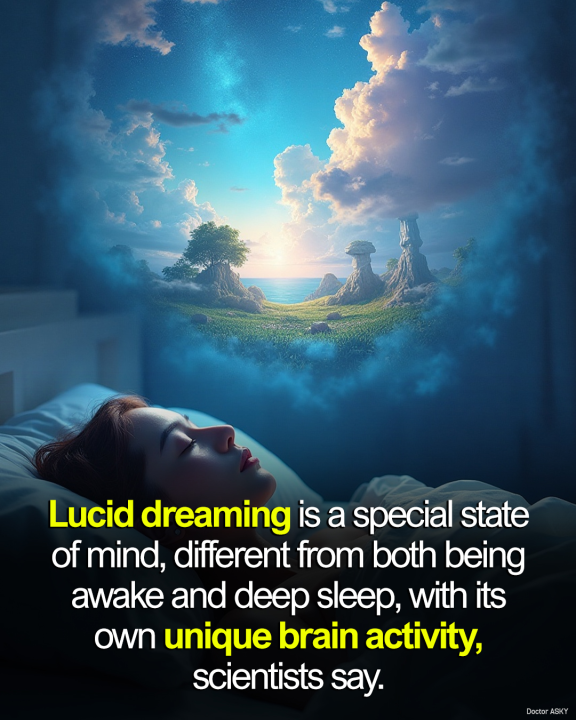
Lucid dreaming is not just an ordinary sleep experience—it's a unique state of consciousness, separate from both wakefulness and REM sleep, according to new research. A team of scientists led by Çağatay Demirel from the Donders Center for Cognitive Neuroimaging in the Netherlands has uncovered that lucid dreaming involves its own distinct brain activity, marking it as a completely separate phenomenon from traditional sleep stages.
Lucid dreaming occurs when you become aware that you're dreaming and can take control of the dream. This allows for incredible experiences, like flying or escaping from a nightmare. The study, published in the Journal of Neuroscience, reveals that lucid dreaming is connected to specific brain wave activity, particularly beta and gamma waves.
Beta waves, typically seen when we are awake, were found in the right temporal and parietal lobes during lucid dreaming. These areas of the brain are linked to spatial awareness, memory, and self-perception, suggesting that the consciousness involved in lucid dreaming is far more complex than in typical REM sleep. This unique state also triggers gamma waves, which are linked to heightened alertness and focus, making lucid dreams somewhat similar to the effects of psychedelic substances like LSD.
Interestingly, while psychedelics can often diminish self-awareness, lucid dreams allow for greater control and self-reflection, making them even more immersive than typical psychedelic experiences Take Care Of Your Health: www.drinkbc6.com