x





We work out hard. And we love to see and feel the results, even in the form of muscle aches and pain. Because hey, if my quads hurt after the 50 weighted squats I did yesterday, then my muscles must be getting bigger and stronger, right? Well…yes, to a certain degree, and if we don’t consistently overdo it. There’s a way to make post-workout inflammation work for the greater good of your muscles and body, and there is, unfortunately, also a way to stoke the flames of inflammation to the degree that they’re burning away all the gains you’ve worked out for.
The inflammatory response is the immune system’s reaction to tissue damage. When we work out we naturally and inadvertently cause microscopic trauma to muscle fibers, connective tissues, bones, and joints. After workouts, the inflammatory response kicks in to repair the damage. You might see and feel this damage in the form of swelling, heat, stiffness, or joint or muscle aches…or the inflammatory response may be so mild that you might not experience any outright physical symptoms.
The muscle recovery period and post-workout inflammation occurs 2 to 48 hours after exercise, during which the body attempts to heal from the microtrauma by releasing pro-inflammatory molecules called cytokines to help rejuvenate soft tissue cells in muscles, ligaments, and tendons so that they are stronger for subsequent workouts of a similar nature. Let’s break the inflammatory response down in steps.
Post-workout inflammation is important to muscle recovery and growth because it helps accelerate the healing process and keeps us from working out already depleted muscles and joints before they are ready to once again perform at top function. Inflammation can help accelerate fitness gains due to satellite cell proliferation, which is crucial to the building of stronger and better adapted muscle fibers. Inflammation also builds up a resistance to future injury due to an occurrence called the “repeated bout effect.” Essentially, inflammation after strenuous exercise increases neutrophil activity for the next round of exercise, thereby shielding muscle fibers from redundant and extreme damage.
Post-workout inflammation, if not appropriately managed, does have downsides—slow recovery, increased risk of injuries from overuse, and constrained fitness gains due to secondary muscle damage between workouts, of which delayed onset muscle soreness (DOMS) is a primary cause.
DOMS is that peculiar type of muscle pain that occurs the day after a workout…and gets even worse on day two! Exercise scientists attribute DOMS in part due to free radicals that are produced as byproducts of neutrophil activity. The degree of muscle damage that has triggered DOMS can greatly impact the quality of your workouts and training, and place undue stress on your joints, increasing your risk of future injuries.
Muscles aren’t the only part of the body affected by post-workout inflammation. The joints also succumb to microtrauma from exercise and are patched back together during the inflammatory response. However, if joint tissues aren’t fully revived during the recovery process, unrelenting chronic inflammation can take over and slowly whittle away joints and cause acute injury.
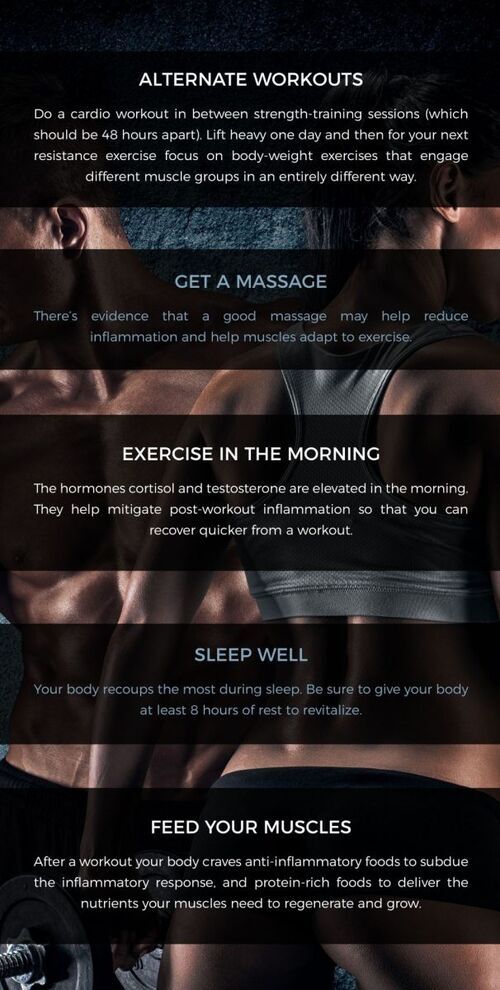
Your muscles, joints, bones, and connective tissues need adequate rest between workouts to fully recover so that they can rebuild stronger with more durability. You can subdue inflammation and trim down the time it takes for your body to regenerate with the following five tips for post-workout inflammation:
We can accelerate muscle growth during recovery by boosting muscle protein synthesis with amino acid nutrition support.
AGING - MUSCLE LOSS - DISEASE ARE YOU AT RISK: LEARN MORE