x





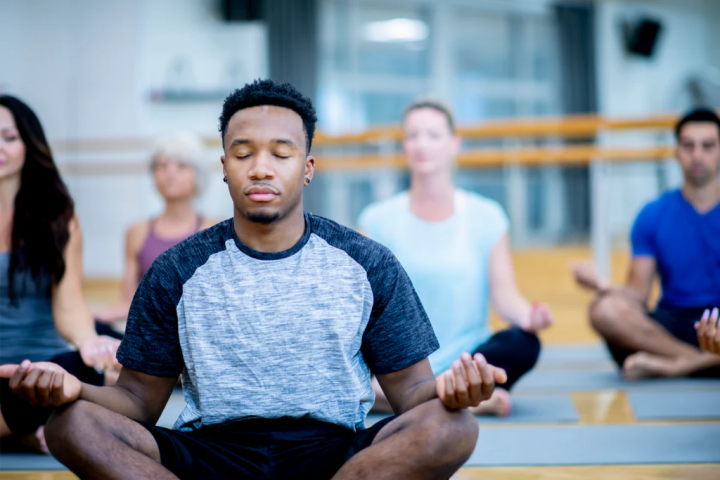
While researching health issues like stroke, high blood pressure, asthma and allergies, and mental health – all of which garner national attention in May – we noticed a common recommendation from health professionals: meditate.
Studies show that meditating lowers our risk of diabetes, cardiovascular disease, headaches, and obesity. It helps us cope and heal when we’re sick or battling diseases like cancer. It even slows the aging process at a cellular level.
Why? Because chronic stress causes and exacerbates health problems and meditating alleviates chronic stress. In fact, meditation is such a potent health agent that it:
Meditation is a practice of clearing the mind and calming the body. Since we can have up to 50 thoughts a minute, we can’t completely clear our minds. Yet, as thoughts arise, we can let them pass.
In mindfulness meditation, focusing on the breath helps thoughts slow and dissipate. Simply sit or lie comfortably, close your eyes, and focus on your breath. Some like to use mantra like “I am breathing in. I am breathing out.” As thoughts, feelings, and sensations come up, observe them without judgement, and let them pass. Start with 5-10 minutes and increase time as you wish.
If you’ve tried mindfulness meditation and feel you failed, try another style. (Although, like any practice, it gets easier, so don’t give up too soon!)

There are many different meditation styles. You may prefer focused, guided, or movement meditation – or find them all enjoyable! Many beginners find it easier to start with a guide, in person or online. In a guided meditation, a teacher leads you through the practice helping you notice your feelings, sensations, and thoughts without judgement. Guided meditations are easy to find online and on over a dozen mobile apps. Try a couple to find voices that resonate with you.
Focused meditation is similar to mindfulness mediation, except you choose an object to focus your attention on like a flame, spiritual item, or even a blade of grass. Your mind still wanders, but you bring it back to the object. Counting your breaths is also considered a focused meditation.
While it’s not considered focused, sound bath meditation also provides an object of focus. It can be music, singing or crystal bowls, chanting, white or brown noise, or sounds of nature (called pink noise). Often, something in place you’re meditating provides focus noise like the white noise of an air conditioner or the pink noise of falling rain.

It can be hard to relax our bodies when we begin meditating, even with a comfortable position. Progressive relaxation relaxes the body as you tense and then release different muscle groups until the whole body is calm. Typically, you begin this practice with a guide and can repeat it independently after a few sessions.
If stillness seems unachievable, try a movement meditation like walking, tai chi, or qi gong. Walking in a mandala or labyrinth is especially calming if you can find one. You may pair your movement with noise or a guided walking meditation.
Whichever styles you try, it’s important not to have expectations or pressure yourself. You can’t do it wrong. There’s no right time, place, or style. Simply dedicate a couple of minutes each day to clearing your mind and see how it goes (no judgement, remember!) Learn More