x






Resistance exercise, often referred to as strength training or weight training (though you can make major strength gains using only your own body weight), is a broad term that encompasses any physical activity involving the use of resistance to muscular contractions in order to increase muscular strength, decrease body weight, and improve your overall quality of life.
Resistance training exercises work the major muscle groups in the body by asking them to overcome resistance force. Push-ups are a classic example of a bodyweight resistance exercise. When you commit to a resistance exercise training program—and execute the movements with good form—you can see impressive improvements when it comes to building muscle.
While there are many benefits of resistance training, including better joint function, increased bone density, and enhanced muscle, tendon, and ligament strength, a well-rounded training program should also incorporate aerobic exercise that targets the health of your heart and lungs as well as flexibility and balance exercises to expand both your range of motion and your control in positions at the extremes of that range.
Before helping you compare resistance-training approaches to determine which is the best fit for you, let's take a moment to go over the benefits of resistance training.
Studies show that resistance exercise can improve your health in a number of significant ways.
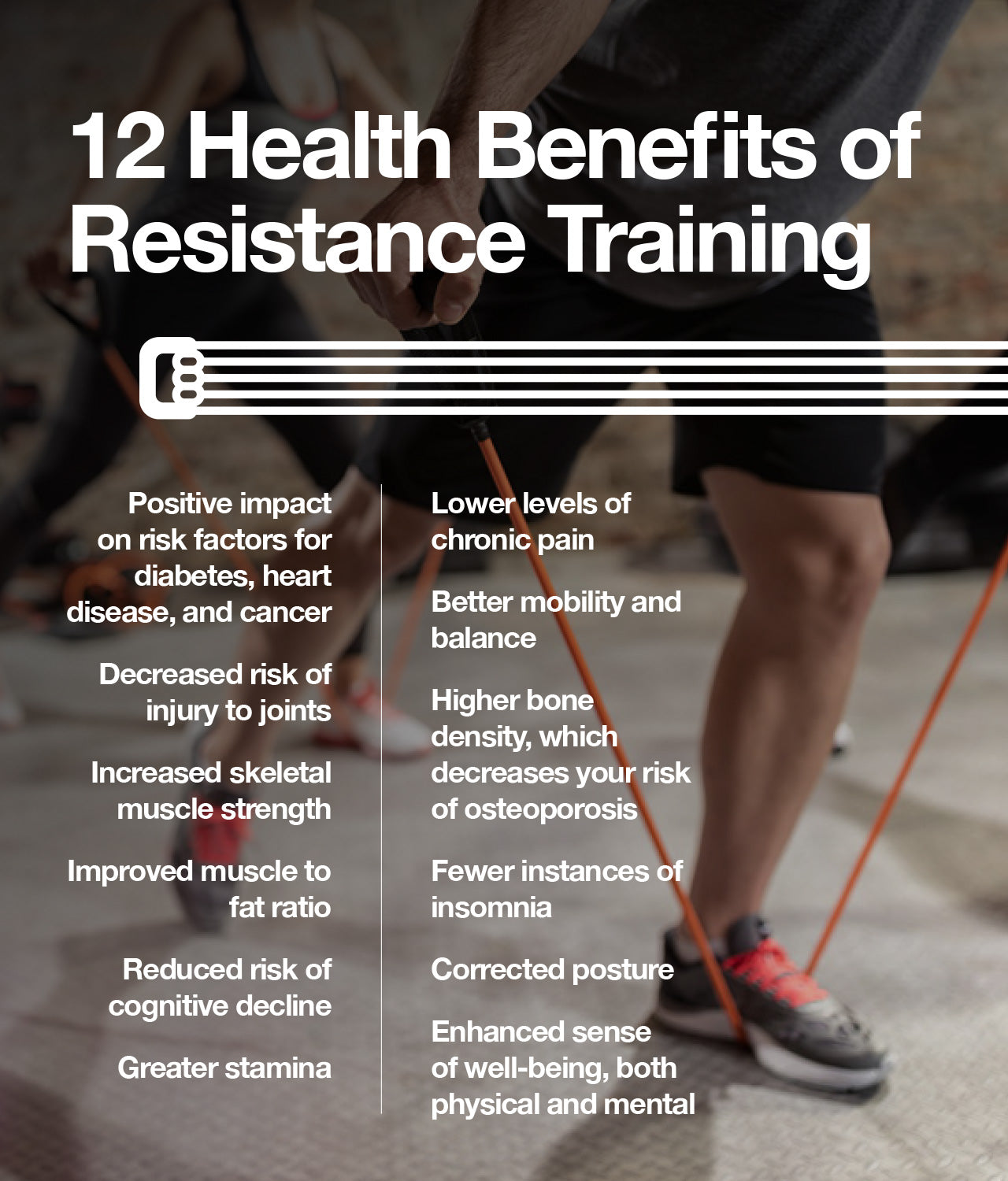
According to a review published in Preventative Medicine: "Research demonstrates that resistance exercise training has profound effects on the musculoskeletal system, contributes to the maintenance of functional abilities, and prevents osteoporosis, sarcopenia, lower-back pain, and other disabilities."
The authors of the review also note that resistance training has been found to positively influence risk factors for diabetes, heart disease, and cancer, such as:
And they found that all these benefits of resistance training can likely be achieved through two 15- to 20-minute training sessions each week—quite a minimal time investment for such a considerable health payoff!
Additional benefits associated with resistance exercise include:
When it comes to resistance-exercise programs, there are numerous options out there sure to appeal to individuals with a wide range of fitness levels and physical activity preferences.
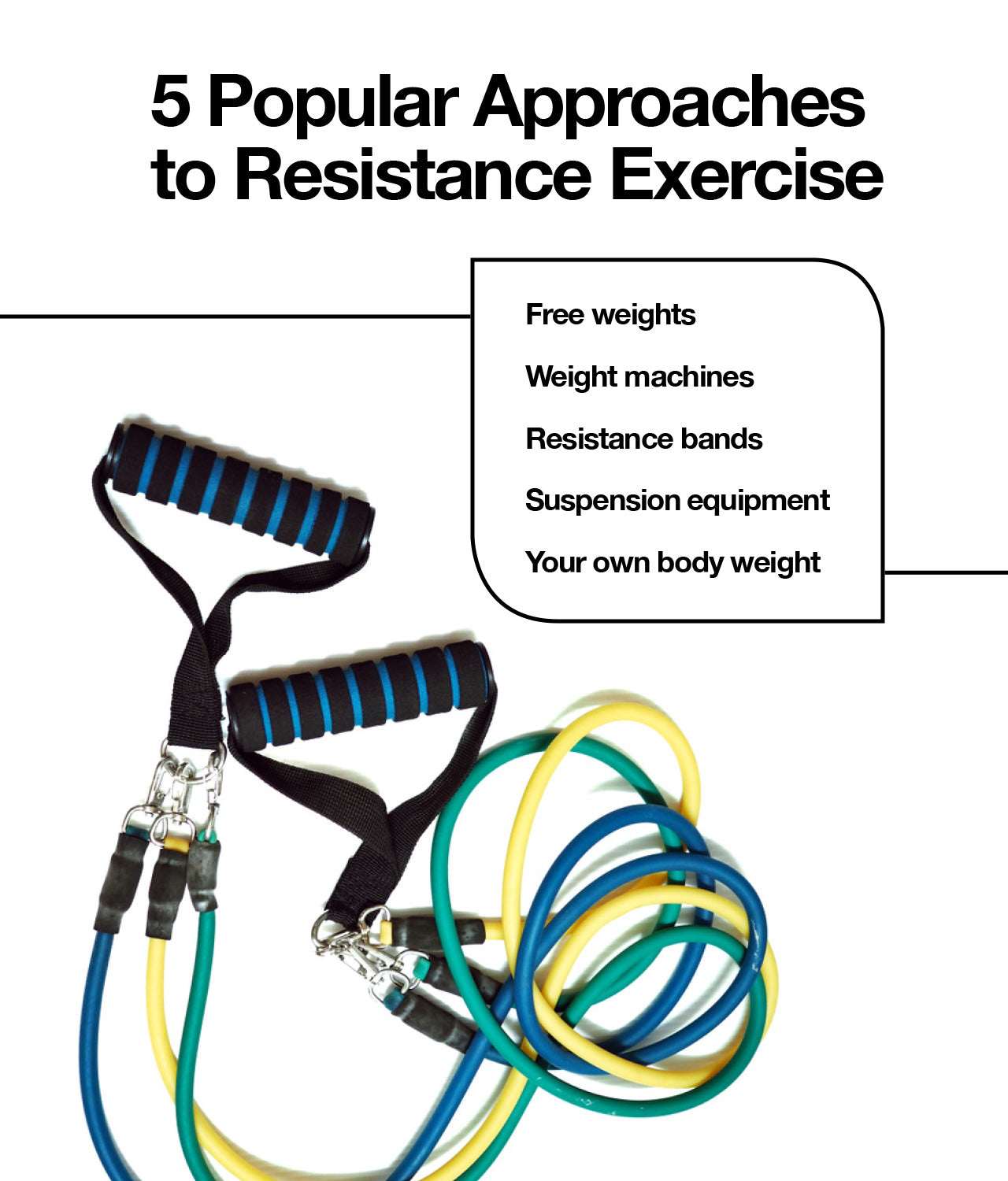
If you're new to resistance training, you may find it beneficial to work with a personal trainer. There are also many online resources that can help you find appropriate warm-up exercises, build muscular strength, work toward healthy weight-loss goals, and effectively target different body parts.
Some popular resistance-training approaches include:
Increasing muscle strength is a primary goal of resistance exercise. But what if your goal is to increase muscle strength without increasing mass? For example, extra body weight is a liability to a distance runner, but increased muscle strength is an asset. A football player on the other hand not only wants to get stronger, but also wants to get bigger. A bodybuilder wants to increase muscle protein mass while minimizing body fat and muscle glycogen in order to get the “ripped” look.
Just as your training will differ depending on your performance goals, so, too, will your optimal nutrition program, including the formulation of your essential amino acid (EAA) supplements, which will help you build muscle fast.
Here are three questions to consider when deciding which resistance-training program, as well as dietary and supplement supports, will be the best match for you and your goals.

It's a common misconception that lifting weights will make you bulkier. The response of the muscles to resistance exercise and EAA supplementation depends on both the type of workout and the amount of calories you consume. Performing a few heavy lifts, for instance, primes the muscle to respond to essential amino acids with both an increase in strength and muscle mass.
When you do multiple lifts with a relatively small weight, muscle protein turnover will also be stimulated to a greater extent when EAAs are taken in conjunction with the workout, but there will be a closer balance between synthesis and breakdown, and strength will increase without much change in muscle mass.
It’s easy to see how the type of workout can affect the desired outcome: strength, or strength plus mass.