x




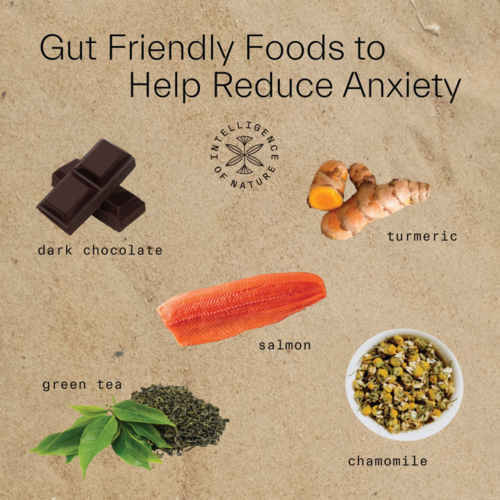
Dark chocolate may help ease anxiety because it contains flavonols, which are plant compounds that act as antioxidants. Some research suggest that these flavonols may have neuroprotective effects, and increase blood flow to the brain, which may allow you to adapt better to stressful situations that can lead to anxiety and mood disorders.
Turmeric, which contains curcumin, is known for its role in promoting brain health and preventing anxiety disorders. Curcumin has high antioxidant and anti-inflammatory properties, which may help prevent damage to brain cells related to chronic inflammation and oxidative stress. Other studies suggest that curcumin may increase the conversion of alpha-linolenic acid (an omega-3 found in plants) to DHA more effectively and increase DHA levels in the brain.
Salmon, speaking of omega-s and DHA, is rich in these nutrients along with vitamin D, and eicosapentaenoic acid (EPA), all of which promote brain health. “These nutrients may help regulate the neurotransmitters dopamine and serotonin, which can have calming and relaxing properties.”
Diets rich in EPA and DHA are also associated with lower rates of anxiety, and these fatty acids may reduce inflammation and prevent brain cell dysfunction that is common in people with anxiety.
Chamomile contains both antioxidant and anti-inflammatory properties, which may help lower anxiety-related inflammation. “Chamomile is believed to help regulate neurotransmitters related to mood such as serotonin, dopamine, and gamma-aminobutyric acid (GABA).” Additionally, it may also help the hypothalamic-pituitary-adrenocortical (HPA) axis, which is a central part of the body’s stress response.
“Green tea contains L-theanine, an amino acid that’s been studied for the positive effects it may have on brain health and anxiety reduction.” L-theanine may produce these effects by preventing nerves from becoming overexcited, along with increasing GABA, dopamine, and serotonin levels.
So sit back, relax, and sip some stress away.