x





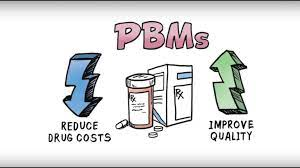
Pharmacy Benefit Managers (PBMs) are all over the news, but do you ever wonder who they really are and what they actually do?
You are about to get your first lesson on why prescription medicines are so much higher in our country than the rest of the world. You are about to learn about something that exists only in our society. A middleman that makes huge profits on prescription drugs while providing no benefit to patients. Their names are pharmacy benefit managers or PBS. We believe a better term for them is profiteering by middlemen. We will start with a multiparty series by giving you a basic grid that will give you the foundation of what is wrong with our current healthcare system. We start with the four basic steps of every prescription medicine. One research and development.
Two manufacturing, three distribution logistics, and four patient interaction or retail.
Let's start with research and development for prescription medicine to get to market. It starts with a company or university taking a risk by investing 100 of millions of dollars in doing research and development. Once developed, the drug has to go through a thorough and exhaustive regulatory process that can take several years. Finally, if the drug passes all the regulatory hurdles, then it is approved by the United States Food and Drug Administration. Next up we have Manufacturing.
Once a drug is approved by the FDA, it must be produced in a facility also approved by the United States Food and Drug Administration. Next up is distribution in logistics. Once a drug is manufactured, it is transported from a manufacturer, then most often through a wholesaler, then to a retailer and then to you the patient. This brings us to patient interaction and the retailer. This is where a patient receives a medicine to ingest or utilize. This can be from a face-to-face interaction with the pharmacist or receiving it in the mail. Now we introduce the four typical participants in this process. First we have manufacturers.
Next we have those pms they call themselves Pharmacy Benefit Managers but they are middlemen who profit on prescription drugs to benefit their shareholders at the expense of patients taxpayers in Main Street pharmacies. After the PBS we have wholesalers and then retailers. Now in a simple grid we will show you the relationship between the four steps in the process and the four participants.
We want to let you know who does the work or takes the risk and who gets paid or gets the reward for these four steps first. Research and development. The manufacturers do the work and take the risk for doing the research and development. Only a small percentage of clinical drug trials actually get approved for patients. They recover these costs when they sell the medicine. Remember, the research and development process is long and costly. The middleman or PBS take no risk but do muscle their way to have exclusive contracts and select what drugs they will approve on their formulary, creating another obstacle for the patients and caregivers as they can refuse to cover a specific drug unless they are compensated. Thus they have no risk but create a reward. Wholesalers and retailers have no significant risk or reward in this step.
Step Two Manufacturing As you already know manufacturers make the medicines and take the risk in making these in highly regulated facilities and sell to address acute or chronic medical needs as well as make a profit.
The Middleman or PBS again have no risk in this step, but have found multiple ways to profit. They control what medicines they cover and what they don't cover. They operate in a payton-play manner, requiring various payments for manufacturers for their medicines to be covered. Pbs are typically publicly traded companies that are driven by profit. They are incentivized to include higher cost items and reject or exclude viable lower cost alternatives. This perverse incentive system hurts patients and taxpayers. Wholesalers and retailers don't take material risk nor get paid in this step either, which brings us to our next step. Step Three, distribution and logistics manufacturers. They, of course, ship the medicines after making, sometimes direct to a retailer, but most often to a wholesaler. This cost is part of their sales price. Next is the Middleman or PBS. They don't ship or receive anything, but they impact logistics as they charge pharmacies, additional fees and incentivize or penalize based on their products they prefer, otherwise the ones they profit from, the most.
Next is wholesalers. They buy in case quantities and sell in bottles to retailers. Next is retailers. They buy bottles and sell to patients in various quantities. Fills usually 30 to 90 at a time. The next step, step four is Patient interaction and retail manufacturers don't take any risk nor earn a reward for this step.
The Middleman or PBS. However, don't see a single patient but profit in several ways.
Such as through a spread pricing, paying a pharmacy one price, and charging government or private company a much higher price. The patient gets no benefit, and taxpayers and insurers pay more than they should. Clawbacks, PBS have the pharmacy charge patients more than they need to and claw back a significant portion from the pharmacy for themselves.
Wholesalers don't see patients or earn a reward for this step that brings us to our retailers. They interact with patients and hope to earn a normal retail markup. But well over 90 percent of the time the sales price is determined by the PBM.
Now that the grid is complete you will notice a startling trend. The middleman or PBS have no risk throughout the process but have found multiple ways to profit, clearly adding to the cost and system and creating a perverse environment. They encourage rising pharmaceutical costs as they profiteer more as prices climb. The first lesson isn't complete yet. Now we add to the grid as to who is currently regulated and who isn't. Yes, you guessed it. Manufacturers, wholesalers, and retailers are all subject to heavy and significant government regulation.
These federal and state regulations are designed to protect public safety. Guess what, though the middlemen are not regulated, are we done with the lesson yet no. PBS may not be regulated by the government, but they impose their own requirements on everyone they do business with. The goal is to maximize returns for their shareholders without regard for how these added requirements impact drug costs and access for patients. We will discuss all of the additional requirements PBS use throughout the prescription drug supply chain that add cost and diminish patient access to drugs. Now it's time for a quiz. True or false PBM middlemen exist to keep the cost of prescription drugs as low as possible for patients.
The answer is false PBS exist to make profits for their shareholders.
Let's try another true or false PBM middlemen restrict where patients can get their medications.
True PBM steer patients to pharmacies they control or mail order even if the patient prefers their local pharmacy. Last one states across the country are reforming PBM laws to ensure patients get the prescription drugs they need at the prices they can afford from the pharmacies they trust.
Now you can see a large source of the high cost of prescription medicines more to come once you've had time to absorb this frustrating and shameful practice that only exists in the United States. Many other states have taken action to try and limit these abuses.