x





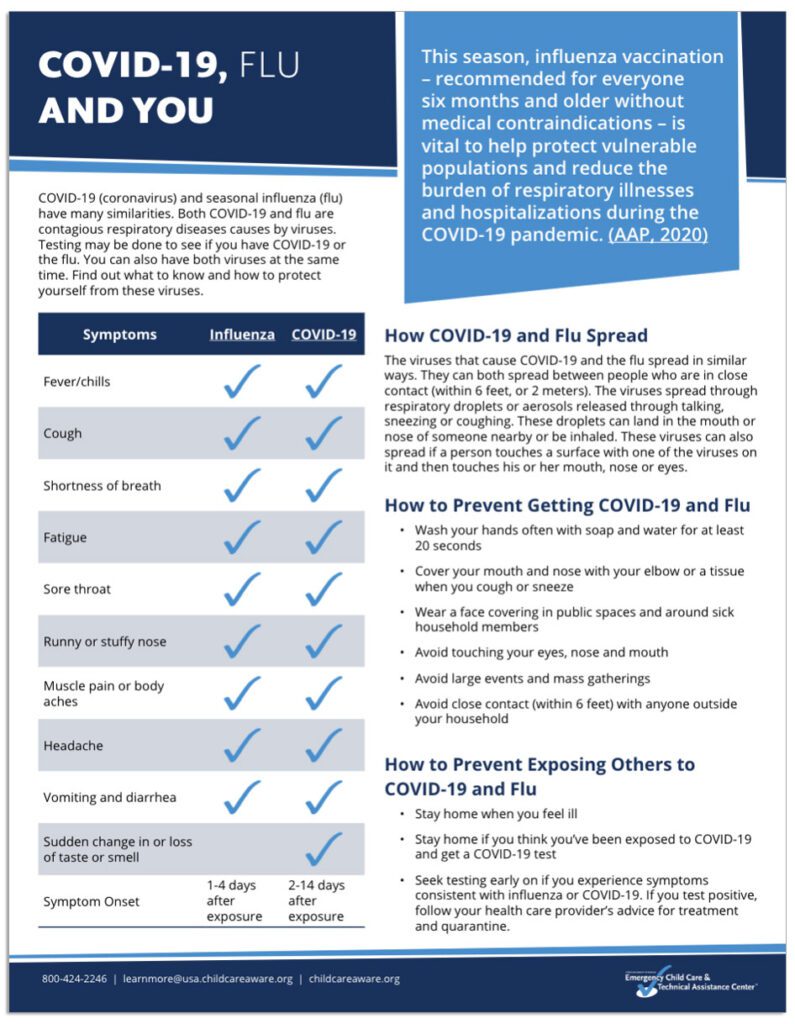
Influenza, commonly referred to as seasonal flu or flu, is a contagious respiratory illness caused by a virus. Influenza is highly contagious, and cases can range from mild to severe. Young children are among those at risk for serious flu complications. Flu is more dangerous than the common cold.
According to the Centers for Disease Control and Prevention (CDC), the best way to prevent flu is by getting vaccinated each year. Child care providers should also encourage healthy habits for all adults and children to help prevent the flu.
The common cold is also a respiratory illness, but it is caused by a different virus than flu. They share common symptoms, but flu is usually worse and more intense. A detailed list of flu symptoms can be found on the CDC website. Colds do not lead to serious health problems as often as flu can. The CDC offers resources to help you determine if an illness is a cold or the flu.
Seasonal flu cases can be found year-round in the United States but fall and winter are the most common times for flu viruses. Flu season is different every year and it is impossible to know when it will start. Flu activity tends to increase in October. Follow media coverage or check with your local health department to find out when an outbreak is happening in your community. The CDC also offers a map that shows current influenza activity. Flu activity tends to peak between December and February.