x




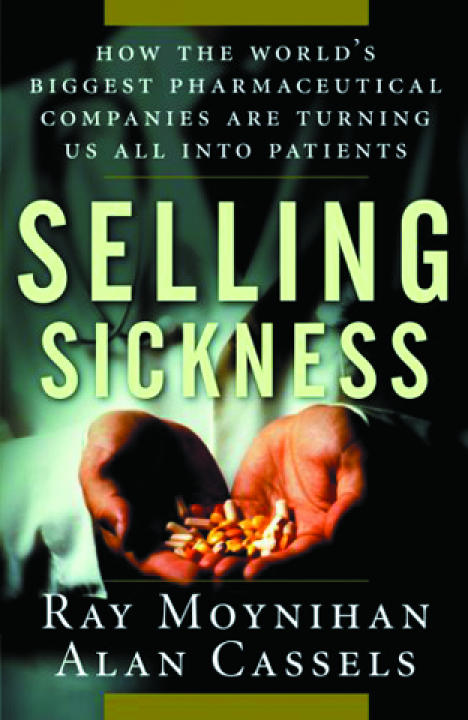
The pharmaceutical companies promote all these conditions through their cultivation of “thought leaders” in the relevant fields and through the presence of recipients of substantial financial favours on elite medical bodies concerned with defining diseases and promulgating guidelines on diagnosis and treatment. They also provide lavish hospitality at events ranging from prestigious specialist conventions to golf weekends for general practitioners.
The pharmaceutical companies promote all these conditions through their cultivation of “thought leaders”
“awareness raising” campaigns seek to transform the worried well into the worried sick. Whereas in the United States the direct advertising of drugs to consumers is possible, in Britain, where this is prohibited, campaigns promote awareness of conditions such as erectile dysfunction, prompting requests for prescriptions. The technique of “astro-turfing”—the formation by drug company public relations professionals of fake grass roots advocacy groups, often featuring celebrities—has helped to popularise new disorders and increase demand for treatments.
It is a diverse processes of “disease mongering” have helped to turn pharmaceuticals into a global $500bn (£271bn; €401bn) industry, one of the most profitable spheres of capitalist enterprise. Yet their narrow focus on the drug companies neglects the wider forces that have encouraged the medicalisation of the lives of individuals and society.
Whereas 20 or 30 years ago the medical profession was the main target of critics of medicalisation, today doctors appear more the victim of pressures from above and below, from government and from the public—and the drug companies have become the new demons.
On the one hand, politicians faced by a loss of prestige and authority have turned to health as a sphere in which they can forge points of contact with a remote and fragmented electorate. In the United Kingdom scarcely a week goes by without a government initiative seeking to raise popular awareness of some condition or other, exhorting people to modify their behaviour or lifestyle in some way in the cause of health, and encouraging them to seek medical advice and treatment. On the other hand, these initiatives find a ready response in an increasingly atomised society, in which individuals experience a heightened sense of frailty and vulnerability, which is often expressed in a preoccupation with health and the measures deemed necessary to achieve and sustain it.
How can we break the cycle of dependency between the medical profession and the pharmaceutical industry? We must first recognise that the convergence between doctors and drug companies cannot be understood as merely the result of the corrupting effects of corporate largesse, however distasteful we may find these links. What is required is a wider challenge to the processes of medicalisation, one that redraws the boundaries between health and disease and between, on the one hand, medical practice involving the diagnosis and treatment of disease and, on the other, the worlds of lifestyle regulation and “recreational” drug use (including preventive treatments of dubious merit as well as medications of unproven therapeutic value).
Twenty years ago, few people worried about their cholesterol level. Today, thanks to the pharmaceutical companies, high cholesterol levels are recognized as a major health problem and two of the best-selling drugs are statin reducers. Disease branding can destigmatize shameful problems, transforming incontinence into an ‘overactive bladder’, and encouraging people to seek treatment. But it can also put healthy people at risk, leading to them taking medicines with potentially dangerous side effects.