x




Hungry after scrolling through your Facebook feed? Food porn might be to blame.
It’s hard to scroll past a perfectly photographed cake or mac and cheese dish on Facebook or Instagram—but you might want to.
Food porn, defined as appetizing food or cooking imagery, has long been used by advertisers and now even has its own searchable hashtag. And if you frequently view these delicious images, you might notice a change in your waistline.
According to research published in the journal Brain and Cognition, regularly viewing mouth-watering food photos on social media may trigger feelings of hunger and encourage overindulgence. The same review also poses the theory that the current obesity epidemic in the United States may be, in part, due to the abundance of food porn people are viewing.
But do images of food, online or on television, really make a person more likely to indulge?
“That's exactly the point of advertising, to get people to buy those things and eat those things,”I think advertisers look for stimuli that get people interested and that's why these images exist,
How food porn makes you hungry
There may be some validity to the saying, ‘you eat with your eyes first.’ In fact, one study published in the journal Physiology & Behavior found that the appearance of your meal—including the color, evenness and shape—actually influences the way you feel about the of taste, smell and flavor, in a food way.
There’s more: Another study found that looking at pictures of food was enough to raise a person’s levels of ghrelin, a hormone involved in the stimulation of hunger. The review published in the journal Brain and Cognition suggests viewing tasty images sends a rush of blood to the part of the brain responsible for taste, encouraging you to eat, even when you’re not hungry. This is known as visual hunger, or the desire to look at images of appealing eats followed by the desire for food that results from this viewing.
There may be another aspect to it—cravings. It seems like a no-brainer: when you’re fixated on satisfying a craving, it won’t take much to push you toward the pantry. If you’re craving a salty, savory dish and a juicy steak appears on your screen, complete with vibrant colors and beautiful imagery, you’ll probably give into the craving
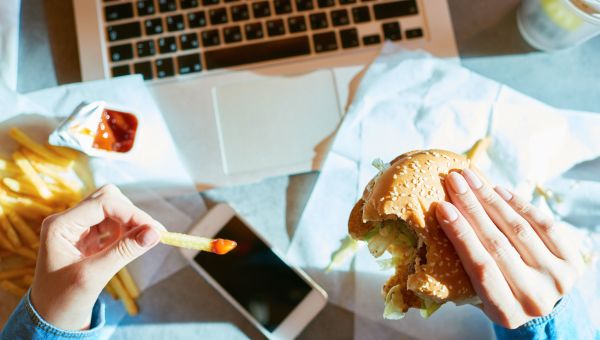
There are several reasons we may crave foods in the first place, including thirst, emotion and habit. How do habits form? By repetition that is made stronger by the release of dopamine, a chemical that regulates pleasure. So, if every time you plop yourself in front of the computer screen, you find yourself reaching for something to munch on, you’ll likely find yourself in a pattern of eating while scrolling.
It’s almost like you see the food porn and think, wow, what a good idea,
The other way social media influences your weight
Although food porn can increase your hunger and up your likelihood to indulge, it may not be the only culprit in online-related weight gain. People who spend a lot of time on social media likely spend large quantities of time sitting while they scroll, too much of which can lead to obesity or metabolic syndrome, a condition characterized by a group of factors that up the risk for heart disease.
Time spent sitting while scrolling through social media has much to do with potential weight gain. “Because you're sitting, you're not moving around, there's less walking, unless someone is really mindful about their exercise “People tend to snack, I think, when they sit on social media, too.”
5 tips to avoid overindulging
Of course you don’t have to give into every craving—you can make small changes to curb your food porn habits.