x





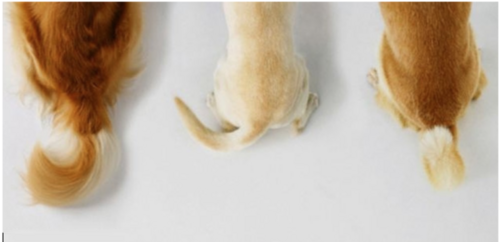
I recently joked with some friends that I wish my dogs could talk. They could tell us what they did while we were at work, when they were hurt or feeling bad, maybe even who left the surprise behind the couch! Oh, the possibilities… The reality is, we have to rely on their body language to understand our canine companions. They can tell us a whole story by their expression, and their tails hold the key to most of their secrets!
Is my dog happy, sad, angry, scared, in pain, interested, stimulated? These are all emotions that can be displayed by tail position and motion.
Assessing a dog’s tail height and tension will give you a general understanding of their current emotional state. Holding his tail high indicates a dog may be feeling excited, alert or dominant. A low or tucked tail position often points to feelings of fear, submission or pain. Somewhere in between the two often indicates a relaxed dog.
A tense tail doesn’t always indicate aggression, but in some cases excitement. If their tail is high but rigid, the dog is aroused and reactive. Spotting a squirrel through the window or another dog walking by could trigger this reaction. High rapid tail flicks, or “flagging” occurs most often when a dog is defending his territory, and could lead to a fight or attack. If agitated, the dog’s tail hair will stand up on end, especially at the base of the tail.
Every dog possess different personality traits, and it often takes time familiarizing oneself to each of their tail cues. Having a general understanding of what they are trying to convey allows us to react and control their environment if necessary.