x





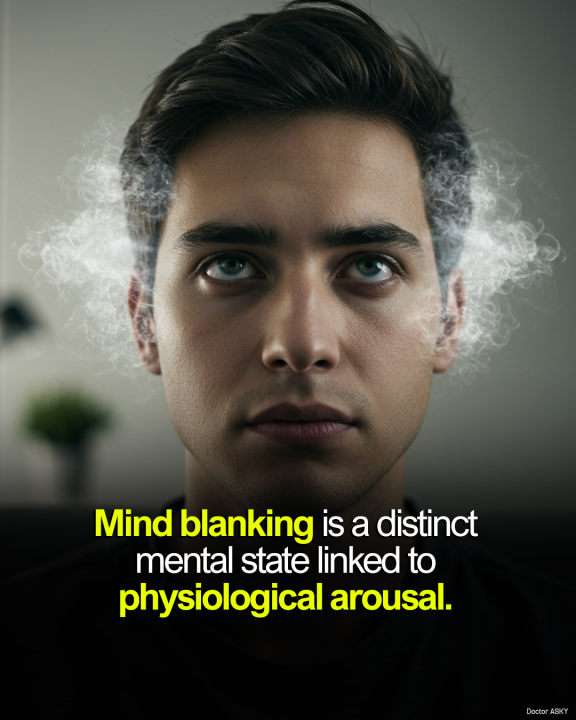
Have you ever had a moment when your mind goes completely blank, like you're thinking about nothing at all? This experience, called "mind blanking," is actually a distinct mental state that’s been misunderstood or confused with mind wandering in the past. New research suggests that mind blanking is linked to how awake or alert you feel, and it has its own unique brain and body markers.
Mind blanking can feel like you're suddenly drowsy or completely unaware, but scientists are starting to realize it’s not the same as daydreaming or mind wandering, where thoughts flow freely. Instead, it’s when your mind seems to freeze, and you might feel more sluggish, forgetful, or even make mistakes. This phenomenon happens more often after long, boring tasks, lack of sleep, or intense physical activity. Interestingly, people with ADHD experience mind blanking more frequently than those without.
In a study published in Trends in Cognitive Sciences, researchers observed people's brain activity when they reported "thinking of nothing" and found that mind blanking isn’t just about being tired—it’s connected to changes in how the brain and body are aroused. For instance, during mind blanking, the heart rate slows down, the pupils shrink, and the brain's electrical signals become less complex, similar to what happens when we sleep.
The study also found that the brain’s frontal, temporal, and visual regions show specific patterns of activity right before mind blanking. This means that mind blanking is more than just a lack of thought; it's a real physiological state that might be caused by the brain being in a high or low-arousal state. Researchers believe these "blanks" might result from disruptions in processes like memory, attention, or language.
Mind blanking also occurs in various clinical conditions like anxiety, strokes, and brain injuries. It’s even part of the diagnostic criteria for Generalized Anxiety Disorder (GAD) in the DSM-5.
The researchers suggest that we need to study mind blanking more carefully as its own mental state, separate from other cognitive experiences like meditation. By acknowledging it as a unique mental experience, we can better understand its connection to our physical and emotional well-being. Take Your Brain Health Seriously at www.superbrainpower.org