x





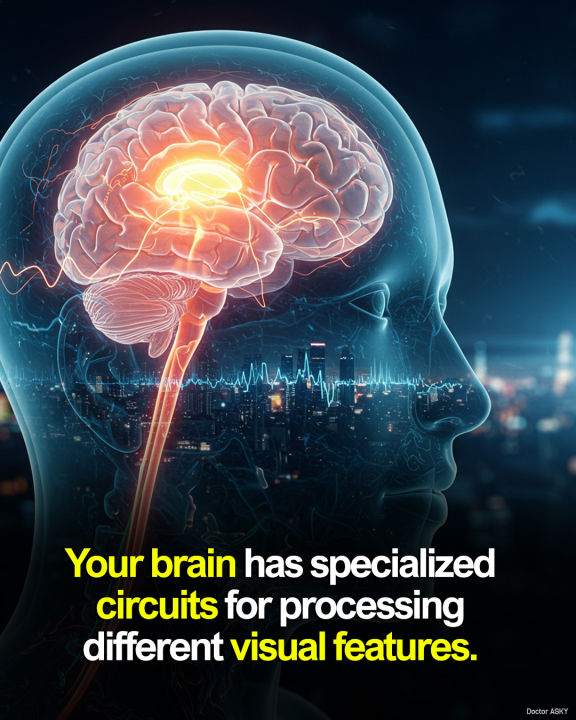
The brain doesn’t just passively receive visual input; it actively decodes the complex, dynamic scenes we experience. A fascinating study has revealed that our brain orchestrates a symphony of neural oscillations, or brainwaves, to process visual stimuli in real time. These synchronized rhythms allow the brain to efficiently assemble information into a unified visual perception. This understanding is critical for developing future brain-computer interfaces or visual neuroprosthetics.
Researchers at LMU, including Lukas Meyerolbersleben, PhD, and his colleagues, found that features like brightness, contrast, and motion in our visual field trigger distinct oscillations across different brain circuits, specifically in the visual cortex (V1). They discovered that specific visual features, like luminance, optic flow, and contrast, induce oscillations in various frequencies and layers of the cortex. For example, narrowband gamma oscillations in layer 4 (L4) are linked to luminance (brightness), while low-gamma oscillations respond to optic flow (movement), and epsilon oscillations are triggered by contrast. These oscillations are consistent across different visual stimuli and provide a unique insight into how the brain processes each element of what we see.
What’s particularly intriguing is how these oscillations are not random but follow specific patterns of coordination, or "translaminar spike-phase coupling," between different layers of the cortex. This suggests the brain has specialized circuits or "motifs" for processing different visual features, enabling it to handle the complexity of what we see. The patterns of oscillations act as markers of dynamic circuits that efficiently manage visual information.
This research further highlights the role of fast oscillations as indicators of brain activity that support complex coding and information processing, specifically in the visual system. These oscillations help our brain integrate visual features in parallel, allowing for seamless perception of the world. This research lays the foundation for developing brain-computer interfaces that could potentially read and interpret visual information directly from the brain or create neuroprosthetics to restore vision.
By understanding the brain’s ability to decode complex visual scenes through neural rhythms, scientists are uncovering the intricate mechanisms that enable us to perceive and interpret the world in real time. This could lead to groundbreaking advancements in vision restoration and brain-machine interfaces, marking a major leap forward in neuroscience. Take Care Of Your Brain Health www.superbrainpower.org