x





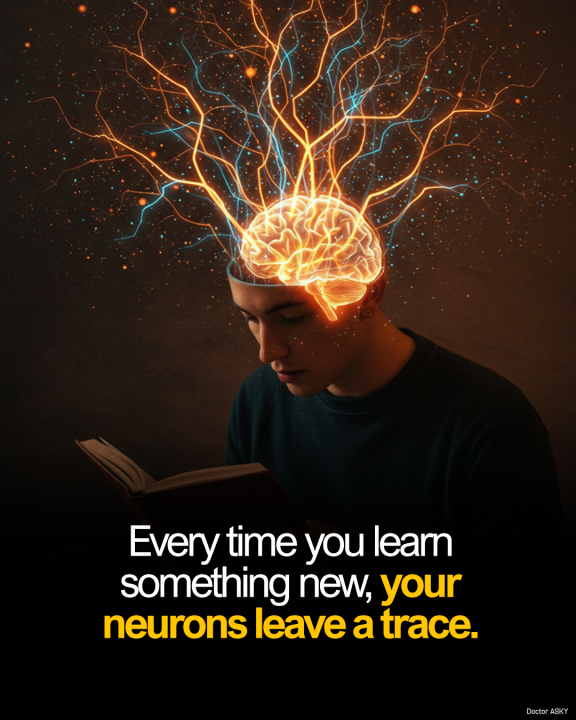
Ever wonder what actually happens in your brain when you learn something new? Whether it’s a new word, a guitar chord, or the smell of your favorite food, your brain is busy reshaping itself, one connection at a time. The science behind this goes all the way back to 1949, when Canadian psychologist Donald Hebb proposed a big idea in a single sentence: “Neurons that fire together, wire together.” It’s the basis of how we form memories and learn new things.
So, what does that mean? Imagine two brain cells (neurons) talking to each other. If they both activate at the same time—say, when you hear a sound and eat something sweet—your brain strengthens the link between them. It’s like carving a trail in fresh snow: the more often that path is used, the clearer and stronger it becomes. This is called Hebbian learning, and it’s a foundation of how experiences literally shape your brain.
Researchers first saw this in action with classic conditioning experiments, like teaching bees to associate a lemon scent with sugar. After enough pairings, the bees would respond to just the smell—even if no sugar was present—because the brain rewired itself to expect it. It’s not just bees, of course. The same basic process happens in your brain every time you associate things, like a certain smell with a memory, or a word with an emotion.
Even reading a new word right now—like brain-numb—is changing your brain. Somewhere in your head, tiny synapses (the gaps between neurons) are adjusting to make space for that word. That’s Hebbian learning in action: invisible, lightning-fast, and essential to everything you know
Learn More: www.superbrainpower.org