x



Most people feel shocked and upset when they first find out that they have cancer.
You may also feel
•Numb
•Frightened and uncertain
•Confused
•Angry and resentful
•Guilty
You may have some or all of these feelings. Or you may feel totally different.
Everyone reacts in their own way.Sometimes it is hard to take in the fact that
you have cancer at all.
Upsetting feelings are a natural part of coming to terms with cancer. All sorts
of feelings are likely to come and go. Your family and friends will probably
have strong feelings too. Remember that you do not have to sort everything out
at once. It may take some time to deal with each issue.
Cancer is the development of abnormal cells that the body cannot control. It is
a disease caused by normal cells changing so that they grow in an uncontrolled way.
The uncontrolled growth causes a lump called a tumour to form. If not treated,the
tumour can cause problems in one or more of the following ways
•Spreading into normal tissues nearby
•Causing pressure on other body structures
•Spreading to other parts of the body through the lymphatic system or bloodstream
It can affect all parts of the body, which means some types are exclusive to women
and others affect only men. Early diagnosis is the key to getting the right treatment.
Cells:
Normal Cells
Our body is made up of billions of tiny cells that can only be seen under
a microscope.These cells are grouped together to make up the tissues and organs
of our bodies. They are a bit like building blocks.
Different types of body tissues are made up of different types of body cells. For
example,there are bone cells in bone and breast cells in the breast.
Normal body cells have a number of important characteristics. They can
•Reproduce themselves exactly
•Stop reproducing at the right time
•Stick together in the right place
•Self destruct if they are damaged
•Become specialised or 'mature'
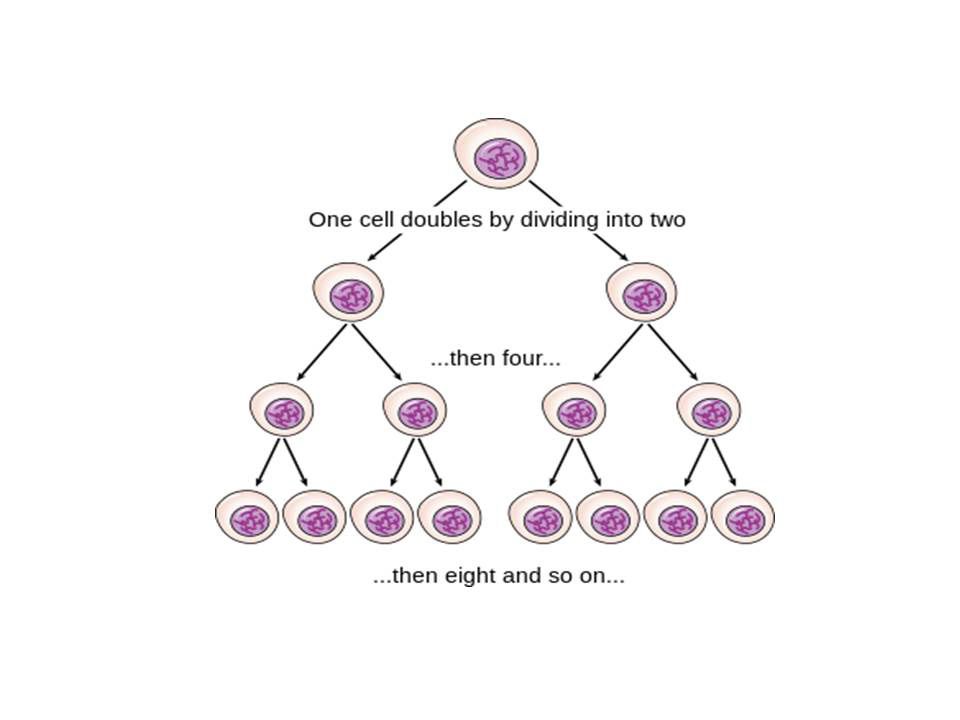
Body tissues grow by increasing the number of cells that make them up. The cells
reproduce themselves exactly. One cell doubles by dividing into two. Two cells
become four and so on.
This happens very fast between conception and adulthood. But once we are grown up,
most cells only reproduce in order to replace others that have died, for example
through injury or illness. Some cells carry on reproducing. These include sperm cells,
hair cells,cells in the gut and cells that make blood in the bone marrow.
Not all cells carry on being able to reproduce. Most cells mature and become specialised
for their particular job in the body. Mature cells may lose the ability to reproduce as
they develop. But there will always be enough immature cells around (Stem cells) to
replace cells that are damaged or killed.
When more cells are needed by the body, some cells double up to increase their numbers.
They do this very precisely so that the new cells are exactly the same as the old ones.
Each cell makes copies of all its genes. Then it splits into two with one set of genes
in each new cell. If even more cells are needed, these new cells will rest for a while
and then reproduce again. The cells will carry on doing this until enough cells have
been made.
Normal growth and healing is very orderly and precise. The cells know when there are
enough new cells to mend a cut or when a structure such as a finger is fully grown.
They send chemical messages to each other so that they stop growing and reproducing
when growth or healing is complete.
Scientists are still finding out how the cells do this. The chemical messages come from
the genes inside the cells. Some genes become switched on (activated) and tell cells to
reproduce and other genes tell them not to.
Why does a growing finger end up finger shaped? It seems the cells have a natural ability
to stick together in the right place. Scientists call this cell adhesion.
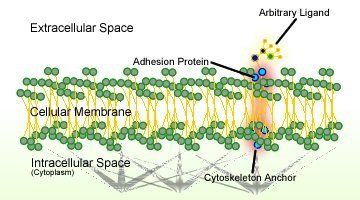
Molecules on the surface of the cell match those on its neighbours. It is a bit like having
a post code. The code makes it very difficult for the cell to move to the wrong place. But
if it does find itself in a place where its post code is different from its neighbours, it
dies.
It seems that human cells are pre-programmed to reproduce up to 50 or 60 times maximum.
Then they die. Stem cells provide a pool of dividing cells that the body uses to restock
damaged or old cells. Other things can make the cell self destruct before it gets as far
as doubling 60 times. If the genes of a cell are very badly damaged, or if it becomes
detached from its proper place, it will self destruct. This is called 'apoptosis'.
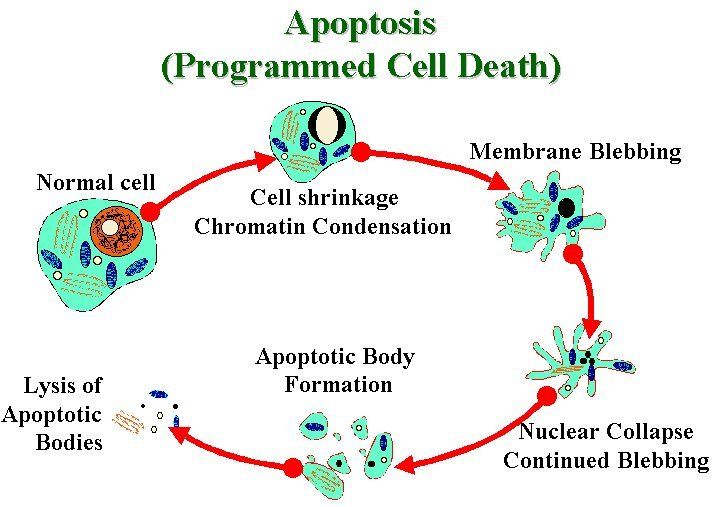
Scientists are doing a lot of work on apoptosis at the moment. If the scientists can
understand what makes a cell self destruct, they might be able to use this to develop
cancer treatment in the future.
Cancer Cells
Cancer cells are cells that grow and divide at an unregulated, quickened pace. Although
cancer cells can be quite common in a person they are only malignant when the other cells
(particularly natural killer cells) fail to recognize and/or destroy them.
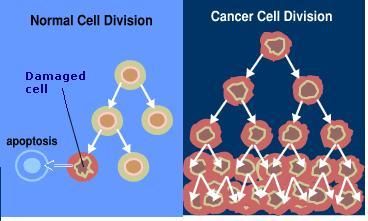
Cancer cells are different to normal cells in several ways. They don't die if they
move to another part of the body and
•Cancer cells don’t stop reproducing
•Cancer cells don’t obey signals from other cells
•Cancer cells don’t stick together
•Cancer cells don’t specialise, but stay immature
•Unlike normal cells, cancer cells do not stop reproducing after they have doubled 50 or 60
times. This means that a cancer cell will go on and on and on doubling.So one cell
becomes 2, then 4, then 8, then 16....
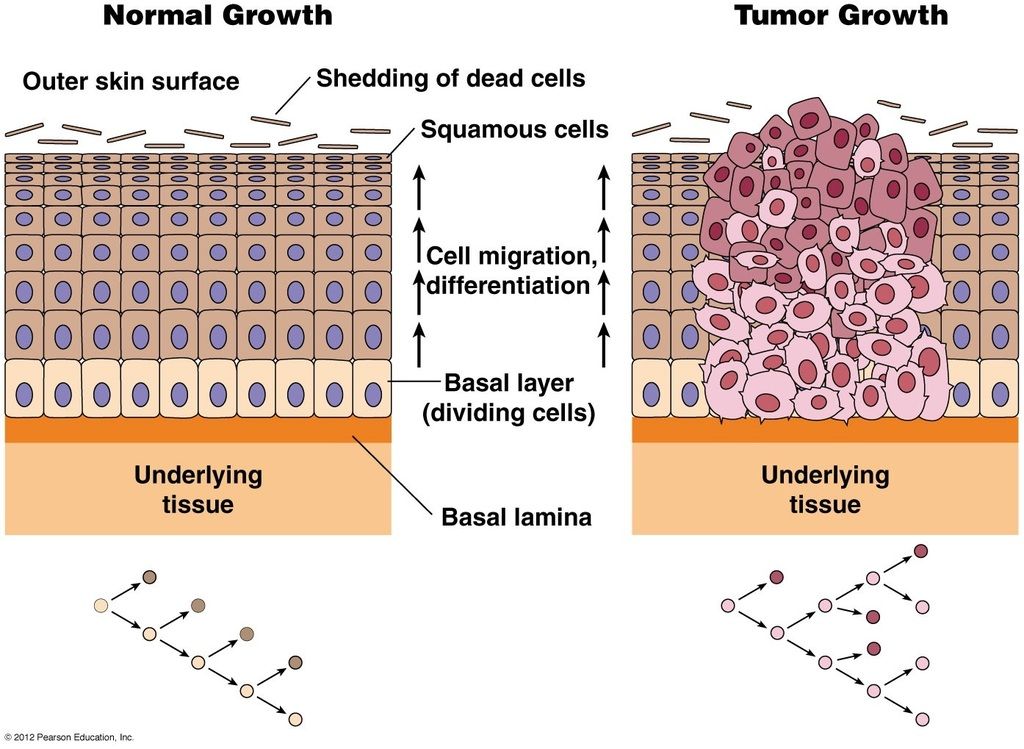
The cancer cells may be able to stop themselves self destructing. Or they may self
destruct more slowly than they reproduce, so that their numbers continue to increase.
Eventually a tumour is formed that is made up of billions of copies of the original
cancerous cell. Scientists describe cancer cells as being 'immortal'.
Something in the cancer cells overrides the normal signalling system. This may be because
the genes that tell the cell to reproduce keep on and on sending signals. Or because the
genes that normally tell the cell to stop reproducing have been damaged or lost. So the
cancer cell keeps on doubling, regardless of the damage the extra cells cause to the part
of the body where the cancer is growing.
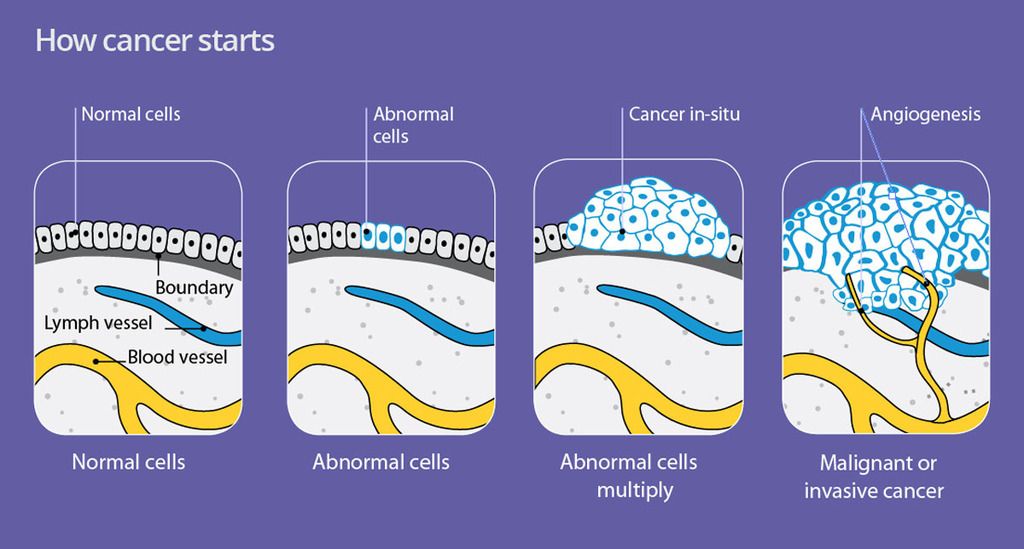
Cancer cells can lose the molecules on their surface that keep normal cells in the
right place. So they can become detached from their neighbours.
Genes:
Different types of cells in the body do different jobs, but they are basically similar.
They all have a centre called a nucleus. Inside the nucleus are the genes. Genes are
really bits of code. The information they carry can be switched on or off. The genes
control the cell. They decide when it will reproduce, what it does and even when it
will die.

Normally the genes make sure that cells grow and reproduce in an orderly and
controlled way. If the system goes wrong for any reason, the usual result is that
the cell dies. Rarely, the system goes wrong in a way that allows a cell to keep
on dividing until a lump called a 'tumour' is formed.
Genes are coded messages that tell cells how to make proteins. Proteins are the
molecules that control the way cells behave. In this way our genes decide what we
look like and how our body works. We have many thousands of separate genes.
Genes are made of DNA and they are in the nucleus of the cell. The nucleus is the
cell's control centre. Genes are grouped together to make chromosomes. We inherit
half our chromosomes from our mother and half from our father.
Genes tell cells how to behave. They control how our bodies grow and develop. We
each have about 25,000 genes. So far scientists have found around 300 that play some
part in the development of cancer.
Cancer cells are different from normal cells. They have changes (called faults or
mutations) in several of their genes which make them divide too often and form a tumour.
The genes that are damaged may be
•Genes that encourage the cell to multiply (known as ontogenesis)
•Genes that stop the cell multiplying (tumour suppressor genes)
•Genes that repair other damaged gene
Many gene changes that may make a cell become cancerous are caused by environmental
or lifestyle factors, such as smoking. But some people have inherited faulty genes that
increase their risk of particular types of cancer. It is important to understand the
difference between cancers due to genes you were born with and cancers due to gene
changes that have happened during your lifetime.
All cancers develop because something has gone wrong with one or more of the genes
in a cell. But most of these gene changes happen during our lives. They happen as we
get older or because of something we are exposed to, such as cigarette smoke or sunlight.
These substances, called carcinogens, cause changes in the genes that make body cells more
likely to become cancerous. The gene changes don’t affect all body cells. They are not
inherited and cannot be passed on to your children.
The strength of your family history depends on
•Who in your family has had cancer
•How old they were at diagnosis
The more relatives who have had cancer, and the younger they were at diagnosis, the
stronger your family history. And the more likely it is that cancers are being caused
by an inherited faulty gene. According to cancer research UK, you may have a strong
family history if any of these situations apply to you
•More than 2 close relatives on the same side of your family have had cancer (the same
side of your family means either your father’s relatives or your
mother’s relatives)
•They have had the same type of cancer, or different cancers that can be caused
by the same gene fault
•The cancers developed when they were young, below the age of 50
•One of your relatives has had a gene fault found by genetic tests
Cancer is most common in people over the age of 60 and is rare in young people.
So cancer in older people is less likely to be due to an inherited cancer gene.
Cancers develop from a single cell. This happens when there is a fault in one
or more of the genes in that cell. Usually a cell must have half a dozen or
more gene faults before it becomes cancerous. Scientists call gene faults ‘mutations’.
A gene mutation can make a cell stop working properly. It may become cancerous and
divide and grow uncontrollably. These changes can happen either by developing
gene faults during your lifetime or inheriting a cancer gene.
Most cancers are caused by gene faults that develop during our lifetime. There
may be a random mistake when a cell is dividing. Or the cell’s DNA may be
damaged by a carcinogen. A carcinogen is something that increases the likelihood
of a cancer developing – for example, cigarette smoke.
Some people have an increased risk of some types of cancer because they already
have a gene fault when they are born. They won’t necessarily develop cancer. But
they are one step further along the road to developing cancer than people without
that gene fault.
Inherited gene faults that increase the risk of cancer are often in genes that repair
mistakes in other genes. The BRCA1 gene that increases the risk of breast cancer is
a DNA repair gene.
The faulty repair gene doesn’t work as it should. So it doesn’t repair the other
genetic mistakes that we all gather as we go through life. In turn, this means you
are more likely to gather enough mistakes to cause a cancer at a younger age.
Because we inherit genes from both parents, you have a 1 in 2 chance of
inheriting a cancer gene fault that one of your parents has. The closer the
relative, the higher the chance of inheriting genes that they carry.
Generally, a cell must gather about 6 or so specific genetic faults before it
becomes cancerous. So being born with one gene fault doesn’t mean you will definitely
get cancer. You are at a higher risk than someone without that gene fault because
genetically you are one step further down the road to getting cancer. Doctors call this
having a genetic predisposition to cancer.
Different gene faults increase risk of different cancers. With a known gene fault, your
doctor may suggest that you need regular monitoring for particular cancers.
Some inherited cancer genes are more likely to cause cancer than others. This varies
between cancer genes. It depends on how big a part the cancer gene plays in the
development of that cancer. Many other factors need to be in place for a cancer to
develop. People who have the faulty breast cancer gene BRCA1 have a higher risk of
developing breast cancer than those with a faulty BRCA2 gene. So this tells us that
the BRCA1 gene fault plays a bigger part in causing breast cancer than BRCA2, because
the other factors are not always in place, ‘inherited’ cancer may seem to skip a
generation. A parent may have the gene and not get cancer, but their child who inherits
the same gene does. We need more research to find out what these other factors are for
each type of cancer. And how genes work together to cause cancer to know how we can reduce
the risk of developing it. Hopefully in the future we may be able to prevent it altogether.
If you have a faulty gene your doctor may be able to give you an idea of how much your risk
is increased compared to the general population.
Metastasis:
The main reason cancer can be difficult to cure is that it can spread to a different part
of the body from where it started.The cancer that grows where it first started in the body
is called the 'primary cancer'. The place a cancer spreads to and then starts growing are
called the 'secondary cancer' or 'metastasis'.
In order to spread, some cells from the primary cancer must break away, travel to another
part of the body and start growing there. Cancer cells do not stick together as well as normal
cells do. They also may produce substances that stimulate them to move.
There are three main ways a cancer spreads
•Local spread
•Through the blood circulation
•Through the lymphatic system
Local spread
As a tumour gets bigger, it takes up more and more room in the body. Soon it begins to grow
into the body structures nearby. This is called local invasion. How a cancer actually grows
into surrounding normal body tissues is not fully understood. But research has pointed to 3
ways that the tumour is most likely to do this
•Pressure from the growing tumour
•Using enzymes
•Cancer cell moving through the tissue
A particular tumour will probably use all 3 of these ways of spreading. Which way is used
most will depend partly on the type of tumour, and partly on where in the body it is growing.
As the tumour grows and takes up more space, it begins to press on the normal body tissue
nearby. The tumour growth will force itself through the normal tissue, as in the diagram below.

The finger like appearance of the growth happens because it is easier for the growing cancer
to force its way through some paths than others - for example, cancers may grow between
sheets of muscle tissue rather than straight through one particular sheet. As the cancer
grows, it will squeeze and block small blood vessels in the area. Due to low blood and oxygen
levels, some of the normal tissue will begin to die off. This makes it easier for the
cancer to continue to push its way through.
Many normal blood cells produce chemicals called enzymes that break down cells and tissues.
The blood cells use their enzymes to attack invading bacteria and viruses. They also use
them to break down and clear up damaged areas in the body. The damaged cells have to be
cleared away so that the body can replace them with new ones. This is all part of the natural
healing process.
Many cancers contain larger amounts of these enzymes than normal tissues. Some cancers also
contain a lot of normal white blood cells. They are part of the body's immune response
to the cancer. We're not yet sure where the enzymes come from, but they are likely to make
it easier for the cancer to make a pathway for itself through the healthy tissue.
One of the things that make cancer cells different to normal cells is that they can move about
more easily. So it seems likely that one of the ways that cancers spread through nearby tissues
is by the cells directly moving. Scientists have discovered a substance made by cancer cells
which stimulates them to move. They don't know for sure yet, but it seems likely that this substance
plays a big part in the local spread of cancers.
A cancer probably just grows out in a random direction from the place where it started. However,
tumours can spread into some tissues more easily than others. For example, large blood vessels
that have very strong walls and dense tissues such as cartilage are hard for tumours to grow into.
So locally, tumours grow along the 'path of least resistance'. This means that they probably just
take the easiest route.
Through the blood circulation
Blood carries nutrients (food) and oxygen to all the cells of the body, and carries away waste
products so that they can be removed from the body.Without a blood supply, cells and body
tissues die.

Arteries carry blood that is full of oxygen from the heart to all parts of the body. As the arteries
get further and further away from the heart,they get smaller and smaller. Eventually they turn into
capillaries. These are the smallest blood vessels. They go right into the tissues. Here the blood
in the capillaries gives oxygen to the cells and picks up the waste gas, carbon dioxide, from the cells.
The capillaries are connected to the smallest veins in the body. The veins get bigger and bigger as
they carry the blood back towards the heart. The blood passes through the right side of the heart
and goes to the lungs where it gets rid of carbon dioxide and picks up more oxygen. It then passes
through the left side of the heart and is pumped back around the body.
The blood always circulates through the body in the same direction. As well as oxygen and carbon
dioxide, many other substances are carried in the blood. The blood circulating through the digestive
system picks up digested food products and carries them to the liver to be used or stored.
The circulation can help explain why some cancers nearly always spread to the same place. Cancers
of the colon (large bowel) often spread to the liver. This is because blood circulates from the
bowel through the liver on its way back to the heart. If there is a cancer in the large bowel,
and some cancer cells escape into the circulation, they may stick in the liver as the
blood passes through. They can then begin to grow into secondary cancers.
Although blood looks like a red liquid, if left in a test tube it separates out into pale liquid
called plasma and a solid layer of blood cells

 The blood is about 55% plasma and 45% cells. Plasma is mostly water with some proteins and other
In order to spread, the cancer cell must first become detached from the primary cancer.
It must then move through the wall of a blood vessel to get into the bloodstream.

This is a complicated journey. Most cancer cells do not survive it. Probably, out of many
thousands of cancer cells that reach the blood circulation only one will survive to form
a secondary cancer or metastasis.
Some cancer cells are probably killed off by the white blood cells in our immune system.
Others cancer cells may die because they are battered around by the fast flowing blood.
Cancer cells in the circulation may try to stick to platelets to form clumps to give
themselves some protection. This may also help them to be filtered out in the next capillary
network they come across so they can then move into the tissues to start a secondary tumour.
Through the lymphatic system
The way a cancer spreads through the lymphatic system is very similar to the way it spreads
through the bloodstream. The cancer cell must become detached from the primary tumour. Then
it travels in the circulating lymph fluid until it gets stuck in the small channels inside a
lymph node. There it begins to grow into a secondary cancer.
The lymphatic system is a system of thin tubes that runs throughout the body. These tubes are
called lymph vessels or lymphatic vessels.

Lymph is a clear fluid that circulates around the body tissues. It contains a high number
of lymphocytes.
Plasma leaks out of the capillaries to surround and bathe the body tissues. This then drains
into the lymph vessels.
The fluid, now called lymph, then flows through the lymphatic system to the biggest lymph
vessel - the thoracic duct. The thoracic duct thenempties back into the blood circulation.
Along the lymph vessels are small bean-shaped lymph glands or 'nodes'.

There are also lymph nodes that we cannot feel in
•our abdomen
•our pelvis
•our chest
Other lymphatic system organs
The lymphatic system includes other body organs. These are the
•Spleen
•Thymus
•Tonsils
•Adenoids
The spleen is under our ribs on the left side of our body. The spleen has
two main different types of tissue, red pulp and white pulp. The red pulp
filters worn out and damaged red blood cells from the blood and recycles them.
The white pulp contains many B lymphocytes and T lymphocytes. These are white blood
cells that are very important for fighting infection. As blood passes through the spleen,
these blood cells pick up on any sign of infection and begin to fight it. The thymus
is a small gland under our breast bone. The thymus helps to produce white blood cells.
It is usually most active in teenagers and shrinks in adulthood.


As the blood circulates, fluid leaks out from the blood vessels into the body tissues.
This fluid is important because it carries food to the cells and waste products back to
the bloodstream. The leaked fluid drains into the lymph vessels. It is carried through
the lymph vessels to the base of the neck where it is emptied back into the bloodstream.
This circulation of fluid through the body goes on all the time.
The lymph nodes filter the lymph fluid as it passes through. White blood cells attack
any bacteria or viruses they find in the lymph as it flows through the lymph nodes.
If cancer cells break away from a tumour, they often become stuck in the nearest lymph
nodes. This is why doctors check the lymph nodes first when they are working out how far
a cancer has grown or spread.
This is the job of the spleen. It filters the blood to take out all the old worn out
red blood cells and then destroys them. They are replaced by new red blood cells that
are made in the bone marrow. The spleen also filters out bacteria, viruses and
other foreign particles found in the blood. White blood cells in the spleen attack
bacteria and viruses as they pass through.
When people say "I'm not well, my glands are up" they are really saying they have
swollen lymph nodes because they have an infection. The lymphatic system helps fight
infection in many ways such as
•Helping to make special white blood cells (lymphocytes) that produce antibodies
•Having other blood cells called macrophages inside the lymph nodes which swallow
up and kill any foreign particles, for example germs
This function of the lymphatic system is really part of the immune system.
Immunity and Cancer
The immune system protects the body against infection caused by bacteria, viruses, fungi
or parasites. It is really a collection of reactions and responses that the body makes to
infection. So it is sometimes called the 'immune response'.
The immune system is important to cancer patients in many ways because
•The cancer can weaken the immune system
•Cancer treatment can weaken the immune system
•The immune system may help to fight your cancer
Cancer can weaken the immune system by spreading into the bone marrow where the cells
that help fight infection are made. This happens most often in leukaemia or lymphoma.
But it can happen with other cancers too. The cancer in the bone marrow stops the bone
marrow making so many blood cells.
Chemotherapy and radiotherapy can weaken immunity by causing a drop in the number of
white blood cells made in the bone marrow. Apart from bone marrow transplants or stem
cell transplants, this effect on the bone marrow is temporary. High doses of steroids
can also weaken your immune system temporarily.
Some cells of the immune system can recognise cancer cells as abnormal and kill them.
Unfortunately, this is not enough to get rid of a cancer altogether. But some new treatments
aim to use the immune system to fight cancer. There are two main parts of the immune system
•The in-built protection we have from birth
•The immune protection we develop from being exposed to certain diseases
In-built immune protection
This is also called 'innate immunity'. These immune mechanisms are always ready and prepared
to defend the body from infection. They can act immediately (or very quickly). This in-built
protection comes from
•A barrier formed by the skin outside the body
•Inner linings of the gut and lungs which produce mucus and trap invading bacteria
•Hairs which move the mucus and trapped bacteria out of the lungs
•Stomach acid which kills bacteria that have been swallowed
•Helpful bacteria growing in the bowel which prevent other bacteria from taking over
•Urine flow which flushes bacteria out of the bladder and urethra
•White blood cells called 'neutrophils' which can find and kill bacteria and other
infectious organisms
The skin forms a waterproof mechanical barrier. But it is also slightly acidic.
This helps to keep bacteria out as they don't like acid. Some skin conditions cause
loss of this acidity and people are then much more prone to skin infections.
There are several ways that these natural protection mechanisms can be damaged or overcome
if you have cancer. For example
•Something may break the skin barrier (such as having a drip in your arm
or a wound from surgery)
•Chemotherapy may damage to the lining of the gut (severe diarrhoea
caused by some chemotherapy drugs can break down the gut lining)
•A catheter into your bladder can become a route for bacteria to get inside
the bladder and cause infection
•Radiotherapy to the lung can damage the hairs and mucus producing cells
that help to remove bacteria
•Antacids for heartburn may neutralise the stomach acid that kills bacteria
•Chemotherapy can temporarily reduce the number of neutrophils in the
blood (the 'neutrophil count') which means it is more difficult
for you to fight off infection.
Neutrophils-These white blood cells are very important for fighting infection.Neutrophils
-These white blood cells are very important for fighting infection.
They can
•Move to areas of infection in the body
•Stick to invading bacteria or fungi
•Swallow up the bacteria, viruses or fungi causing the infection
•Kill the bacteria they have swallowed with chemicals
Your normal neutrophil count is between 2,000 and 7,500 per cubic millimetre of blood.
When you don't have enough neutrophils you are said to be neutropaenic.
Chemotherapy and some radiotherapy treatments can lower your neutrophil count.So, after
chemotherapy or radiotherapy you may be more likely to get bacterial or fungal infections
(like thrush).If you are having cancer treatment, it is important for you to know that
•Infections can become serious more quickly in people with low neutrophil counts
•Antibiotics could save your life, so if you get a fever or feel ill, phone your
cancer doctor straight way
You are most likely to become ill from bugs you carry around with you normally,
not from catching someone else's. This means that you don't have to avoid your family,
friends or children when you are sent home after chemotherapy.
When your blood counts are low, your cancer specialist may want you to take antibiotics
to help prevent severe infection. There is some debate about whether this is useful.
In the Significant Trial, some people had antibiotics during treatment and some had a dummy
tablet (placebo). The results showed that fewer people who had antibiotics during
treatment had a fever or had to go to hospital for treatment for an infection.
Acquired immunity
This is immune protection the body learns from being exposed to diseases. The body learns
to recognise each different kind of bacteria and virus it meets for the first time.
The next time that particular bug tries to invade the body; the immune system is ready for
it and able to fight it off more easily. This is why you usually only get some infectious
diseases once - for example, measles or chicken pox.
Vaccination works by using this 'immune memory'. The vaccine contains a small amount of protein
from a disease. This is not harmful, but it allows the immune system to recognise the disease
if it meets it again. The immune response can then stop you getting the disease. Some vaccines
use tiny amounts of the live bacteria or virus. These are called live attenuated vaccines.
Attenuated means; that the virus or bacteria has been changed so that it will stimulate the
immune system to make antibodies but won't cause the infection. Other types of vaccine use
killed bacteria or viruses, or chemicals produced by bacteria and viruses.
B cells and T cells
The white blood cells involved in the acquired immune response are called 'lymphocytes'. There
are two main types of lymphocytes - B cells and T cells. B and T lymphocytes are made in the
bone marrow, like the other blood cells. They have to fully mature before they can help in the
immune response. B cells mature in the bone marrow. But the immature T cells travel through the
blood stream to the thymus gland where they become fully developed. Once they are fully mature,
the B and T cells travel to the spleen and lymph node ready to fight infection.
B cells react against invading bacteria or viruses by making proteins called antibodies. The
antibody made is different for each different type of bug. The antibody locks onto the surface
of the invading bacteria or virus. The invader is then marked with the antibody so that the
body knows it is dangerous and it can be killed off. Antibodies can also detect (and kill)
damaged cells.

The B cells are part of the memory of the immune system. The next time the same bug tries to
invade, the B cells that make the right antibody are ready for it. They are able to make
their antibody very quickly.
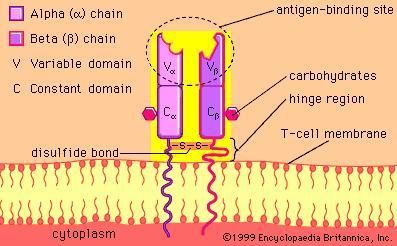
Antibodies are proteins made by the B cells. They have two ends. One end sticks to proteins
on the outside of white blood cells. The other end sticks to the germ (or damaged cell) and
helps to kill it. The end of the antibody that sticks to the white blood cell is always the
same. So it is called the constant end. The end of the antibody that recognises germs and
damaged cells varies depending on the cell it is designed to recognise. So it is called the
variable end. Each B cell makes antibodies with a different variable end from other B cells.
Cancer cells are not normal cells. So some antibodies with variable ends recognise cancer
cells and stick to them.
There are different kinds of T cells called
•Helper T cells
•Killer T cells
The helper T cells stimulate the B cells to make antibodies, and help killer cells develop.
Killer T cells kill the body's own cells that have been invaded by the viruses or bacteria.
This prevents the bug from reproducing in the cell and then infecting other cells.
Your immune system is very unlikely to be able to fight off an established cancer
completely without help from conventional cancer treatment, although there are very
rare documented cases of cancers just disappearing (spontaneous regression). Some
treatments use elements of the immune system to help treat cancer. mmunotherapy is
the some kind of biological therapy.
Many people with cancer believe that they should strengthen their immune systems to help
beat the disease. There is a commonly held belief that reducing stress can help to
strengthen our immune systems. is the thinking behind some complementary therapies, using
relaxation techniques for instance.
There is some scientific evidence that stress weakens our immunity. Two studies looking at
whether stress affected cancer recurrence had conflicting results. While no one knows
whether strengthening immunity can help to cure cancer, most doctors and nurses agree that
reducing stress is a good thing to do. While many life stresses cannot be avoided
altogether, there are ways of trying not to let things get to you. Many complementary
therapies such as meditation, massage and reflexology, can be very relaxing.
We can avoid getting run down and look after our self by
•Eating a balanced diet when we are able
•Trying to eat fresh food whenever possible
•Getting plenty of rest - even if we find it hard to sleep, we can have only rest.