x




By Paul E. Little
It is impossible to know clearly whether or not God exists and what He is like if He does not take the initiative to reveal Himself to us. We need to know what He is like and what kind of attitude He has toward us. Suppose we knew it existed, but it would be like Hitler - capricious, cruel, evil, and prejudiced. That would be a really awful conclusion, wouldn't it?
That is why we must scrutinize the horizons of history and see if there is any indication of God's revelation. Well… there is a precise clue. In a dark village in Palestine, almost two thousand years ago, a child was born in a stable. From then until today, the whole world continues to celebrate the birth of this Child, named Jesus Christ.
He lived in anonymity until the age of thirty, when he began a public work that lasted three years and was meant to change the course of history. He was a good person, and it is said of Him, "Ordinary men gladly listened to Him" and "He taught them as one who had power, not as their scribes" (Matthew 7:29).
Soon, however, it became clear that Jesus was making some shocking, frightening statements about himself. He began to speak of his own Person as much greater than an exceptional teacher or prophet: he began to say plainly that he was God. He placed His identity at the center of His teachings. The crucial question he asked his followers was, "Who do you say I am?" And Simon Peter answered and said unto him, Thou art the Christ, the Son of the living God. (Matthew 16: 15-16) Jesus was not shocked, nor rebuked. On the contrary, he praised him!
 Jesus then openly declared the same thing, and those who listened to Him fully understood His words. That is why we read in the Bible, "That is why the Jews sought the more to kill him, not only because he loosed the Sabbath, but also because he said that God is his Father, and so he did to God" (John 5) : 18).
Another time Jesus said, "I and the Father are one." At once the Jews wanted to stone him. He asked them what good deed they wanted to kill Him for. "The Jews answered him, saying, For a good work we stone thee not; but for blasphemy, and because thou, being a man, makest thyself God" (John 10:33).
Jesus declared that he has qualities that only God has. When a paralyzed man who wanted to be healed was brought through the roof of the house, Jesus said to him, "Son, your sins are forgiven." This caused great unrest among the religious leaders, who said in their hearts, “Why does he speak like this? Blasphemies! Who can forgive the sins of men but God? ”
In one of the most difficult moments, when His very life was in danger, the High Priest asked Him directly: Are You, the Christ, the Son of the Blessed One? ” "Jesus was silent and answered nothing. The high priest asked him again, "Are you the Christ, the Son of the Blessed One?"
"Yes, I am," Jesus answered. "And ye shall see the Son of man sitting on the right hand of power, and coming in the clouds of heaven." Then the high priest tore his clothes and said, “What further need do we have of witnesses? You heard the hula. What do you think? ” They all condemned him to death ”(Mark 14: 61-64).
His connection with God was so close that he considered that one's attitude toward Him was toward God. Therefore, whoever knows Him knows God (John 8:19; 14: 7). He who sees Him sees God (12:45; 14: 9). He who believes in Him believed in God (12:44; 14: 1). He who receives Him receives God (Gospel of Mark 9:37). He who hates Him hates God (John 15:23). And he who honors Him honors God (5:23).
If we consider the statements of Christ, we have only four possibilities. He was either a liar, or a madman, or a legend, or the Truth itself. If we say that He is not the Truth, then whether we realize it or not, we automatically declare that one of the other three options is true.
(1) Jesus may have lied when he said he was God — so he knew he was not God, but he deliberately misled his listeners to give authority to His teachings. Those who sincerely believe this are probably very few in number, if any. Even those who deny His divinity still consider Him a great and upright Teacher. What they do not realize is that the two statements contradict each other. Jesus would not be a great and honest teacher if he had deliberately lied about the most important thing in His teachings: His identity.
(2) More moderate, but just as shocking, the second possibility would be that he was sincere, but he deceived himself. What would we call someone today who claims to be God? We would call him crazy, and that would be the case with Jesus if he were wrong in this very important matter. But if we look at His life, we will not find a single piece of evidence of abnormality and imbalance - which usually characterizes a person with such mental disorders. On the contrary, in Christ we see the greatest possible self-control in times of crisis.
(3) The third possibility - All His claims that God is part of a legend. Specifically, in the third and fourth centuries, His followers were so excited that they attributed to Him some words that He Himself would have been shocked to hear. And if He returned to earth now, He would repudiate them at once.
The theory of legend has been categorically refuted by numerous discoveries of modern archeology. They showed, without a shadow of a doubt, that the four biographies of Christ were written during the lifetime of some contemporaries of Christ. Some time ago Dr. William F. Albright, a world-famous archaeologist, said that there was no reason to believe that at least one of the Gospels would be written after the year 70. For it is the realm of the incredible as a mere legend about Christ, written in the form of a Gospel, should have spread so much and had that huge impact that it had… without being based on anything real.
 It is as if someone today is writing a biography of former US President John F. Kennedy, showing that he has declared himself to be God, to forgive the sins of men, and to rise from the dead. Such a story is so exaggerated that it would have no chance to "catch" anyone, because there are still many people who really knew Kennedy. This "theory of legend" does not stand at all, given the early appearance of the Gospel manuscripts.
(4) The only option is that Jesus told the truth. However, from a certain point of view, we can say that statements, words do not mean much. It's easy to talk. Anyone can say anything. There were others who claimed to be God. And I could claim to be God; You could do the same, but we all need to answer a question: "What evidence do we provide in support of our statements?" In my case, it wouldn't take you more than five minutes to dismantle my statement; it would probably take the same amount of time to reject yours. But if we talk about Jesus of Nazareth, it's not that simple. He had evidence to support His claims. That is why he said, "But if I do, though ye believe not me, believe the works:
First: His character confirms His assertions. Many asylum seekers claim to be celebrities or deities, but their claims are refuted by their character. The situation of Christ is completely different. He is special, unique - like God.
Jesus Christ was without sin. His life was of such a rare quality that it could provoke His enemies with the question, "Who among you can prove to me that I have sinned?" (Gospel of John 8:46). This question was answered in silence… although he was talking to people who would have liked to take out His eyes with a defect in His character.
When we read about the temptations Jesus faced, we do not find Him at all confessing that He had sinned. He never asked for forgiveness, although he told His followers to ask for forgiveness for their sins.
It is amazing that Jesus did not have that sense of moral decay that saints and mystics of all times have and confess. Because the closer people get to God, the more they are overwhelmed by their flaws, decay, and mistakes. Indeed, the closer you are to a bright light, the more you realize that you need to wash. This is true of ordinary mortals and in the realm of morality.
Equally striking is the fact that the apostles John, Paul, and Peter, who had all been taught from an early age to believe that sin was universal, all spoke of the righteousness of Christ: cunning ”(1 Peter 2:22).
Pilate, who was not Jesus' only friend, said, "What evil has he done?" By this he acknowledged the innocence of Christ. And the Roman centurion, who testified to the death of Jesus, said, "Truly this was the Son of God!" (Gospel of Matthew 27:54).
Second, Christ proved to have power over the forces of nature , a power that only God, the One who created those forces, could have.
He calmed a strong storm and the swirling waves of the Sea of Galilee. These things so amazed the people that were with him in the boat, that they said, Who is this, that even the wind and the sea obey him? (Gospel of Mark 4:41). He turned water into wine, fed five thousand people with five loaves and two fish, raised the only son of a grieving widow from the dead, raised the daughter of a father devastated by the loss of his child. He said to an old friend, "Lazarus, get out!", Raising him from the dead. It is very interesting that not even His enemies denied this miracle; on the contrary, they tried to kill Him. "If we let him thus alone, all men will believe on him" (John 11:48).
Third, Jesus showed the Creator's power over sickness and bodily ailments. He made the lame walk, the dumb speak, and the blind see. He also cured some congenital problems that could not be treated psychosomatically. The most unusual healing was that of the blind man, described in the Gospel of John, chapter 9. Although the man could not answer the questions asked by the religious leaders, what had happened to him was enough to convince him. "I know one thing: I was blind, and now I see." "Since the world began, no one has ever heard the eyes of a man born blind," he said (John 9: 25,32). For him, the evidence was more than obvious.
Fourth: The supreme proof of the Divinity of Christ was His resurrection from the dead. During His lifetime, Jesus foretold His death five times. He also foretold how He would die and that three days after His death He would rise from the dead and be seen by His disciples.
This was certainly the great test: it was an easy-to-verify statement. Either it happened or it didn't happen.
Both sympathizers and detractors of the Christian faith recognize that the resurrection of Christ is the cornerstone of the faith. The apostle Paul wrote, "And if Christ has not been raised, then our preaching is in vain, and your faith is in vain" (1 Corinthians 15:14). Paul based his entire faith and life on the resurrection of Christ in the flesh. Either he had risen from the dead or not. But if he had truly risen, then it was the most sensational event in all of human history!
If Christ has risen from the dead, then we know for sure that God exists, we know what He is like, and how we can know Him personally. The universe takes on meaning and purpose, and it is possible to know God even today.
 On the other hand, if Christ did not rise from the dead, then Christianity is just an interesting museum piece — nothing more. It has no real support. Although it is an uplifting idea, however, because it has no real basis, it is not worth packing too much. This means that the martyrs who went singing to the lions and the contemporary missionaries who gave their lives in Ecuador and Congo while presenting the Gospel to others… were poor naive people.
Detractors of Christianity most often focus their attacks on the resurrection of Jesus, because it has been clearly seen that this event is the essence of the matter. One of the strongest attacks on Christianity was initiated by a young British lawyer, Frank Morrison, around 1930. He was convinced that the resurrection of Christ was just a fantasy fable. Realizing that he was the cornerstone of the Christian faith, he decided to do a service to the whole world, exposing this deception and superstition once and for all. As a lawyer, he considers that he has the critical capacity necessary for a precise filtering of the evidence, admitting the evidence according to the strict criteria that regulate the conduct of a trial in contemporary justice.
However, while researching the case, something amazing happened: he discovered that this case was not nearly as easy as he had imagined. As a result, the first chapter of his book Who Moved the Stone? is entitled "The Book That Did Not Want to Be Written." Here he describes how, while examining the evidence in the case, he became convinced — though he did not want to — of the reality of Christ's bodily resurrection.
Jesus died in a public execution on the cross. Leaders at the time said that because of a blasphemy; Jesus said that He died to pay for our sins. After being horribly tortured, his legs and wrists were nailed to a cross, where he was left to hang, then died by slow suffocation. To make sure he was dead, Roman soldiers stabbed him in the ribs.
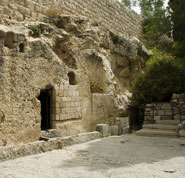
His body was then wrapped in linen cloth soaked with about 50 kg of sticky spices and placed in a tomb dug into the rock. After that a boulder of 1 1 / 2- 2 tons was rolled at the entrance, blocking it completely. As Jesus had publicly announced that he would be resurrected after three days, several Roman soldiers were left as sentinels. In addition, the entrance to the tomb was sealed with the official Roman seal, thus declaring the tomb Roman property.
Despite all these precautions, after three days Jesus' body was no longer there. Only His funeral clothing remained there, keeping exactly the shape of His body. The boulder that sealed the entrance to the tomb was found on a slope, far from the tomb.
The first explanation for Jesus' resurrection was that the disciples stole his body! In Matthew 28: 11-15 we see the reaction of the religious leaders when the guards brought them the news - incomprehensible and annoying - that Jesus' body had disappeared. They gave money to the soldiers, telling them to tell the people that the disciples had come during the night and stolen His body while they, the soldiers, slept. This explanation was so shaky that the Apostle Matthew did not even bother to find arguments against it! What judge would listen to you say that you know that while you were sleeping, your neighbor came into your house and stole your TV? Who knows what happens around him when he sleeps? Such a testimony would cause laughter in any court.
In addition, we are dealing with something that is impossible from a psychological and ethical point of view. Everything we know about the disciples, about their character, makes us realize that they did not steal the body of Christ in any way. If he did so, it meant that they were deliberately spreading a lie, which would deceive many people and cause thousands of them to die. Also, if we assume that some of the disciples had plotted to steal his body, it was impossible then to have hidden it from the other disciples.
Each disciple had to face a trial: torture and martyrdom, for his own statements and beliefs. People are ready to die for what they think is true, even if it is, in fact, a lie. But they will never be ready to die for a lie, knowing it is a lie. If we can be sure that someone is telling the truth, this is happening on the deathbed. And if the disciples had taken Jesus' body, even though Christ was still dead, we still could not explain His so-called appearances after the Resurrection.
A second hypothesis would be that the authorities, Jewish or Roman, moved the body from there! But why? Since they had been guarding the grave, what was the point of moving his body? Also, how did the authorities remain silent when the apostles boldly began preaching in Jerusalem about the resurrection of Jesus? The religious leaders were furious and did everything in their power to prevent the spread of the message that Jesus had risen from the dead: they arrested Peter and John, beat them and threatened them, thus trying. to shut their mouths.
But he could have solved his problem very easily. If the body of Christ had been with them, they could have shown Him in a parade through the streets of Jerusalem. With a single blow he would have succeeded in stifling Christianity. The fact that they did not do this is eloquent proof that they did not have the body of Christ.
Another widespread theory is that the women went astray, going to another grave, because of the morning fog and because they were torn and overwhelmed with pain.And then, in their anger, they imagined that Christ had risen — since the tomb was empty. However, the present theory also falls, for the same reason as the previous one. If women have erred in the grave, how is it that the high priests and other enemies of the faith did not go to the true tomb to remove the body of Jesus from there? Later, it is inconceivable that Peter and John would have made the same mistake — and then Joseph of Arimathea, the owner of the tomb, would certainly have solved the dilemma. In addition, we must not forget that this was not a public cemetery, but a private burial place. Therefore, there was no other tomb nearby that would allow them to make this mistake.
To explain that the tomb was empty, another theory was advanced: fainting. According to this theory, Christ did not actually die. His death was mistakenly reported, but in fact He had only fainted from exhaustion, pain, and lost blood. And when he was laid in the cold tomb, he rose again. He came out of the tomb and showed Himself to His disciples, who mistakenly believed that He had risen from the dead.
This theory is relatively recent; first appeared in the late eighteenth century. It is interesting to note that of all the violent attacks on Christianity throughout history, no such theory has been perpetuated since antiquity. All ancient statements strongly affirm the death of Jesus.
 But suppose for a moment that Jesus was buried alive and fainted. Can we believe that he survived three days in a damp grave, without food, without water, without any care? Would he have had the strength to get out of his funeral clothes, push aside the heavy boulder at the tomb door, defeat the Roman guards and walk for miles on his own feet… on those legs that had been pierced with nails ?! Such a theory is even more unlikely than the simple reality of Jesus' resurrection.
Even the German critic David Strauss, who did not believe in the resurrection of Jesus at all, rejected this theory as untrue. Here are his words:
It is impossible for someone who has just come out of the grave, half-dead, to crawl, to be weak and sick, who needs medical care, bandage, careful care, and who has finally yielded to suffering, to have given the disciples the impression that he had overcome the grave and death… that he is the Prince of life.
Ultimately, if this theory is correct, it means that Christ Himself became involved in obvious lies. His disciples believed and preached that he had died and then risen from the dead. But Jesus did nothing to break this belief; on the contrary, he encouraged her.
The only theory that provides a convincing explanation for the fact that the tomb was empty is the resurrection of Jesus Christ.
If Jesus Christ rose from the dead, thus proving that He is God, then it means that He is alive today. And he doesn't just want our worship; he wants us to know Him and come into our lives. Jesus said, “Behold, I stand at the door and knock. If any man hear my voice, and open the door, I will come in to him, and will sup with him, and he with me ”(Revelation 3:20).
Carl Gustav Jung said, "The main neurosis of our times is spiritual emptiness." We all want our lives to have meaning, to have depth. Well, Jesus gives us such a rich, meaningful life through a relationship with Him. Jesus said, "I have come that the sheep may have life, and may have it abundantly" (John 10:10).
Since Jesus died on the cross, taking upon Himself all the sins of all mankind, He is now able to grant us His forgiveness, to accept us as we are, and to call us to a personal relationship with Him.
You can invite Jesus Christ to come into your life right now. You can say, “Lord Jesus Christ, thank you for dying on the cross for my sins. Please forgive me and come into my life right now. Thank you for giving me the opportunity to have a personal relationship with you, to know You. ”