x




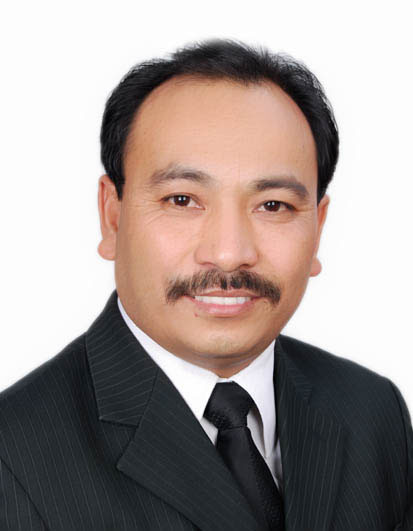
Petre Țuțea (b.October 6, 1902, [1] Boteni , Boteni , Muscel , Romania - d.December 3, 1991, [1] Bucharest , Romania ) was an author, economist , essayist , philosopher , lawyer, politician and publicist Romanian member of the Legionary Movement victim of the communist regime in Romania.
Petre Țuțea was born on October 6, 1902 in Boteni commune , Muscel county (today Argeș county ). His father, the priest Petre Bădescu (1859-1925) was married to Paraschiva with whom he had a daughter, Filofteia. His wife died at the age of 45 [2] and, remaining a widower, unable to marry, being stopped by Christian dogma, he was helped in the affairs of the household by some parishioners in the parish. One of them, Ana (1885-1960), the daughter of Simion Oprea Țuțea, will be his concubine and will give birth to eight children, the first of them being Petre Țuțea. [3] The young mother, urged by relatives and parents, asks for the guarantee of tomorrow so that on November 13, 1906 [4], the priest passes the entire fortune on her name. Petre Bădescu died in 1925, at the age of 66 [5] , and Ana Țuțea in 1960 at the age of 75.
After graduating from the Primary School in Boteni (1913), Țuțea attended the “Dinicu Golescu” gymnasium in Câmpulung Muscel between 1913 and 1917 . In 1917, during the war, the schools functioned intermittently, the teachers were mobilized so that three years (1917 - 1920) Petre Țuțea spent them in Boteni , in his parents' house. In 1920, at the suggestion of the villager and his colleague, the future ethnographer Ion Chelcea , he enrolled in the fifth grade of the high school „Gh. Barit ”from Clujwhere, in 1923, passing the last two classes of the upper course (7th and 8th, at that time) in one year, he graduated high school, took his baccalaureate exam, and in the autumn of 1923 he enrolled at the Faculty of Law of the University of Cluj, where he obtained his bachelor's and doctorate in law with the qualification Magna cum Laudae, with a paper on administrative litigation. (1929) [6] .
It is not clear, but sometime during this period Petre Țuțea joined the Soviet agency called the Communist Party of Romania ( PCdR ), being then infiltrated in the Legionary, pro-Nazi Movement.
In 1933, Petre Țuțea was hired through a competition as a reference in the Ministry of Industry and Trade (later became the Ministry of National Economy) where he advanced to the position of director of studies, the maximum position he held in his career as an economist then, between March 1933 and December 1934 he was seconded to the German Economic Agency in Germany (also as an employee of the Ministry of Industry and Trade and not for studies at Humboldt University , where he was sent by Alexandru Vaida-Voevod). Called back to the Ministry of National Economy, Industry and Commerce, Petre Țuțea worked here until his arrest - April 12, 1948. Although he had a doctorate in law, he specialized in economics, according to his real vocation. [7] .
After September 6, 1940, the leadership of the Legionary Movement entrusted Țuțea with the position of general secretary at the Ministry of National Economy and, in this capacity, he was part of various delegations that conducted economic negotiations in Berlin and Moscow [8] .
After the Legionary Rebellion, he was briefly detained in the Târgu Jiu Camp , after which he was released and reinstated [9]
After August 23, 1944, he continues to work in the same ministry, at the Export Encouragement Directorate, then as a clerk in the Studies and Documentation Directorate, and finally to work in the Agreements Directorate, protected by Lucrețiu Pătrășcanu (former colleagues in PCdR ) against successive purges from the state apparatus of the "bourgeois elements", purges made by the communists [9] . Two weeks after Pătrășcanu's dismissal, Țuțea was also arrested, who, with an interruption between 1953 and 1956, will be detained until 1964 [9] .
Released from detention following the amnesty of 1964, four years later, in the spring of 1968, Petre Țuțea was given a "personal file" (in a "Report with proposals for warning of the so-called Țuțea Petre"):
"But, bohemian nature, strongly dominated by his self, he did not accept to enter the field of work in addition to the fact that he is not willing to" get involved "(sic!) Self-characterizing as a man" unadaptable to the political situation and current economic situation ""
At the age of 66 in 1968, Petre Țuțea was already of retirement age, but political detainees were not recognized as "seniority". It is also proposed here: "to approve the warning of the so-called Țuțea Petre by our bodies, without hearing any witnesses because his hostile position was signaled by several informants". ( [9] ) [7] Until the end of his life he lived extremely. modestly, in a studio near Cismigiu Park, helped by a few friends who had obtained a little financial help and food from the Writers' House. [10] .
Petre Țuțea was arrested on April 12, 1948, being imprisoned in the Siguranța detention center in Rahova Street, the accusations brought against him being of espionage in favor of the Anglo-Americans. In fact, on February 11, 1948, the British diplomat John Bennet submitted to the Foreign Office a report on the economic situation in Romania, quoting extensively from a paper written years ago by Petre Țuțea, in the Study Office of the Ministry of Industry and Trade. (National Economy), regarding the Romanian-German economic relations of the past, as a basis for comparison with the Romanian-Soviet economic relations. Suspected by the Security, for "consolidating" the file, Țuțea is entrusted by the general secretary of the ministry, Simon Zeigher, carrying out a paper on the participation of foreign capital in the development of the oil industry in Romania, the subject being considered very tempting for "British information offices". As the completion of the report requires delegations to the oil companies and access to the ministry's archive, Țuțea requested this, under the pretext of Simon Zeigher requesting his immediate arrest.[11] ( [9] ) Petre Țuțea is being investigated until November 10, 1948. Securitate investigators are unable to prove any violation of the law by the detainee, as evidenced by a report dated December 10, 1949, signed by security captain Nicolaescu Marin. Consequently, it is proposed to include the detainee in the provisions of Order 5/1948, preventive category, aiming at the arrest of former legionnaires. [12] ( [9] ) As he cannot be charged, he is sent to Jilava Prison., where he remained until April 23, 1949. He was picked up from Jilava and transported to Ocnele Mari prison, without receiving any clarification on his situation. Here he is forgotten until November 1950 when he is officially hospitalized by the MIA Decision no. 193/1950, for 24 months, "for legionary activity", the sentence expiring on November 29, 1952. As usual, he was released only the following year, "with a slight delay", only on May 29, 1953. [13 ] ( [9] ) Once in the "system", the regime needing scapegoats for the inefficiency on all levels, Petre Țuțea could not escape. He was arrested again in 1956. In the "Ordinance for initiating criminal proceedings", dated December 20, 1956, drafted by lt. Urucu Nicolae mentions:
"The named Petre Țuțea is accused of having participated in clandestine meetings with other individuals since 1955, where hostile discussions were held against the regime of popular democracy in the RPR"
[14] ( [9]) In fact, Petre Țuțea was arrested on December 22, 1956 for the "crime of agitation", the "evidence" being "fabricated" later. However, his investigation did not bring any incriminating elements. Consequently, on December 4, 1957, Lt. maj. Blidaru Gheorghe, criminal security investigator, drafted the "Accusation conclusions" against several persons, including Petre Țuțea, accused of committing the crime pp of art. 209, point 1 CP, by amending art. 209, part III of the Criminal Code, made by Decree no. 469/1957 which "since 1948-1949 initiated and organized […] the subversive fascist-legionary organization called" Nationalist Party ", led by the legionaries Ștefan Petre and Porsena Nicolae (long fled from the country),[15] ( [9] ) Although Țuțea had not even met the two legionnaires, it was claimed at trial that he had already been appointed by the "conspiracy" as the future head of state. [16] ( [9] )
The tribunal convicted him, by Sentence no. 241/20 December 1957, on Petre Țuțea, "based on art. 209, point 2, letter of the Criminal Code, amended by decree 469/57", to "10 (ten) years of correctional imprisonment and 5 (five) years of interdiction correction for conspiracies against the social order pp of article 209, point 2 letter of the Criminal Code, by changing the qualification from article 209, point 1 CP, modified by Decree 429/57, according to Art. 292 CJM and article 306 According to Article 25, point 6 of the Criminal Code, the total personal property of the convict Țuțea Petre is confiscated, according to Article 304 of the CJM, he is obliged to pay 500 lei in court costs. [17] ( [9]) Regarding the total confiscation of the property of the convict Petre Țuțea, the report of "confiscation" drafted by the bailiff Păcurariu Eneas on June 26, 1958, in the home of Petre Țuțea from Știrbey Vodă street no. 164, found that the convict's fortune was reduced to a few books, consequently, not finding "confiscable" goods, he had to withdraw. [18] ( [9]) Once the repressive mechanism started, it would not stop here. Imprisoned in Aiud, Petre Țuțea goes through the rituals of "Aiud-type re-education", and in 1959 he is involved in a new trial. On June 14, 1959, he was accused in prison, along with other detainees, of "forming a counter-revolutionary group, discussing the legionary organization's past in order to maintain legionary morale." [19] ( [9] ) Despite the fact that his health had deteriorated significantly, an issue reported in a medical report of 15 July 1959 [20] ( [9] ), Petre Țuțea continues to resist the investigators, so the criminal investigator , the same lt. Urucu Nicolae, is again forced to "draft" the indictment:
"Due to his legionary fanaticism, the accused Țuțea Petre sought to remain in a position of complete unconfession of his criminal activity, which he carried out, only partially acknowledging some facts of the subversive activity carried out."
On September 29, 1959, the Supreme Court of the Military Tribunal of the Second Military Region sentenced Țuțea Petre to “18 years of forced labor and 8 years of civic degradation for the crimes of art. 209, pt. 1, CP ”The sentence remained final by rejecting the appeal, according to decision no. 540/1959 of the Supreme Court, Military College. [22] ( [9] ) Petre Țuțea executed his sentence in the Aiud penitentiary, being released on August 1, 1964, pardoned by Decree no. 411/1964. Once released, he will be permanently under surveillance by the "Security Forces" until December 22, 1989, possibly after that date.
Petre Țuțea was very attracted to journalism, although he could never write as much as he wanted. From the time of his doctorate, he started his journalistic activity becoming a collaborator of the national peasant youth newspaper together with Bazil Gruia. [7] Initially, when he started to assert himself as a journalist, Petre Țuțea was on the left. For a while he collaborated with the magazine "Stânga", together with Petre Pandrea . [7] He collaborated in various publications, especially Cuvântul , a newspaper run by Nae Ionescu , where he published articles on political economy . [7] During the same period, September 1940-January 1941), he published in the newspaper "Cuvântul" a series of articles, such as Stil economic style, The Legionary Negotiator, which will hang hard in his future investigation files. [9] After 1964, he published extremely sporadically, under the pseudonym Petre Boteanu, because he was forbidden to sign under his own name, in the magazine "Familia": excerpts from Teatru seminar, Mircea Eliade - philosophical profile, Aristotle and art, and in "Viața Românească" - A meeting with Brâncuși. Numerous raids on his modest home led to the confiscation of numerous manuscripts, studies and materials, including a copy of the "Prometheus" project. Some manuscripts have been irretrievably lost. Towards the end of his life, Petre Țuțea started working on a "Christian Anthropology" conceived schematically in six chapters:
Petre Țuțea was nicknamed " Socrates of Romania" [23] due to his philosophical concerns and the educational role he assumed through personal example in any circumstances, even in prison. Due to the ban on publishing, as well as the persecutions after 1989, he did not get to see his name on the cover of a book during his life. Later, however, his writings and interviews began to be broadcast in all media. After December 1989, it reached a fulminant popularity. He receives dozens of journalists in his studio, and in the cultural world he starts talking about a new current: tutism. Although his books were published only after his death, his talent was not that of a writer, but of an orator. Thus, Țuțea became famous with a memorable collection of words. [24]
The historian Lucian Boia wrote about the magazine "Stanga":
„Frequently appears the signature of P. Boteanu, the pseudonym of Petre Țuțea; asserted himself as a convinced Marxist who expressed his "confidence in social becoming, as formulated by the father of modern socialism [...]"
An image of a thin and grotesque humor (if possible) is that of the young Petre Țuțea, whom Cioran remembers as follows (we are in the 1930s): "He bought Pravda - we were not far from the Royal Palace - , he made his cross and kissed the diary. He did not know a word of Russian. So, on the street, he kissed Pravda. He was a Marxist then; a passionate, mystical Marxist "(p.83). [26] [note 3] In fact, Țuțea would later confess, in an interview with Vartan Arachelian :
"I was not a legionary, nor a communist"
Most current historians see "Left" articles as a slap in the face to the system. [note 4] The two quoted texts speak of Marxism, not communism. As for the Stalinism of that time in the Soviet Union , Petre Țuțea is extremely sharp:
"Stalinism is the definition of communism. Where there is no Stalinism, after three months I fall from power, because I am not able to give even ... water. Communism can only be imposed with a stick, with a hair! "
In the feverish atmosphere of searches and projects of the 1930s, in 1935, against the background of the visible shortcomings of parliamentary democracy and as a reply to the obvious crisis of the political class in interwar Romania, affected by corruption and demagoguery, appears the Manifesto of the National Revolution. of the new generation. Published in the form of a brochure, the Manifesto is signed by Sorin Pavel, Petre Țuțea, Ioan Crăciunel, Gheorghe Tite, Nicolae Tatu and Petre Ercuță and proposes "a new formula for organizing humanity: nationalism" but not the one before the First World War but a different kind of nationalism "the result of an inner path, traveled by the individual from himself to the nation." Also in the contents of the Manifesto, the signatories review the right-wing political parties and declare themselves "[28]
Starting with 1935, Petre Țuțea will be attracted by the Legionary Movement . In the summer of 1935, he met Corneliu Zelea Codreanu in the camp of Carmen Sylva, then Ion I. Moța , Vasile Marin , etc ... [29] ( [9] ) After the establishment of the legionary government on September 6, 1940, Petre Țuțea became a full member: "The truth is that I officially became a member of the legionary organization immediately after September 6, 1940," said Țuțea on May 25, 1957. [12] He was soon appointed, exceptionally, chief nest:
"I participated in the nest meetings, which I conducted according to the instructions in the Book of the nest chief. The meetings were held in Traian Popescu's house, but I don't remember which street he lived on. I paid dues and participated in a trip to the Băneasa forest, where various legionary issues were discussed. In my capacity as head of the nest, I made a plan of activity of the nest in which I foresaw the educational activity of the legionary members of my nest and which consisted in reading within the nest of the Bible and the whole legionary literature, marches. ”
After his release from the Târgu Jiu Camp, he resumed his service, still remaining in the attention of the Security. On July 31, 1943, Group I of the Detective Corps was informed by an informative note that Țuțea was carrying out a "living legionary activity" within the ministry and, as such, ordered the verification of the information, concluding that "the note in question is not verified". Țuțea was appreciated as "a serious person, with wide views". [30] ( [9]) After August 23, 1944, he had sporadic contacts with leading members of the Legionary Movement. Thus, according to a statement by Nicolae Pătrașcu from July 30, 1957, he personally contacted Țuțea in 1945 to ask him to obtain that "a group of legionaries captured in the Ciucaș Mountains not be sentenced to death", based on the friendship between him and Petre Pandrea , Lucrețiu Pătrășcanu 's brother-in-law , the then Minister of Justice. [31] ( [9] )
In recent years (after 1989), Petre Țuțea's health has deteriorated. He spent most of his time in bed, never leaving the house. However, he had around him a few friends from detention, but also students. Because of the trembling of his hands, he could no longer write, having to dictate. In the autumn of 1991, Petre Tuțea was hospitalized at the Philanthropy Hospital. Although the results of the tests were good, he continued to be tormented by headaches and the horror of loneliness. [32] At the insistence of Dan Amedeo Lăzărescu, joins the PNL. Țuțea died on December 3, 1991, in the morning, being lucid, in a reserve of the "Cristiana" hospital in Bucharest when he was interviewed by a group of reporters. He was 89 years old. His last words were, "Lord Jesus Christ, have mercy on me!" He is taken from Bucharest to his native Boteni by car carrying carrots. The funeral takes place on St. Nicholas Day, making the way to the eternal place in a chariot pulled by oxen. Those present at the funeral claim that they were not even oxen. They were cows. [24] The funeral service was performed according to the Orthodox rite, Petre Țuțea being buried in the Orthodox cemetery of Boteni commune . In an interview, published posthumously, in "România Libera", Petre Țuțea stated:
"I left a request to the Writers' Union to be buried in Blaj, in Eminescu's Little Rome. I paid for the job, the bells, the place. Now - of course I can be buried in Blaj near the fence, because there is sacred land there ... I am connected to Blaj through my pan-Latin conception of Romanian culture "."

On May 7, 1937, he was awarded the Order "Crown of Romania" , in the rank of knight, as head of section cl. III in the Ministry of Industry and Trade. [34]
On May 9, 1941, he was awarded the Order of "Star of Romania" in the rank of knight. [35]
He was also awarded the Medal "Commercial and Industrial Merit", class I (May 9, 1940) and the Order "Crown of Romania" in the rank of officer (May 9, 1943).[ citation needed ]
After seven years, the Romanian state made a first reparative measure against the memory of the great thinker: by Decision no. 4/19 January 1998, the Supreme Court of Justice allowed the appeal for annulment against the sentence no. 179 of September 29, 1956 of the Military Tribunal of the Second Military Region, the College of the Fund and of the criminal decision no. 540 of November 21, 1959 of the supreme court - the Military College, by which Țuțea was sentenced to 18 years of forced labor and 8 years of civic degradation. [9]
Unfortunately, Petre Țuțea's great misfortune was that he found freedom in 1989 towards the end of his life, when perhaps the flashes of his mind did not reach the height as when he was in maximum intellectual form, and the recorded interviews and pseudo-interviews sometimes made him a disservice. Following such steps - otherwise very benevolent -, Petre Țuțea appears either with ideas truncated from a whole scaffolding of thought, or not deducing certain ideas or statements to the end. And the way his work was edited after his death leaves much to be desired, and in many cases the way it is quoted ruined his image. Andrei Pleşu said in a text: “Nothing is more rude, more immoral, more ruthless than to reduce the splendor of such a mind to a monotonous, propagandistic phraseology. Nothing more deadly than erecting a statue in half. To record his statements about "absolute Romanian" and to silence his huge disappointments: "It means that I spent thirteen years in prison for a people of idiots" or "I am not comforted by the fact that I am Romanian only Eminescu, Blaga, Nae and the coolness of some churches »