x



The Future Isn’t Workless — It’s Contribution-Driven
One of the most common fears about the future sounds something like this:
“What happens when there’s no work left?”
It’s a question that comes up again and again.
As automation accelerates…
As artificial intelligence becomes more capable…
As industries transform faster than people can adapt…
There’s a growing sense that traditional work—the kind we’ve known for generations—may not survive in its current form.
And for many, that thought is deeply unsettling.
Because work has never just been about income.
It’s been about identity.
Structure.
Purpose.
Contribution.
So when people imagine a world without work, what they’re really imagining is something far more concerning:
A world without meaningful participation.
When someone asks, “What happens if there are no jobs?”
They’re not just worried about money.
They’re asking:
These are deeply human questions.
And they deserve more than surface-level answers.
Because if the future removes people from participation, then no amount of financial support—no matter how generous—will fully address what’s lost.
Here’s the key issue:
We’ve been conditioned to equate work with jobs.
But they are not the same thing.
A job is a structured role within an economic system.
Work, in its broader sense, is any activity that creates value.
And value comes in many forms:
The problem is not that work is disappearing.
It’s that jobs are becoming less central as the primary gateway to participation.
And that distinction changes everything.
For most of modern history, employment has been the dominant way people contribute to the economy.
You get a job.
You perform tasks.
You receive income.
Simple. Structured. Familiar.
But this model has limitations.
It requires:
And as technology advances, many of these structures become less necessary.
Which leads to a natural shift:
From employment…
To contribution-based participation.
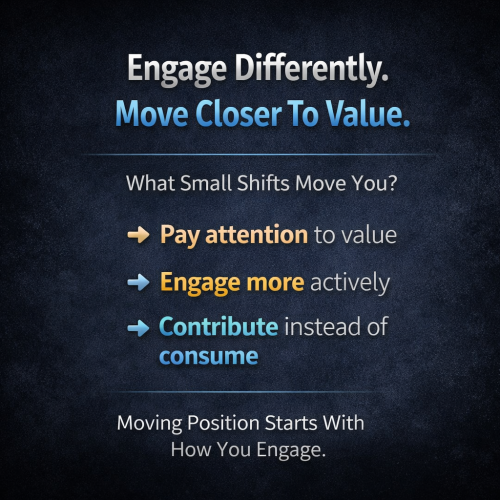
In a contribution-driven system, value is not limited to formal jobs.
Instead:
This creates a much more flexible and inclusive model.
Because people are no longer limited by:
They are able to participate based on what they can contribute—however small or large.
UBI attempts to solve the problem of disappearing jobs by replacing income.
But it does not address the underlying need for participation.
It answers:
“How do we support people without work?”
But it doesn’t answer:
“How do people remain part of value creation?”
And that second question is the more important one.
Because without participation, people become disconnected.
And disconnected systems do not thrive—no matter how well they are funded.
There is a common assumption that if people don’t need to work, they won’t contribute.
But history—and human behaviour—suggest otherwise.
People naturally seek:
Even in environments where survival is guaranteed, people still create, build, and engage.
The issue is not willingness.
It’s opportunity and structure.
If systems are designed to exclude participation, people withdraw.
If systems are designed to invite it, people step forward.
This is where the real opportunity lies.
Not in eliminating work…
But in redesigning systems so that contribution becomes:
This is the foundation of participatory economies.
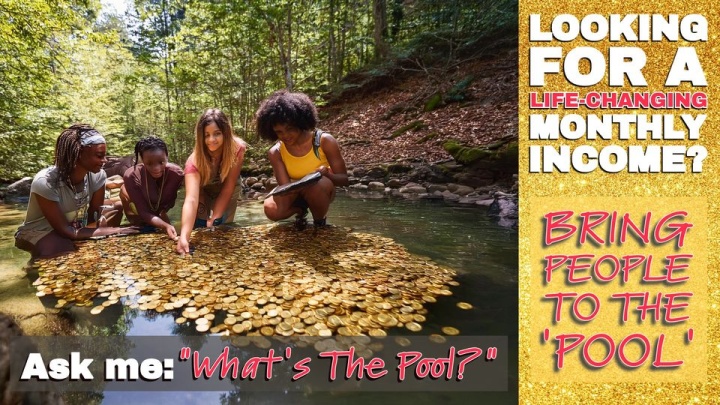
And it’s where models like poolfunding.io begin to show their relevance.
poolfunding.io is built around a simple but powerful idea:
That value can be created through structured participation.
In this system:
This is not tied to employment.
It is tied to participation itself.
Which means people are not excluded if they don’t have a job.
They are included because they choose to contribute.
The idea of a “workless future” is misleading.
What we are actually moving toward is a future where:
The challenge is not the absence of work.
It is the absence of systems that recognise and organise new forms of contribution.
Once those systems exist, the narrative changes.
From:
“There are no jobs”
To:
“There are new ways to participate”
As this shift happens, identity will also evolve.
Instead of defining ourselves by job titles, we may begin to define ourselves by:
This is a more fluid and dynamic identity.
One that is not tied to a single role…
But to ongoing participation.
If we fail to build contribution-driven systems, the consequences could be significant.
We could end up in a world where:
And over time, that leads to:
This is the hidden risk behind purely distribution-based solutions.
But if we get this right…
If we design systems that expand participation rather than replace it…
Then the future could look very different.
A world where:
This is not a step backward.
It is an evolution.
At its core, this is about aligning systems with human nature.
People are not designed to be passive.
We are designed to:
Any system that ignores this will eventually struggle.
Any system that embraces it has the potential to thrive.
The future is not workless.
It is changing.
Jobs may become less central.
Structures may evolve.
But the need for contribution will remain.
The real question is not:
“What happens when there is no work?”
It is:
“What systems will allow people to continue contributing in meaningful ways?”
UBI answers the question of income.
But it does not answer the question of participation.
And participation is where purpose lives.
So as we look ahead, we should not be asking how to replace work…
But how to redefine it.
Because the future will not be built by systems that remove people from the equation…
But by systems that invite them back in—differently.