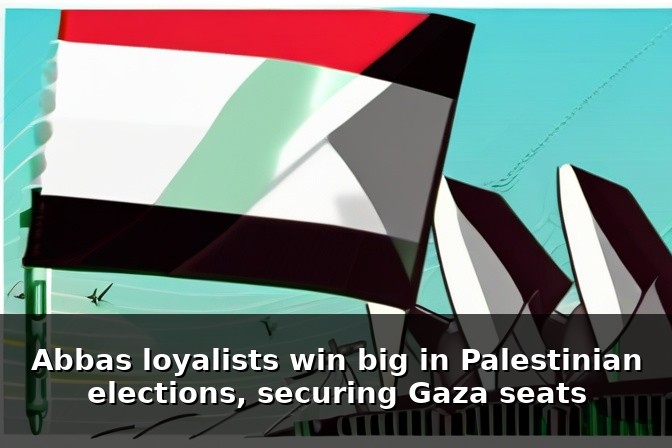
Palestinian Elections: Abbas Loyalists Claim Victory, Even in Gaza
In a development that reshapes the rhythm of Palestinian politics, Fatah-aligned candidates backed by President Mahmoud Abbas surged to victory across the contested elections, extending their reach to seats in Gaza for the first time in years. The outcome signals a consolidation of leadership in the West Bank and a reassertion of authority that some observers say could have wide-ranging effects on governance, reconciliation efforts, and the broader trajectory of the Palestinian national project.
Context: A political landscape defined by division and endurance
Palestinian governance has been split since 2007, with the West Bank governed by Abbas’s Fatah faction and Gaza controlled by Hamas. Attempts at unity have stalled repeatedly, leaving two parallel political systems, separate security forces, and divergent approaches to diplomacy and daily life for Palestinians. The recent vote, therefore, arrives at a moment when many Palestinians are weighing the costs and benefits of continued division versus renewed national cohesion. For Abbas loyalists, the electoral gains are not just a domestic win; they are a strategic signal about who speaks for the Palestinian people in a fragmented regional environment.
The Gaza turnout question: humanitarian realities and political calculus
- Low voter participation in Gaza underscores the severe toll of the ongoing humanitarian crisis—restricted access, insufficient essential services, and repeated rounds of conflict have dampened political engagement.
- When people face displacement, shattered infrastructure, and limited economic opportunities, political choices can feel constrained. In Gaza, turnout patterns may reflect both dissent and fatigue, complicating assessments of mandate and legitimacy.
- Observers caution that turnout gaps in Gaza can complicate cross-entity legitimacy questions, raising concerns about representation while highlighting the urgent need for humanitarian relief and economic relief to create space for meaningful political participation.
Why Abbas loyalists gained ground
- Organizational strength and party machinery: Fatah has long cultivated a robust grassroots network, which can translate into electoral efficiency even in difficult environments.
- Perceived stability and security coordination: Some voters associate Abbas-led leadership with continuity in security arrangements and international diplomacy, prioritizing stability amid chaotic regional dynamics.
- Disenchantment with ongoing stagnation: After years of deadlock and factional bickering, a portion of the electorate may favor a leadership that promises clear continuity and a return to known governance norms.
- External dynamics and donor expectations: International partners often signal preference for recognizable Palestinian governance structures, which can influence local perceptions and mobilization efforts.
Implications for governance, legitimacy, and the peace process
- Legitimacy and accountability: A sweep by Abbas loyalists could strengthen the perception of a singular leadership track, but it may also raise questions about inclusive representation and civil liberties if dissenting voices feel sidelined.
- Governance and reforms: With broader control, there may be movement on administrative reforms, public-sector efficiency, and anticorruption initiatives—though results will depend on political will and internal dynamics.
- Towards a reconciled path: The split between the West Bank and Gaza remains a central obstacle to a unified Palestinian agenda. Electoral outcomes could either spur new reconciliation incentives or entrench existing divides, depending on how leadership engages with Hamas and other factions.
- Impact on diplomacy and aid: International donors and regional partners often condition support on governance standards. Clear, accountable governance could unlock aid and investment, while political rigidity might complicate financing and development programs.
What entrepreneurs and the regional economy should watch
- Policy certainty matters: A stable leadership can create a more predictable framework for local businesses, NGOs, and cross-border trade initiatives essential to a fragile economy.
- Aid flows and reconstruction: Many sectors rely on external funding for infrastructure and job creation. The legitimacy of leadership and its ability to implement reforms will influence donor confidence and project cycles.
- Innovation amid constraints: Startups and digital ventures in Palestine face unique challenges, but clearer governance channels can unlock investment in e-commerce, fintech, and remote-work ecosystems, especially with diaspora engagement.
- Regional dynamics: Shifts in Palestinian governance reverberate through neighboring economies and conflict-management efforts, influencing partner collaborations, procurement, and security considerations.
Looking ahead
The evolving Palestinian political landscape demands careful attention to how leadership translates electoral gains into tangible services, reconciliation, and inclusive participation. For the entrepreneurs and communities fueling a resilient economy, the key will be governance that blends stability with accountability, enabling both humanitarian relief and sustainable growth.