x



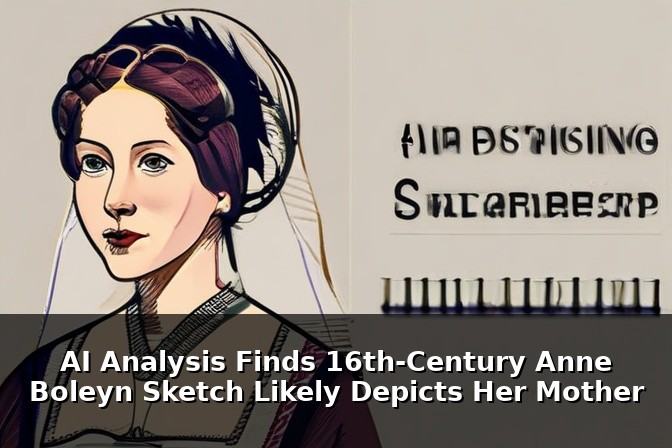
A centuries-old drawing labeled “Anna Bollein Queen” has long sparked curiosity among historians. A fresh AI-assisted analysis suggests a surprising twist: the portrait may more likely depict Anne Boleyn’s mother, Elizabeth Howard, than the future queen herself. This development adds a new layer to how we study Tudor-era images and the stories they tell.
Facial-recognition tools aren’t just for tech desks or security systems—they’re increasingly used to illuminate questions in art history. In this case, researchers fed a dataset of authenticated Tudor portraits into an AI model trained to map facial landmarks, measure proportions, and compare distinctive features such as the shape of the jaw, eye spacing, and the contour of the nose. The model then evaluated how closely the sketch matched known likenesses of Anne Boleyn, her mother, and other contemporaries.
The result isn’t a verdict, but a probabilistic assessment: the features align more closely with Elizabeth Howard than with Anne Boleyn. It’s a reminder that AI can surface patterns humans might overlook, especially when dealing with worn drawings, aging, or stylistic shifts that complicate straightforward identification. Yet the finding also underscores a fundamental caveat: AI isn’t a substitute for archival context or expert judgment. It’s a powerful complement that invites historians to re-evaluate existing attributions with fresh data.
There are several reasons a 500-year-old sketch can drift between subjects in public memory and museum catalogs:
Identifying who sat for a drawing isn’t merely about who looks like whom. It affects how we understand social networks, patronage, and the transmission of Tudor iconography. If the subject is Elizabeth Howard, the piece might reflect her status, alliances, or the education and appearance of women in noble circles rather than the portrayal of a future queen. That, in turn, can inform us about how families curated images to project influence across generations.
AI findings should prompt a broader, multi-disciplinary approach: cross-referencing inscriptions, inventories, letters, fashion codes, and other portraits from the period. When combined with archival research, AI can help pinpoint where a misattribution began and how it perpetuated in catalogs, guides, and gallery labels. It also invites conservators to re-examine the drawing’s materials and techniques to see if stylistic cues align with a specific period or workshop.
For audiences curious about history, this development is a compelling example of how technology can spark dialogue about long-standing narratives. When presenting such findings, it’s essential to communicate clearly that AI is a tool—not the final authority. Emphasize the provisional nature of the conclusion and invite readers to weigh multiple sources and expert opinions.
From a storytelling perspective, the episode offers a narrative arc: a century-spanning artifact, its label challenged by modern methods, and a reimagined glimpse into the societal web that shaped Tudor portraiture. By highlighting the collaboration between historians, conservators, and data scientists, you can craft engaging, thoughtfully balanced content that educates and inspires.
In the end, this AI-assisted interpretation doesn’t erase the mystery of the sketch. It enriches it—encouraging us to ask better questions, seek corroborating evidence, and appreciate how technology can illuminate the complexities of history while respecting the expertise that has preserved it for centuries.