x




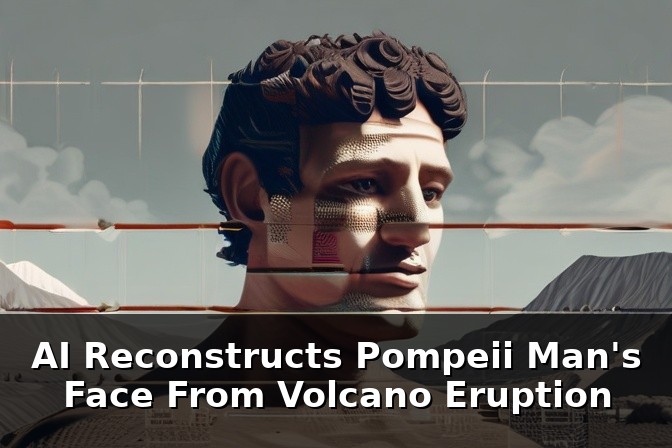
In a landmark fusion of archaeology and artificial intelligence, researchers have for the first time digitally reconstructed the face of a man who perished in the Mount Vesuvius eruption that buried Pompeii in 79 AD. This breakthrough blends centuries-old forensic inquiry with modern computer vision, offering a tangible glimpse into a life from a world long past.
Pompeii isn’t just a ruined city carved into stone; it’s a time capsule. The eruption preserved streets, buildings, and even the bodies of victims in ash, allowing scientists to study Roman life with rare immediacy. Traditional methods, from plaster casts to skeletal analysis, have painted portraits of social status, health, and daily routines. The newest development adds a personalized dimension—an identifiable face that helps connect audiences with history on an emotional level.
Digital facial reconstruction from human remains has a controversial but evolving track record. The latest effort takes that concept into a new frontier by applying artificial intelligence to the data gleaned from ancient remains. The process typically involves integrating 3D scans of skulls or other remains with demographic estimates, tissue-depth data, and contemporary facial morphology patterns learned by machine learning models. The AI synthesizes soft-tissue layers, muscle structure, and skin texture to produce a lifelike visage that aligns with the known anatomy while offering a plausible representation of appearance.
As with any reconstruction from incomplete data, the image represents a best-informed approximation, not a precise portrait. The aim is to humanize the past and spark curiosity, not to claim an exact likeness. Experts emphasize transparency about uncertainty, the assumptions underlying tissue depth, and the ethical duty to avoid overinterpretation or sensationalism. The AI model is trained on modern populations, which means cultural and temporal differences can affect outcomes—an important caveat in presenting the result to the public.
This milestone has two broad dividends. For scholars, it adds a powerful visualization tool that complements skeletal analysis, artifact study, and historical records, enriching hypotheses about health, occupation, and daily life in ancient Pompeii. For the public, it offers a more intuitive doorway into a distant era, turning a silent ruin into a person with a story. Museums, educational platforms, and digital heritage projects can leverage such reconstructions to boost engagement, contextual learning, and culturally aware storytelling.
The reconstructed face from Pompeii marks more than a technological feat; it signals a shift in how we connect with the past. By combining rigorous scientific method with the evocative power of AI-generated imagery, we can foster deeper appreciation for ancient civilizations while preserving integrity and context for future generations.