
x
Black Bar Banner 1
x

NEW: About Me Look — turn on a full-width dark About Me from your profile Configuration (Profile Page Upgrade). The Academy, profile feeds and Media Feed now read like the News Feed. See Subscriptions »

New: AI Blog Autopilot — free for the next 30 days. Switch it on by November 15th »

NEW: Smart Mail is live — free for every member. Send broadcasts, build lists and run autoresponders. Open Smart Mail »

New training: The Campaign Map. Watch it now »

A+ A−
Ads by Markethive - View All
The Blog Feed
The Blog Feed
» Blog Feed
Write a New Blog Post
Search Blog Status
Most Viewed
Most Recent
Most Shared
Alphabetical
Markethive Blog (default)
My Blog Posts
Friends' Blogs
Blog Categories
All
Advertising
Blockchain & Cryptocurrency
Business Development
Diet & Weight Loss
Environmental
Health and Wellness
History and Culture
Home and Garden
Marketing
Mentoring & Training
Money & Finance
Other
Political
Prayer & Religion
Programming & Technical
Real Estate
Search Engine Optimization
Social Media
Spirituality
Sports & Recreation
Transport
Travel & Events
Website Design
Blogging Tools & Assets
My Blog Info
Members Subscribed to You
Blogs You Are Subscribed To
Website Widget
Wordpress Plugin
Subscribe for Greater Services
Subscribe to one of many subscriptions, each one includes the previous ones.. Unlock powerful tools, advance features, to build a powerful reach.

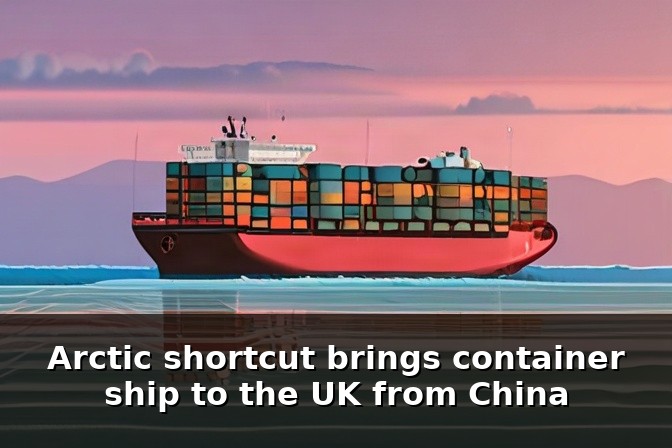
Arctic shortcut brings container ship to the UK from China

Posted by CEO Thomas Prendergast on September 13, 2026 - 6:15pm


Arctic shortcut brings container ship to the UK from China

Arctic Route Takes Center Stage: What a UK Arrival Means for Global Shipping

A container ship recently arrived in the United Kingdom after completing a landmark voyage from China via the Arctic, signaling growing interest in the Arctic sea route as a shorter, potentially safer alternative to the Suez Canal. As climate patterns shift and maritime technology advances, there’s renewed attention on whether the Northern Sea Route and other Arctic passages can become regular conduits for international trade. For entrepreneurs and businesses, this development isn’t just about a new shipping lane—it’s about supply chain resilience, cost considerations, and strategic planning in a changing global marketplace.

Why this voyage matters

  • Shorter transit times: When conditions permit, sailing via Arctic waters can significantly cut the distance between East Asia and Europe, offering meaningful time savings for time-sensitive cargo.
  • Diversification of routes: Expanding the mix of viable passages reduces dependence on a single chokepoint, such as the Suez Canal, and can help markets respond to disruptions elsewhere.
  • Potential emissions impact: Fewer miles can translate into lower fuel burn and emissions per voyage, which matters for companies pursuing sustainability targets—although this depends on route efficiency, weather, and vessel design.

Operational realities and challenges

  • Seasonality and ice risk: Arctic navigation is highly seasonal. Even in warmer months, ice conditions, storms, and limited daylight can complicate operations, requiring careful planning and flexible scheduling.
  • Specialized equipment and crews: Ships cruising Arctic routes often need ice-class designs and crews trained in polar navigation, which can raise capital and operating costs.
  • Support infrastructure: Icebreaker assistance, pilotage, and robust port facilities are crucial. The capacity of northern ports to handle larger volumes and the downstream network to move containers efficiently to UK destinations are key bottlenecks to watch.
  • Insurance and risk: The Arctic environment carries unique risk profiles, including weather variability, potential environmental incidents, and geopolitical considerations, all of which influence insurance premiums and terms.

Economic and strategic implications

For shipping lines, insurers, and port operators, Arctic routes represent a strategic lever rather than a guaranteed shortcut. If more vessels begin to use these passages, there could be ripple effects on freight rates, schedule reliability, and regional logistics ecosystems. However, the route remains sensitive to global conditions, including fuel costs, ironed-out ice navigation procedures, and the pace at which Arctic infrastructure expands. Businesses must weigh the potential time savings against the upfront investments and operational complexities involved.

The UK perspective

Deliveries to UK ports stand to benefit from diversified arrival times and routes, especially for goods that can tolerate slightly longer lead times in exchange for stability in supply chains. UK port authorities and logistics providers will need to adapt to shifting traffic patterns, enhance hinterland connections, and ensure cold-chain capabilities for sensitive cargo. The arrival underscores the importance of regional readiness—having optimized customs, inspection processes, and fast transfer routes to distributors and retailers.

What this means for entrepreneurs and businesses

  • Enhance supply chain resilience: Consider alternate routes in risk assessments to mitigate geopolitical, weather, or congestion-related disruptions.
  • Factor in transit variability: Plan for potential changes in shipping times and build buffers into production schedules and inventory levels.
  • Explore opportunities in regional logistics: As routes diversify, there may be new openings for warehousing, last-mile delivery, and cold-chain services near major ports.
  • Stay agile with suppliers: A broader network of sourcing regions can help negotiate favorable terms and reduce single-point dependency.

Looking ahead

The Arctic route is not a universal replacement for traditional lanes, but it is becoming a more credible option for specific trades and seasonal windows. For businesses, the key takeaway is to incorporate Arctic routing into long-term logistics planning where appropriate, while continuing to monitor environmental, regulatory, and infrastructural developments. As climate trends evolve and technology advances, Arctic passages may increasingly become a strategic complement in the global shipping toolkit—one that requires careful analysis, robust risk management, and proactive collaboration across ports, carriers, and customers.

Thomas Prendergast (clone)
By his direction