x




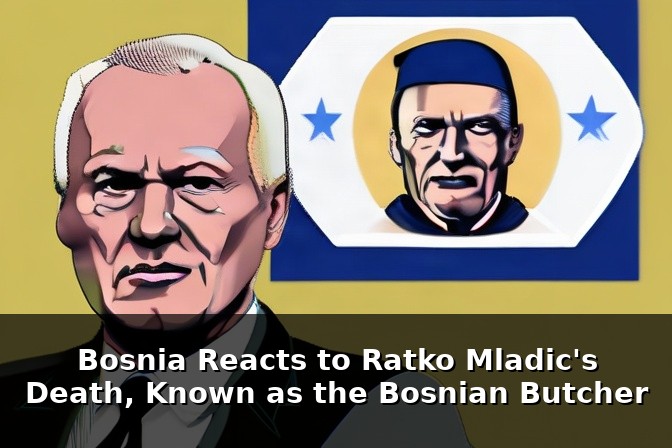
The passing of Ratko Mladić, the former Bosnian Serb military commander linked to some of the war’s darkest atrocities, sparked a wave of reactions across Bosnia and Herzegovina. For many, it closes a grim chapter of the 1990s; for others, it underscores the unfinished work of justice, memory, and reconciliation. In the days after the news, streets and online forums reflected a broad spectrum of emotions—from relief and fatigue to renewed grief and anger.
Mladić was one of the most reviled figures from the Bosnian War, leading Bosnian Serb forces during the conflict from 1992 to 1995. He played a central role in the siege of Sarajevo and, most notably, in the Srebrenica massacre, where thousands of Bosniak men and boys were killed in 1995. He was later convicted by the International Criminal Tribunal for the former Yugoslavia (ICTY) on charges of genocide, crimes against humanity, and war crimes, and he spent the rest of his life in a Dutch prison. His death does not overturn those crimes, but it does mark the end of a judicial odyssey that spanned decades and sparked ongoing debates about accountability, memory, and reconciliation in the region.
One blunt sentiment circulated across social media and local conversations: "Even his own family should not be mourning him." The line captures a bitter truth for many: the suffering caused by a man who commanded a campaign of ethnic cleansing remains a wound that time alone cannot mend.
Mladić’s death brings into focus the continuing debate over how Bosnia remembers its past while building a more inclusive future. Memory remains deeply political: memorials, anniversaries, and school curricula shape how younger generations understand the war. While the ICTY judgment provided a formal denouement in a legal sense, many families still seek truth about missing relatives and detailed explanations of the events that tore communities apart.
Analysts note that real progress depends on more than courtroom outcomes. Reconciliation requires sustained dialogue across communities, transparent investigations into unresolved crimes, and education that acknowledges suffering without inflaming ethnic loyalties. Civil society groups advocate for joint memorial initiatives, cross-cultural projects, and policies that protect minorities while promoting accountability for wartime violence.
For Bosnia, Mladić’s death is not a conclusion so much as a turning point—the end of a notorious chapter and the beginning of a renewed call for truth-telling, healing, and durable peace. The challenge now is to convert collective memory into concrete steps that prevent the recurrence of such violence: inclusive governance, robust protection of human rights, independent media, and a commitment from leaders across communities to put victims’ needs at the center of national reconciliation efforts.
As Bosnians reflect on the life of a figure synonymous with atrocity, the dominant takeaway is clear: justice is not just about punishment, but about ensuring dignity for survivors and lessons for the future. Mladić’s death marks the closing of a legal chapter, while Bosnia’s long work of memory, accountability, and reconciliation continues—step by careful step. This is a country unafraid to confront its past, even as it strives toward a more peaceful and inclusive tomorrow.
Thomas Prendergast (clone)
By his direction