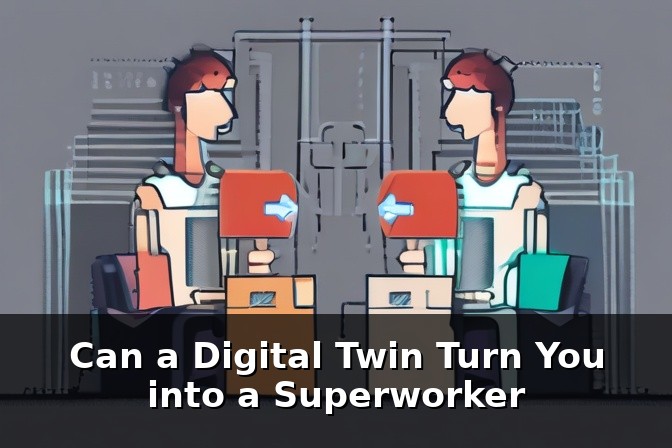
Could a digital twin turn you into a 'superworker'?
Digital twins—the virtual replicas of real-world systems—are expanding from factories and city planning into the daily workflows of knowledge workers. A workforce digital twin is a dynamic representation of how you work: the tasks you tackle, the decisions you make, the tools you rely on, and the patterns that shape outcomes. When used thoughtfully, these digital doubles can coach, optimize, and accelerate performance. But they also raise serious legal and ethical questions that organizations can’t ignore.
What a workforce digital twin does
In practice, a staff digital twin collects data from work apps, communication channels, task logs, and performance metrics to map behavior and results. It can:
- simulate scenarios to support training and onboarding
- identify bottlenecks and suggest process improvements
- provide personalized coaching and feedback
- forecast workload, capacity, and risk exposure
- help teams balance tasks to reduce burnout
For many roles—sales, software development, customer support—the potential gains are real: faster ramp-up, better decision quality, and more consistent execution. The key is making the model accurate, transparent, and aligned with human judgment, not replacing it.
Why this can become a legal minefield
Turning workers into data profiles invites scrutiny from a legal and ethical standpoint. Notable concerns include:
- Privacy and data protection: collecting detailed work data touches sensitive information. Regulations like GDPR and local equivalents demand purpose limitation, data minimization, and strict access controls.
- Consent and transparency: employees should understand what data is collected, how it’s used, and who can access it. Coercive or opaque practices can backfire legally and reputationally.
- Surveillance and bias: automated assessments risk creating a culture of constant monitoring, while biased algorithms can disadvantage certain groups or misinterpret context.
- Accountability and decision-making: who is responsible for actions taken or recommended by the digital twin? If a decision leads to a negative outcome, the line between human oversight and machine guidance must be clear.
- Data ownership and retention: employers, employees, and possibly third-party vendors may all claim rights to data. Clear policies are essential to avoid disputes.
Without careful governance, the digital twin could shift labor rights, wage considerations, or performance evaluations into questionable territory. The impact isn’t just regulatory—it affects trust, morale, and the long-term viability of such programs.
Building a responsible framework
Organizations can mitigate risk by embedding strong governance from the start. Consider these pillars:
- Purpose limitation: collect only what is necessary for work-related goals and refuse data as a proxy for unfair judgments.
- Data minimization and security: implement strict access controls, encryption, and regular security audits to protect sensitive information.
- Transparency and consent: clearly explain data sources, uses, and decision logic; obtain informed consent where appropriate and provide opt-out options where feasible.
- Human-in-the-loop: keep human review at critical decision points, ensuring algorithmic recommendations are checked before actions with real consequences.
- Impact assessments: conduct data protection impact assessments (DPIAs) and ethics reviews to anticipate risks and mitigation strategies.
- Data governance and accountability: assign ownership for data quality, policy adherence, and incident response; publish governance briefs for employees.
- Fairness and applicability: test for bias, validate models across roles and demographics, and adjust continuously to avoid discriminatory outcomes.
Practical ways to deploy ethically and effectively
If you’re considering a pilot, approach it with clear boundaries and milestones:
- Define tangible goals: faster onboarding, reduced error rates, or improved customer outcomes.
- Involve stakeholders: HR, legal, IT, security, and frontline staff should co-create the framework.
- Start opt-in: offer voluntary participation and demonstrate benefits before expanding usage.
- Document data flows: map what data is collected, where it’s stored, who can access it, and how long it’s kept.
- Measure impact: track productivity, engagement, and any unintended consequences; adjust quickly.
- Communicate findings: share outcomes with teams, celebrate improvements, and acknowledge concerns.
Use cases that illustrate potential and caution
In customer support, a digital twin can model the best response paths, helping agents resolve issues faster while ensuring policy alignment. In software development, it can help plan workloads, flag risky code changes, and provide coaching on debugging practices. In field services, route optimization and tool usage can be improved without over-monitoring technicians. The common thread is balancing performance gains with respectful data practices and human judgment.
The bottom line
Digital twins can unlock a new level of productivity and learning, nudging workers toward “superworker” status—if, and only if, organizations pair capability with accountability. The path to success hinges on transparent data practices, robust governance, and continuous human oversight. When designed with people at the center, a workforce digital twin becomes a powerful ally rather than a legal risk.