China’s View of a Shifting U.S. Power Landscape
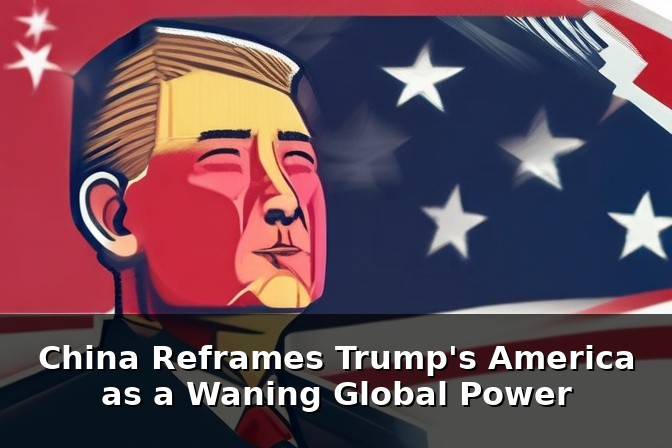
For decades, American influence in China carried a blend of opportunity and tension. The United States stood as a model for innovation, a market for Chinese goods, and a security anchor in regional geopolitics. Yet Trump’s volatile second term reshaped that image, nudging many Chinese observers to view the United States less as an enduring global empire and more as a nation whose power is fluctuating and increasingly self-referential. The result is a recalibration in how China interprets American reach, credibility, and intent on the world stage.
From Admiration to Skepticism: what signaling changed
- Political volatility and polarization at home undermined the perception of American stability and predictability.
- Trade conflicts and tariff wars highlighted frictions in the U.S.–China relationship, eroding confidence in long-term cooperation.
- Escalating export controls, restrictions on technology, and aggressive sanctions signaled a more transactional approach to power, not a guaranteed beacon of open rules-based order.
- Alliances and partnerships appeared more transactional and sometimes burdened by domestic political fault lines, prompting questions about the reliability of U.S. leadership.
- Economic pressures—debt levels, political fatigue, and strategic competition—fed a narrative of decline that Chinese observers could interpret as a strategic opening for maneuvering on the global stage.
The Trump Factor: volatility as a ballast for a new view
Trump’s leadership style amplified a long-standing debate in Chinese circles: is the U.S. an unstoppable force or a capricious actor whose commitments can waver with a phone call or a tweet? The second term intensified the latter interpretation. In conversations across business, academia, and policy circles, U.S. reliability looked less assured, and the idea of building long-term, multi-decade partnerships with Washington faded in favor of hedging bets and diversifying risk. This shift didn’t erase respect for American innovation or military prowess, but it did weaken the aura of moral leadership and the certainty of cross-border collaboration.
Strategic recalibration: how China is adjusting its approach
- Strengthening domestic capacity: a continued push to become more self-reliant in critical technologies, manufacturing, and consumer markets to reduce exposure to abrupt U.S. policy shifts.
- Diversifying international ties: deepening engagement with regional partners in Asia, Europe, and beyond to build a robust, multipolar network that does not hinge on American consent.
- Regional leadership and influence: leveraging initiatives that connect markets, supply chains, and standards-setting to claim a bigger role in shaping global norms.
- Technology and market resilience: investing in R&D, digital infrastructure, and local ecosystems to maintain an edge even as the U.S. tightens its export controls and invests in rival capabilities.
- Policy continuity with pragmatism: balancing a long-term strategic ambition with a pragmatic approach to cooperation where interests align, even if U.S. leadership is in question.
Implications for business and entrepreneurship
- Supply chain diversification becomes a top priority. Firms are increasingly factoring political risk into sourcing, manufacturing, and logistics decisions.
- Cross-border commerce grows in a more nuanced ecosystem. Opportunities flourish in markets that bridge East and West, with digital marketing and localization playing central roles.
- Intellectual property and compliance rise in importance. Businesses must navigate a complex web of standards, regulations, and enforcement regimes across multiple jurisdictions.
- Regional platforms gain traction. As U.S. leverage becomes less predictable, enterprises lean into regional ecosystems— Southeast Asia, the Pacific, and Europe—to sustain growth.
- Entrepreneurs who can tell compelling East–West stories—authentic, culturally aware, and compliant—will find audiences that crave credible connections between markets.
Looking ahead: a multipolar arena with new opportunities
If the United States is perceived as an empire whose influence is no longer uncontested, China’s response is to build resilience, diversify partnerships, and shape a more balanced, multipolar order. For entrepreneurs and marketers, this evolving landscape emphasizes adaptability, regional collaboration, and a keen eye on policy shifts. The decade ahead will reward those who blend innovation with cultural insight, turning geopolitical recalibration into practical business opportunity rather than paralysis.