
x
Black Bar Banner 1
x

NEW: About Me Look — turn on a full-width dark About Me from your profile Configuration (Profile Page Upgrade). The Academy, profile feeds and Media Feed now read like the News Feed. See Subscriptions »

New: AI Blog Autopilot — free for the next 30 days. Switch it on by November 15th »

NEW: Smart Mail is live — free for every member. Send broadcasts, build lists and run autoresponders. Open Smart Mail »

New training: The Campaign Map. Watch it now »

A+ A−
Ads by Markethive - View All
The Blog Feed
The Blog Feed
» Blog Feed
Write a New Blog Post
Search Blog Status
Most Viewed
Most Recent
Most Shared
Alphabetical
Markethive Blog (default)
My Blog Posts
Friends' Blogs
Blog Categories
All
Advertising
Blockchain & Cryptocurrency
Business Development
Diet & Weight Loss
Environmental
Health and Wellness
History and Culture
Home and Garden
Marketing
Mentoring & Training
Money & Finance
Other
Political
Prayer & Religion
Programming & Technical
Real Estate
Search Engine Optimization
Social Media
Spirituality
Sports & Recreation
Transport
Travel & Events
Website Design
Blogging Tools & Assets
My Blog Info
Members Subscribed to You
Blogs You Are Subscribed To
Website Widget
Wordpress Plugin
Subscribe for Greater Services
Subscribe to one of many subscriptions, each one includes the previous ones.. Unlock powerful tools, advance features, to build a powerful reach.

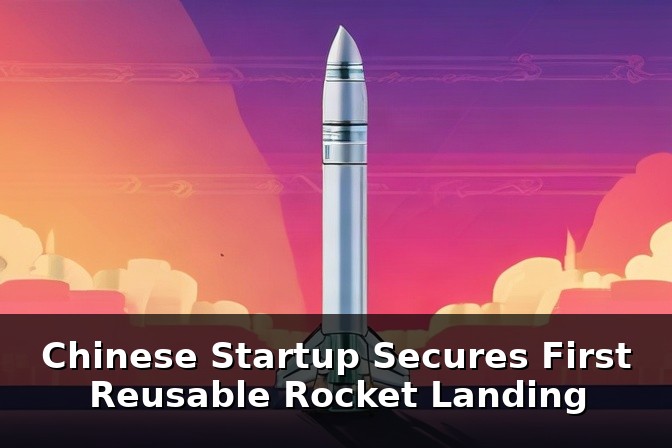
Chinese Startup Secures First Reusable Rocket Landing

Posted by CEO Thomas Prendergast on August 21, 2026 - 12:15am


Chinese Startup Secures First Reusable Rocket Landing

Chinese Start-Up Lands Reusable Rocket for the First Time: What It Could Mean for Spaceflight Costs

The space industry is buzzing with the prospect that a private Chinese company has achieved a milestone in rocket reuse. If verified, LandSpace’s breakthrough would mark a pivotal moment for China’s burgeoning private space sector and could reshape the global cost landscape for launches. Here’s why this development matters, what it signals about technology and scale, and what to watch next.

Why this milestone matters for China and the broader market

Spaceflight cost has long been tied to launch frequency, manufacturing efficiency, and the ability to recover and reuse hardware. SpaceX set the benchmark by demonstrating that a first stage could survive the brutal stresses of ascent, be refurbished, and fly again with rapid turnarounds. A comparable achievement by a Chinese private team signals a deliberate shift in the region’s space ambitions—from single-use legacy designs to a model built around reusability and recurring revenue.

China’s space ecosystem has strong government support, a growing private sector, and a strategic push to reduce launch costs for satellites, constellations, and research missions. If LandSpace has indeed demonstrated reusable capability, it could accelerate domestic competition, spur new partnerships, and push other players to optimize for cadence, reliability, and cost per launch. In turn, that creates more options for customers—universities, startups, and commercial operators—seeking affordable access to space.

The technology tailwinds behind reusability

  • LandSpace has pursued methane-oxygen propulsion, which offers practical advantages for reuse—cleaner combustion, easier engine refurbishment, and potential for higher chamber pressures with repeatable manufacturing.
  • Reusable systems demand robust thermal protection and efficient cooling, enabling quick turnaround without sacrificing safety.
  • Whether via parachutes, powered landing, or a combination strategy, the ability to precisely locate, recover, inspect, and refurbish hardware shortens the time between flights.
  • A successful reuse program hinges on streamlined supply chains, modular components, and data-driven maintenance—areas where private players can outpace larger, slower programs.

Implications for the business model and market demand

Lower launch costs open doors to new customers and mission types. For satellite constellations—Earth observation, communications, or IoT networks—a cadence-based pricing model becomes more viable when the same hardware can fly multiple times. LandSpace’s potential success could inspire more private entrants in China to pursue reuse, nudging the domestic market toward a more mature, cost-competitive ecosystem.

Beyond China, a credible private reuse program adds competitive pressure to the global market. SpaceX remains the benchmark for cost-per-kilogram and flight cadence, but robust competition can push innovation, accelerate standards for safety and interoperability, and diversify the supply chain for access to space.

Key challenges ahead

  • Reusable flight plans must demonstrate consistent reliability across many cycles, with rigorous testing, data sharing, and regulatory alignment.
  • Refurbishment, inspection, and component life assessment need streamlined processes to meet aggressive launch schedules.
  • Ground facilities, tooling, and skilled workforce are essential to sustain rapid reuse at scale.
  • Navigating space-related laws, export rules, and international collaboration norms will shape how quickly reuse programs mature.

Looking ahead: a practical path forward

If LandSpace’s reusable rocket milestone is real, the immediate next steps will center on repeat flights, performance consistency, and international visibility of data. Observers will watch for flight cadence, payload capacity retention after refurbishment, and the scalability of manufacturing. Over the next 12 to 24 months, key proofs will include multiple successful reuse cycles, reliable turnarounds, and documented cost improvements that demonstrate true market viability.

Ultimately, the pursuit of lower-cost spaceflight is a global race. A confirmed reusable milestone by LandSpace would add a powerful new voice to the conversation, emphasizing that innovation, speed, and disciplined execution can converge to broaden humanity’s reach in space—and do so at a scale that challenges established cost leaders.

Thomas Prendergast (clone)
By his direction