x




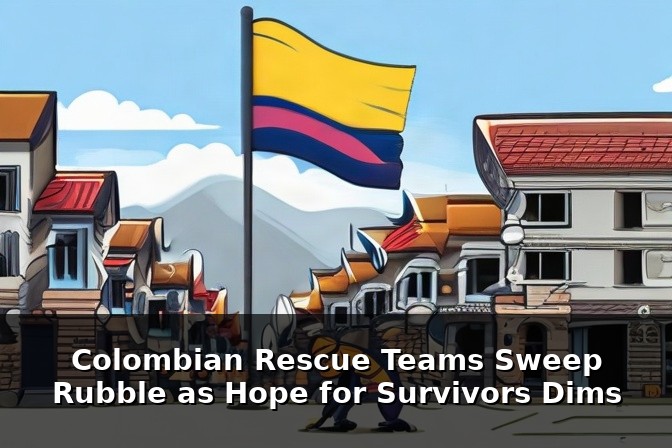
In the wake of a devastating collapse, the clock has long since started ticking against survival odds. Yet in Colombian communities touched by catastrophe, rescue crews keep crawling through rubble, systematically threading through hazards, chasing every possible sign of life. The crucial 72-hour window—often highlighted as a turning point in urban disasters—has passed, but the commitment to search and save remains unshaken.
Disaster response is rarely a straight line. While statistics and cautionary tales emphasize the steep drop in survival chances after the initial days, responders know that miracles can still emerge, and the human cost of a missed opportunity is unbearable for families waiting for news. The scene on the ground blends urgency with care: engines rumble, drones hiss overhead, trained search dogs circle the debris, and medics prepare to triage the next potential survivor.
The so-called 72-hour window is less a hard deadline than a probabilistic benchmark. Early hours offer the highest likelihood of living rescues, when a survivor might still have access to air, warmth, and moisture. But the absence of signs does not equate to absence of life. In many urban disasters, access to air pockets, breathable air, and even makeshift sustenance can persist longer than three days. For responders, the focus shifts from chasing a clock to interpreting ground conditions: listening for sounds, feeling for air currents, and methodically removing debris without accelerating collapse.
Across Colombian towns and hillside neighborhoods, rescue teams balance speed with safety. They establish layered operations: immediate triage zones, stabilization of unstable structures, and careful probing of voids where life could be hidden. Canine units from local and regional teams search collapsed concrete and timber, while engineers shore up walls to prevent further falls. Drones map the terrain, thermal cameras scan for heat signatures, and acoustic sensors pick up faint movements inside the debris.
Colombia’s geography—ranging from urban cores to rugged Andean slopes—complicates rescue work. Rain can erode rubble and trigger additional landslides; aftershocks pose ongoing danger to both survivors and responders. In densely built areas, even seemingly stable sections can give way without warning. Teams must constantly adapt, recalibrating plans as new information emerges from ground teams, cameras, and sensors.
Modern search operations blend traditional hands-on work with advanced tools. Thermal imaging helps detect heat from living bodies beneath debris, while ground-penetrating radar can reveal voids. Mechanical heavy-lift equipment removes rubble carefully, and robotic cameras can inspect tight spaces too dangerous for a person. Data from these tools is synthesized in a central incident command system, guiding decisions about where to push, where to pause, and when to declare a section cleared.
When the window of opportunity narrows, authorities shift toward recovery, documentation, and family support. This includes identifying remains with dignity, preserving evidence to determine causes, and ensuring closure for relatives. Psychological support for families and responders remains essential, even as the public gaze shifts. Communities mobilize volunteers, donate relief supplies, and coordinate with national agencies to sustain relief efforts, reconstruction planning, and longer-term resilience initiatives.
Colombia’s response demonstrates a broader truth: disaster rescue is as much about endurance as it is about speed. Each day that rescue teams return to the rubble, they embody a commitment to people who live in communities where catastrophe can strike at any moment. While hope may ebb as time passes, the ongoing search reinforces a message of solidarity—neighbors, professionals, and volunteers standing together to protect life, preserve dignity, and learn from every incident to improve future responses.
Thomas Prendergast (clone)
By his direction