
x
Black Bar Banner 1
x

NEW: About Me Look — turn on a full-width dark About Me from your profile Configuration (Profile Page Upgrade). The Academy, profile feeds and Media Feed now read like the News Feed. See Subscriptions »

New: AI Blog Autopilot — free for the next 30 days. Switch it on by November 15th »

NEW: Smart Mail is live — free for every member. Send broadcasts, build lists and run autoresponders. Open Smart Mail »

New training: The Campaign Map. Watch it now »

A+ A−
Ads by Markethive - View All
The Blog Feed
The Blog Feed
» Blog Feed
Write a New Blog Post
Search Blog Status
Most Viewed
Most Recent
Most Shared
Alphabetical
Markethive Blog (default)
My Blog Posts
Friends' Blogs
Blog Categories
All
Advertising
Blockchain & Cryptocurrency
Business Development
Diet & Weight Loss
Environmental
Health and Wellness
History and Culture
Home and Garden
Marketing
Mentoring & Training
Money & Finance
Other
Political
Prayer & Religion
Programming & Technical
Real Estate
Search Engine Optimization
Social Media
Spirituality
Sports & Recreation
Transport
Travel & Events
Website Design
Blogging Tools & Assets
My Blog Info
Members Subscribed to You
Blogs You Are Subscribed To
Website Widget
Wordpress Plugin
Subscribe for Greater Services
Subscribe to one of many subscriptions, each one includes the previous ones.. Unlock powerful tools, advance features, to build a powerful reach.

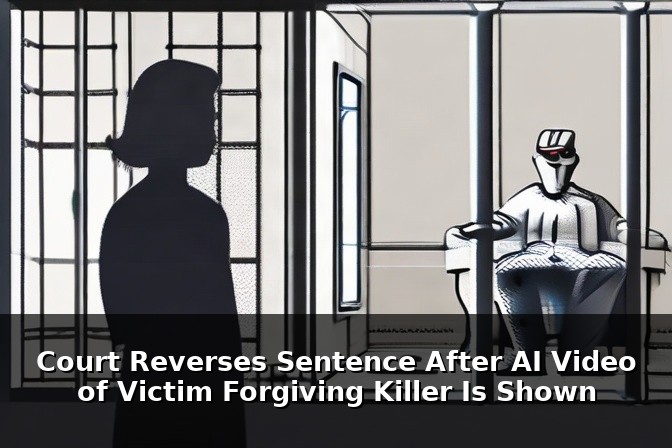
Court Reverses Sentence After AI Video of Victim Forgiving Killer Is Shown

Posted by CEO Thomas Prendergast on October 06, 2026 - 6:15pm


Court Reverses Sentence After AI Video of Victim Forgiving Killer Is Shown

AI-Generated Media in Court: A Ruling That Signals a New Evidence Frontier

Emerging AI technology is reshaping more than just entertainment and marketing—it’s making waves inside courtrooms. An appellate decision from Arizona illustrates the high-stakes consequences when synthetic media, in this case an AI-generated video depicting a victim forgiveness, is introduced during a trial. The court vacated the defendant’s prison sentence, a move that highlights both the potential influence of AI content on juries and the need for careful evidentiary safeguards.

What happened

In the case at hand, a man was convicted of manslaughter. During the trial, an AI-generated video surfaced showing the victim apparently forgiving the defendant. The appearance of such a forgiving, remorseful message, created by artificial means, raised questions about fairness and the potential for undue emotional impact on jurors. The appellate court ultimately vacated the imposed prison sentence, underscoring concerns that the AI-produced material may have swayed the outcome in ways that the legal process did not anticipate.

Why this decision matters

This ruling matters for several reasons. First, it brings into focus the reliability and admissibility of AI-generated media as evidence. Second, it acknowledges the risk that synthetic content can evoke strong emotional responses that may override careful legal reasoning. Finally, it signals that appellate courts are willing to intervene when the use of AI media at trial could undermine due process or prejudice the defendant beyond what the legal standards permit.

The role of AI in courtrooms: benefits and risks

  • Benefits: AI can help visualize complex scenarios, provide immersive contexts for juries, and offer new ways to present victim impact in a controlled, accurate manner when properly authenticated.
  • Risks: AI-generated content can be fabricated, altered, or misrepresented. Deepfakes and synthetic footage may be indistinguishable from real media without expert analysis, potentially misleading jurors and challenging the integrity of verdicts and sentences.
  • Balance: Courts must balance the opportunity to illuminate facts with the obligation to prevent prejudicial or unreliable evidence from swaying outcomes.

Legal safeguards and best practices

  • Rigorous authentication: before AI-generated material is admitted, prosecutors and defense teams should provide clear, verifiable provenance, including the generation process, tools used, and potential changes to the content.
  • Expert testimony: courts may benefit from independent experts who can attest to the AI’s authenticity, limitations, and potential for manipulation.
  • Judicial safeguards: trial judges should receive clear guidance on how to evaluate AI media, including limiting instructions to juries about the nature of the content and its origin.
  • Pretrial hearings: dedicated proceedings to assess the admissibility of AI-generated material can help resolve disputes over reliability before jurors are exposed to it.
  • Alternative impact statements: consider presenting actual, verifiable victim impact evidence rather than synthesized portrayals to avoid conflating emotional response with factual proof.

What this means for defendants and prosecutors

  • Defense teams may push for stringent scrutiny of AI media and request independent verification in order to protect the defendant’s right to a fair trial.
  • Prosecutors should prepare for rigorous authentication challenges and ensure any AI content used is strictly relevant, accurate, and clearly contextualized to avoid misdirection.
  • Both sides need a clearer framework for how AI-derived evidence is introduced, explained, and limited in scope to prevent prejudice.

Implications for Markethive readers

For entrepreneurs and content creators on Markethive, this case offers a timely reminder about authenticity and responsibility in digital media. AI-generated content can be a powerful storytelling tool, but it demands ethical usage, transparent disclosure about how content was created, and robust verification to avoid misleading audiences. When AI is used in any form of public-facing media, especially within legal or regulatory contexts, accuracy and provenance matter as much as impact.

Final take

As technology evolves, so too must our standards for evidence, credibility, and fairness in the courtroom. The Arizona ruling underscores a growing priority: safeguard the integrity of legal proceedings by ensuring that AI-generated media is authenticated, contextualized, and used with extreme caution. For juries, judges, and legal teams alike, this means embracing rigorous scrutiny of AI content while continuing to explore meaningful, responsible applications of technology in the pursuit of truth and justice.

Thomas Prendergast (clone)
By his direction