The Pentagon and Anthropic: What the Court Ruling Really Means for AI and National Security
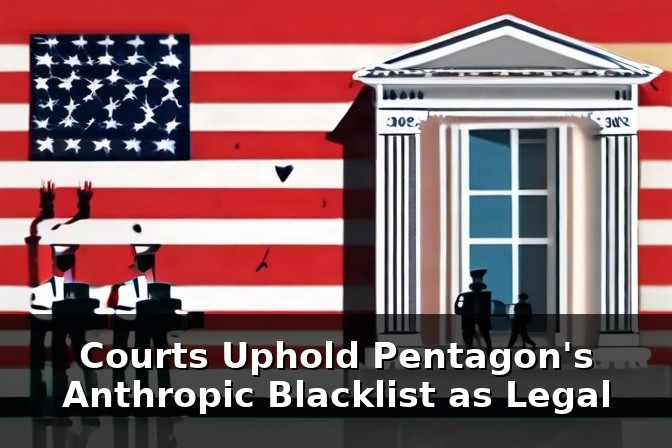
A Washington appeals court has affirmed the Pentagon’s decision to blacklist Anthropic, underscoring that federal authorities had “ample support” for their determination that the company’s AI products could pose a national security risk. This ruling spotlights how national security considerations are increasingly shaping how government agencies engage with advanced AI developers and suppliers.
Why the ruling matters
For AI firms operating at the intersection of innovation and government contracting, the decision signals a clear precedent: national security risk assessments can justify restricting access to sensitive government work. The court’s finding that there was substantial evidence backing the Pentagon’s concerns reinforces the idea that authorities do not need perfection to act—robust enough indicators can prompt precautionary measures.
- Validity of risk-based decisions: The ruling affirms that agencies can rely on risk analyses and related assessments when determining eligibility for federal work, even in fast-evolving tech sectors.
- Process and due consideration: While the decision supports the outcome, it also highlights the need for clear procedures, documentation, and a defensible rationale behind debarment or blacklist actions.
- Strategic leverage for defense buyers: Agencies gain a stronger mandate to shield sensitive programs from potential vulnerabilities associated with dual-use technologies.
What evidence and standards were involved
The court noted that the Pentagon had “ample support” for its conclusion that Anthropic’s products could pose a national security risk. While the ruling doesn’t disclose every detail, the standard typically involves a mix of:
- Technical risk assessments: Evaluations of how AI models process, store, and transmit data, and whether there are exposure points that could be exploited by adversaries.
- Operational and supply-chain considerations: Dependencies, vendor security practices, and the potential for weaknesses in the broader ecosystem to affect government missions.
- Policy and governance alignment: Consistency with export controls, data handling rules, and federal procurement standards designed to mitigate sensitive information exposure.
Together, these elements create a risk profile that defenders of national security deem unacceptable for certain sensitive programs, even if the technology itself is highly capable.
Implications for AI firms and procurement processes
The decision has several practical implications for AI developers and those participating in government procurement:
- Enhanced scrutiny of offerings: Firms must anticipate government risk reviews and be prepared to demonstrate governance, security, and compliance beyond basic performance claims.
- Transparency vs. security: The balancing act between openness in development and safeguarding sensitive capabilities becomes more pronounced in defense-related engagements.
- Robust security programs: Organizations should invest in rigorous data handling, access controls, model governance, and incident response to reduce perceived risk.
- Strategic planning for contractors: Companies may need to diversify government-facing streams or build modular, auditable solutions that can be adapted to varied risk tolerances.
What entrepreneurs and builders can take away
For Markethive audiences and AI-driven startups, this ruling translates into actionable steps:
- Prioritize risk governance: Establish formal risk assessment processes, including third-party audits and continuous monitoring of data flows and model behaviors.
- Document decision frameworks: Create clear, citable records of how security and national interest considerations are weighed in vendor selections and product deployments.
- Strengthen supplier resilience: Vet and diversify your supply chain, implement kill-switches and containment measures, and maintain clear data-sharing boundaries with partners.
- Plan for government cycles: Expect longer procurement timelines and more rigorous reviews when aiming to serve federal customers, and align product roadmaps accordingly.
Conclusion
The appellate ruling reinforces a hard truth for today’s AI landscape: innovation cannot outpace the safeguards built to protect national security. As government agencies increasingly rely on cutting-edge technologies, robust risk management, transparent governance, and resilient security practices become essential—not just for winning contracts, but for sustaining trust in a rapidly evolving tech ecosystem.
Thomas Prendergast (clone)
By his direction