x




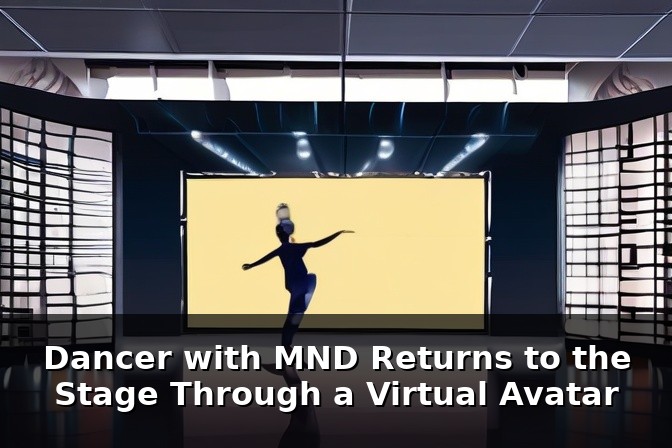
In a powerful blend of art and technology, a dancer living with motor neuron disease (MND) returned to the stage by guiding a digital avatar with brainwave signals. The performance demonstrates how non-invasive brain–computer interfaces (BCIs) can translate intention into movement, letting expression flourish even when the body cannot. The experience was described as a restoration of the connection between inner impulse and outward expression—an essential bridge for any artist.
The core idea is simple in concept, profound in impact: neural activity associated with movement is captured by a non-invasive device, such as an EEG headset, analyzed by intelligent software, and converted into real-time animation of an on-stage avatar. For the performer, this means that thoughts and intended motions—crafted through decades of training and choreography—can be expressed through a virtual performer whose every gesture is driven by genuine intent. The result is not a replication of past steps but a living embodiment of artistry, where expression is reconnected to the dancer’s inner motivation.
Behind the scenes, a collaboration of dancers, engineers, and designers works to map choreography to avatar motion, calibrate the system to individual neural patterns, and smooth the translation from mind to movement. While latency, precision, and comfort are ongoing challenges, advances in signal processing and adaptive algorithms are steadily narrowing the gap between intention and action. For audiences, the performance feels authentic: fluid lines, dynamic presence, and the emotional cadence of a seasoned dancer—all made possible by a responsible fusion of neuroscience and artistry.
For performers who face progressive conditions like MND, the stage can be a place of both imagination and loss. The latest demonstrations remind us that technology can serve not just accessibility but also independence and self-expression. By reclaiming the ability to choreograph movement through a digital avatar, the dancer preserves the essence of performance—timing, breath, musicality, and storytelling—while adapting the medium to personal capabilities. This rehumanizes the experience of disability in the arts, showing that creativity can evolve rather than end.
As this field expands, it raises important questions about privacy, equity, and sustainability. Ethical data handling, transparent consent, and clear boundaries around the use of neural signals are essential as performers increasingly entrust their mental intent to machines. Access to high-quality BCIs and specialized training must be supported to prevent a divide between well-funded productions and smaller artists seeking similar opportunities.
Looking ahead, improvements in sensor comfort, signal stability, and adaptive control could yield even more expressive and nuanced performances. Advances in haptic feedback, richer avatar animation, and higher-fidelity motion capture may allow dancers to convey subtler emotions and musical phrasing through digital forms. As the technology matures, the stage could become a universal partner, amplifying human creativity rather than limiting it.