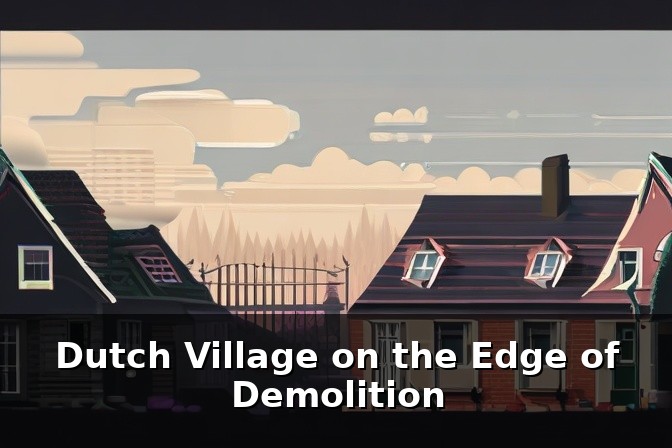
The plan to relocate a Dutch village for a colossal substation
A small Dutch village, Moerdijk, has emerged as a focal point in one of Europe’s most consequential shifts: the modernization of the electrical grid. The proposal envisions demolishing parts of the community to make way for a vast new substation designed to handle critical loads, connect renewable energy sources, and improve cross-border reliability. It’s a stark reminder that the energy transition isn’t just about technology—it’s about people, places, and paid-in-full trade-offs.
Why this project is happening now
The push to upgrade the grid is accelerating as renewable generation expands and demand grows. Large-scale wind and solar projects require robust transmission capacity, and Europe’s energy markets depend on reliable interconnections across borders. A single, high-capacity substation can act as a nerve center—balancing supply and demand, absorbing surplus power from windy or sunny periods, and distributing it where it’s needed most. Critics say the pace is necessary; supporters fear the social and cultural price exacted on rural communities.
What this means for Moerdijk and its residents
- Displacement and compensation: Homes, farms, and local facilities may be acquired or relocated. The discussion often hinges on compensation packages, relocation assistance, and the long-term impact on quality of life.
- Property values and investment climate: Perceptions of risk can affect property values and future investment in the area, influencing everything from small businesses to local services.
- Environmental and cultural considerations: The footprint of a large substation raises questions about noise, electromagnetic fields, land use, and potential effects on nearby ecosystems and cultural landscapes.
- Local economy and identity: A village built around community life and local industries may experience shifts in employment, tourism, and social cohesion during the transition.
Weighing the costs and the benefits
Proponents stress long-term reliability and energy security. The new substation could enable greater grid resilience, smoother integration of renewables, and more stable electricity prices for households and businesses. Opponents emphasize the social cost: whether a community should bear the brunt of infrastructure upgrades, and whether there are less invasive paths to the same goals.
- Costs: Construction, compensation, potential relocation, and ongoing maintenance. The project’s price tag is measured not only in euros but in lived experience for residents.
- Benefits: Improved grid performance, reduced risk of outages, access to cleaner energy, and potential regional economic benefits from upgraded infrastructure.
- Alternatives to consider: Underground cables, distributed-generation approaches, and decoupled substations placed at greater distances from community hubs.
Exploring alternatives and innovations in grid design
A modern grid can be more flexible than previous generations. Some viable options being discussed include:
- Underground transmission lines to minimize visual and land-use impact.
- Distributed energy resources, such as local solar plus batteries, to reduce peak demand on central hubs.
- Modular substations and smart grid controls that decouple the need for one large facility.
- Enhanced demand-side management to smooth consumption without new large-scale footprints.
The process, rights, and voices that matter
Planning a project of this scale typically involves environmental impact assessments, public consultations, and negotiations over compensation and timing. Residents deserve clear information about timelines, safety measures, and avenues to influence decisions. Transparent processes, accessible data, and fair settlement terms are essential to maintaining trust and social license for such transformative infrastructure.
What entrepreneurs and residents can do in the meantime
- Engage early: Attend public sessions, ask for detailed project briefs, and request independent impact assessments.
- Explore opportunities: Infrastructure projects can spur local business, skills development, and partnerships in construction, maintenance, and services.
- Plan for resilience: Invest in community-led resilience, small-scale renewable projects, and energy efficiency to reduce reliance on single-point disruptions.
A broader view: lessons from Moerdijk for the energy transition
Moerdijk’s scenario underscores a central tension of the energy transition: the need to upgrade critical infrastructure while preserving the fabric of local communities. The path forward will likely require a mix of bold engineering and careful, people-centered policymaking. When done with genuine community engagement and transparent compensation, such projects can become catalysts for regional renewal rather than sources of strain.