x



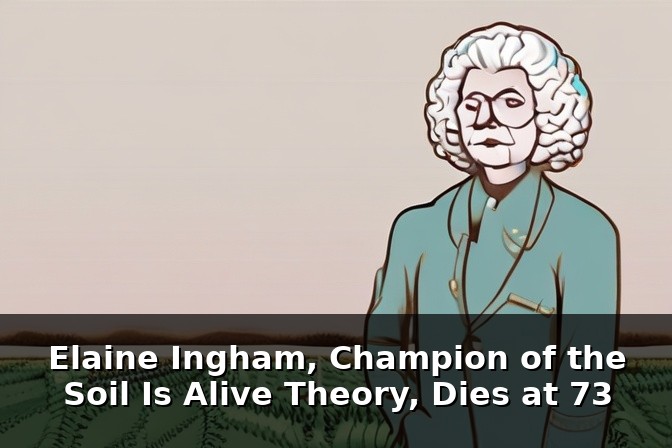
Elaine Ingham, a renowned soil biologist and a driving force behind the organic farming movement, has passed away at the age of 73. Her enduring contribution wasn’t merely a theory; she popularized a paradigm shift: soil is not an inert bed of minerals but a living, breathing ecosystem teeming with life. Her work helped gardeners, farmers, and educators see the soil as a dynamic community that shapes what grows above it—and how resilient farming can be when that life is nurtured.
For decades, conventional agriculture often treated soil as something to be managed with inputs rather than a partner to collaborate with. Ingham reframed that relationship through the soil food web—a conceptual map of the intricate interactions among soil organisms. Roots exude carbohydrates that feed bacteria and fungi, which in turn release nutrients like phosphorus and nitrogen for plant uptake. Predators such as protozoa, nematodes, and microarthropods keep populations in balance, while larger soil life, including earthworms, helps structure the soil so roots can explore and access water more efficiently.
This living network affects everything from nutrient availability to disease suppression. A flourishing soil food web can mineralize nutrients more efficiently, improve soil structure, and bolster a plant’s natural defenses. Ingham’s framing of these relationships offered a practical rationale for practices that many organic and regenerative farmers already valued—practices that feed the life in soil rather than burning it with chemical inputs.
The implications of the soil food web extend far beyond theory. They translate into tangible, day-to-day management choices that gardeners and farmers can implement. Here are some core tenets that emerged from Ingham’s work and the broader soil-health movement:
Ingham’s approach also influenced education and practical training. Her work fostered a cadre of practitioners who teach soil biology, develop soil-health protocols, and advocate for policies that recognize soil life as an essential agricultural asset. The resulting ecosystem of farms, labs, and classrooms continues to evolve, translating scientific insights into accessible actions for producers, landscapers, and homeowners alike.
The legacy of Elaine Ingham is visible wherever farms and gardens embrace living soil. Her emphasis on the soil food web has helped catalyze a broader shift toward regenerative agriculture, climate-smart farming, and resilient landscapes. By reframing soil health as a biological foundation rather than a mere nutrient reservoir, she empowered countless practitioners to pursue farming that works with nature—cultivating productivity while safeguarding ecological balance.
As the soil-health movement matures, her influence endures in the everyday practices of growers who view every seed under their care as part of a larger, living system. For anyone planting, growing, or stewarding land, the message remains clear: nurture the web beneath and watch the crops thrive above.