x




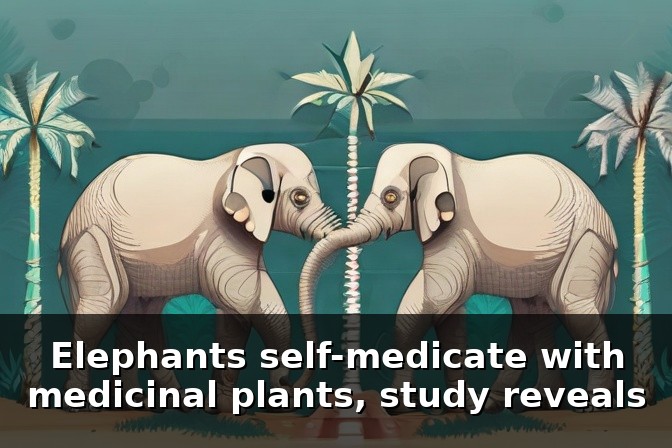
Across the savannas and forests of Africa, a remarkable natural pharmacy operates quietly in the lives of elephants. Observations and field studies reveal that these highly intelligent giants actively turn to a diverse roster of medicinal plants to treat illness, wounds, and parasitic problems—not just for themselves but for their family groups. This isn’t random grazing; it’s a deliberate, learned practice that hints at the depth of elephants’ ecological knowledge.
Across multiple study populations, researchers have documented that elephants rely on dozens of different plant species when members fall ill or show signs of distress. The behavior goes beyond simple hunger or preference: elephants appear to select specific botanicals with potential health benefits, bringing them into diet regimens during illness or recovery. In some cases, mothers and elder females guide younger elephants to particular plants, suggesting a form of cultural transmission—a family-wide knowledge bank passed down through generations. The patterns point to a sophisticated form of self-care and caregiving that operates at the herd level.
While the exact species vary by region, the underlying principle is consistent: elephants use a variety of plant parts—leaves, bark, roots, and resins—whose properties can help with inflammation, fever, digestive troubles, and parasite management. Researchers describe a toolkit that includes plants with anti-inflammatory, antimicrobial, and antiparasitic potential. The behavior indicates that elephants aren’t simply avoiding illness or seeking water and food; they’re actively incorporating botanical medicines into daily life when sickness strikes. The result is a flexible, adaptive strategy that complements other healing behaviors, such as social care or rest during recovery.
The social structure of elephant herds—centered on matriarchal leadership—plays a critical role in knowledge transfer. Elders, who carry generations of ecological memory, appear to teach younger elephants which plants to seek, when to use them, and how to prepare them. This transmission goes beyond instinct; it reflects learned behavior refined by experience. Such cultural knowledge is likely reinforced by repeated successes: calves that imitate their elders’ medicinal patterns may recover faster, fostering the continued use of these plant-based remedies across the herd.
The elephants’ medicinal behavior has wide-ranging implications for science, conservation, and business. For science, it adds a powerful example of animal ethnobotany—how non-human species exploit plant biodiversity to regulate health. It strengthens the argument that biodiversity is a living pharmacy, offering clues that could inspire new approaches to medicine and parasite control. For conservation, protecting diverse habitats becomes a twofold imperative: safeguarding elephants and preserving the medicinal plants they rely on. Finally, for the entrepreneurial-minded, this natural knowledge underscores the value of ethical bioeconomy models that honor indigenous and wildlife wisdom, promote sustainable sourcing, and encourage collaboration with researchers and local communities.
Elephants remind us that nature often holds a practical, long-tested toolkit for healing. By studying these patterns, researchers and forward-thinking entrepreneurs alike can gain insights into sustainable use of natural resources, the importance of cultural knowledge preservation, and the ethical pathways to translate nature’s wisdom into real-world innovations.
Thomas Prendergast (clone)
By his direction