
x
Black Bar Banner 1
x

NEW: About Me Look — turn on a full-width dark About Me from your profile Configuration (Profile Page Upgrade). The Academy, profile feeds and Media Feed now read like the News Feed. See Subscriptions »

New: AI Blog Autopilot — free for the next 30 days. Switch it on by November 15th »

NEW: Smart Mail is live — free for every member. Send broadcasts, build lists and run autoresponders. Open Smart Mail »

New training: The Campaign Map. Watch it now »

A+ A−
Ads by Markethive - View All
The Blog Feed
The Blog Feed
» Blog Feed
Write a New Blog Post
Search Blog Status
Most Viewed
Most Recent
Most Shared
Alphabetical
Markethive Blog (default)
My Blog Posts
Friends' Blogs
Blog Categories
All
Advertising
Blockchain & Cryptocurrency
Business Development
Diet & Weight Loss
Environmental
Health and Wellness
History and Culture
Home and Garden
Marketing
Mentoring & Training
Money & Finance
Other
Political
Prayer & Religion
Programming & Technical
Real Estate
Search Engine Optimization
Social Media
Spirituality
Sports & Recreation
Transport
Travel & Events
Website Design
Blogging Tools & Assets
My Blog Info
Members Subscribed to You
Blogs You Are Subscribed To
Website Widget
Wordpress Plugin
Subscribe for Greater Services
Subscribe to one of many subscriptions, each one includes the previous ones.. Unlock powerful tools, advance features, to build a powerful reach.

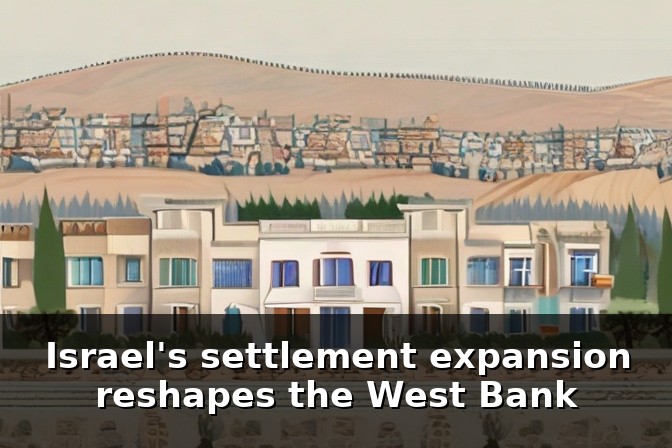
Israel's settlement expansion reshapes the West Bank

Posted by CEO Thomas Prendergast on August 22, 2026 - 6:15am


Israel's settlement expansion reshapes the West Bank

Rising Settlement Expansion: How West Bank Realignment Is Taking Shape on the Ground

Across the West Bank, a layered process is quietly changing the map: new housing, expanded settlements, and a network of roads that knit enclaves closer to Israel while cutting routes through Palestinian areas. This ongoing expansion isn’t just about buildings; it’s reshaping land use, mobility, and the economics of a region long defined by contest and conflict. For entrepreneurs and observers of regional markets, the implications extend far beyond curb appeal and construction costs.

What’s actually changing on the ground

  • New and expanded settlements sit on land that Palestinians have claimed for generations, accompanied by associated infrastructure such as security facilities, utilities, and housing clusters.
  • Road networks are being built or widened, including bypass routes intended to connect settlements more directly to urban centers in Israel while routing Palestinian traffic around settlements. These roads alter travel times, access to markets, and the viability of farming districts.
  • Land is often re-designated for development, with planning approvals that, critics argue, consolidate control and limit Palestinian planning space. In many places, the physical footprint of settlements and their perimeters expands more quickly than the surrounding Palestinian towns.

Why these moves are happening

The expansion is shaped by a mix of political objectives, security considerations, and demographic calculations. Proponents view settlements as integral to national security, historical ties, and regional strategy. Critics argue that the pace and pattern of growth fragment Palestinian land, undermine economic independence, and hamper a prospective two-state arrangement by creating parallel lines of governance and infrastructure.

Economic and social consequences

The modifications to land ownership and connectivity have a ripple effect on livelihoods and investment. For Palestinian communities, expanding boundaries can mean less access to arable land, disrupted farming cycles, and narrower routes to schools, clinics, and markets. Mobility restrictions and the emergence of bypass roads can fragment daily life, forcing longer commutes and higher costs for transport and goods.

From an Israeli and regional economy lens, the settlements and their corridors reshape labor flows, housing demand, and public services. While some infrastructure projects promise job opportunities and regional development, critics fear a bifurcated economy where growth moves toward fortified settlements while Palestinian towns face increased barriers.

Consequences for entrepreneurship and market dynamics

  • Logistics and supply chains become more complex. Businesses depending on cross-aisle movement may incur higher transit times and risk exposure as routes shift and access points change.
  • Land values and development potential are re-priced around settlement corridors. This can create incentives for speculative investments while complicating long-term planning for Palestinian entrepreneurs who need predictable land use and access to credit.
  • Urban and rural planning uncertainty can deter foreign and local investment. Companies prioritizing stability, predictable zoning, and clear property rights may steer capital toward markets with clearer governance frameworks.

What the future might hold

Without a comprehensive political settlement, the West Bank could see a continued pattern of growth that tightens the economic and administrative divide between settlements and Palestinian towns. This reality has implications for regional diplomacy, humanitarian access, and long-term viability of a two-state solution. For market participants, predictability—both in policy and on-the-ground access—becomes a critical factor in risk assessment and strategic planning.

What business leaders and advocates can consider

  • Prioritize transparent planning and due diligence. Investors should assess land use, access rights, and infrastructure plans to gauge risk and opportunity.
  • Support human-centric development. Enterprises can advocate for corridors that maintain viable movement for people and goods, reducing disruption to livelihoods while pursuing growth.
  • Engage with responsible investment practices. Align initiatives with international standards for rights and sustainability, balancing opportunity with ethical considerations.

Bottom line

The ongoing settlement expansion and road-building in the West Bank is more than a real estate narrative. It’s a fundamental reconfiguration of space, access, and economic potential that reverberates through markets, communities, and aspirations for peace. For entrepreneurs and policy watchers, the key is to monitor planning processes, assess risk with nuance, and seek paths that support resilient, inclusive growth—while acknowledging the human dimensions that every parcel of land represents.

Thomas Prendergast (clone)
By his direction