x




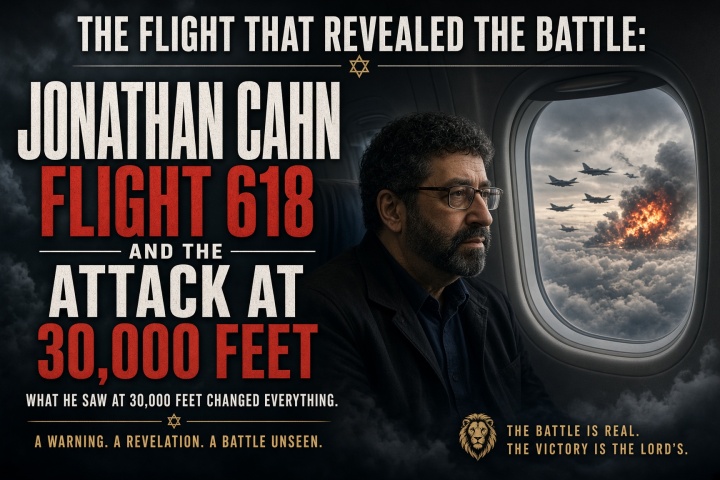
The Flight That Revealed the Battle: Jonathan Cahn, Flight 618, and the Attack at 30,000 Feet
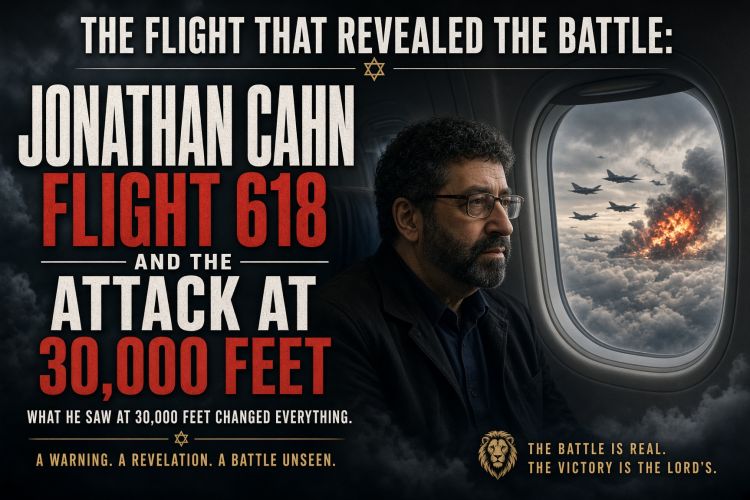
The headlines were everywhere. An American Airlines flight diverted. A passenger restrained with zip ties and wrapped in duct tape. Racial slurs. Chaos in first class. Emergency landing in Baltimore.
What the media did not tell you is who was sitting next to that man—and why the explosion happened.
On September 3, 2026, American Airlines Flight 618 left Dallas-Fort Worth for Newark. Two hours in, the cabin changed. The passenger later identified as Arthur Lundeen, 67, of Tucson, Arizona, turned on the man beside him. That man was Jonathan Cahn.
Cahn has now told the full story himself. The unidentified passenger in the viral videos was him. What looked like a random outburst of rage, according to Cahn, was something far more specific: a spiritual confrontation triggered by the Gospel and by a book that had just been released.
Cahn says the conversation started normally. The two men talked about life, faith, and Cahn’s new book, The Altar of Pergamon. Cahn shared his own journey from atheism, spoke about salvation, and discussed biblical prophecy and Israel. The tone was civil at first.
Then Cahn mentioned the book’s subject—the ancient Altar of Pergamon, described in Revelation as connected to “Satan’s throne,” and its later appearances in history tied to some of the darkest chapters of the modern world. The man sitting next to him changed.
The insults began quietly, then grew. Curses against God, against Jesus, against Cahn. Physical aggression followed: a chokehold, an attempt to smash Cahn’s laptop (which contained the book’s material), threats, and a struggle that forced other passengers and crew to intervene. The flight was diverted. Lundeen was restrained, removed by authorities, and later charged.
Cahn’s account does not deny the man’s actions. It reframes their origin. He points to Ephesians 6:12: the struggle is not ultimately against flesh and blood, but against principalities and powers. He calls the incident an example of what he terms the “preemptor” strategy—the enemy’s attempt to strike at a purpose at its beginning, the same pattern he sees in Scripture when Moses and Jesus were targeted as infants.
Cahn also notes a pattern around his own book releases: unusual opposition, delays, and personal attacks that have accompanied earlier titles. This one, he says, happened at 30,000 feet.
The viral photos of a man taped to a first-class seat are easy to treat as spectacle. Cahn’s testimony is not. It is a claim that some public events have a spiritual layer the news cycle will never report.
Whether you accept that interpretation or not, the sequence is documented: a conversation about faith and a newly published book, a sudden violent turn, an emergency diversion, and a bestselling author now saying the real story was never just about one passenger’s rage.
For people who build, create, and speak publicly—entrepreneurs, writers, marketers, anyone who puts a message into the world—the episode is a reminder that ideas have consequences. Some messages attract ordinary disagreement. Others, according to Cahn, attract something that does not stay in the realm of debate.
The Altar of Pergamon is Cahn’s latest work. He presents it as a thriller that traces an ancient object through history—from biblical Pergamon to later regimes and into the present—and argues it is tied to a larger pattern of spiritual opposition. He has used similar narrative-and-prophecy form in earlier bestsellers. This flight, he says, became an unplanned illustration of the book’s theme.
You can watch Cahn tell the story in his own words here:
Markethive exists so that people who have something to say can publish it, broadcast it, and own the channel rather than renting space on platforms that can change the rules overnight. Cahn’s account is one more example of a larger pattern many of us already recognize: when you speak about things that cut against the grain—faith, truth, sovereignty, the nature of the age we are in—you should expect resistance. Sometimes it is social. Sometimes it is institutional. Sometimes, if Cahn is right, it is something older than both.
The plane landed. Cahn walked off unharmed. The book is out. The story is now public.
The question the video leaves you with is not whether a 67-year-old man lost control on a flight. That much is already on video. The question is whether you believe the collision was only human—or whether something else was trying to shut the conversation down before it could go any further.
Watch the testimony. Then decide what you think was really happening at 30,000 feet.
Thomas Prendergast
CEO and Founder
Markethive, Inc.