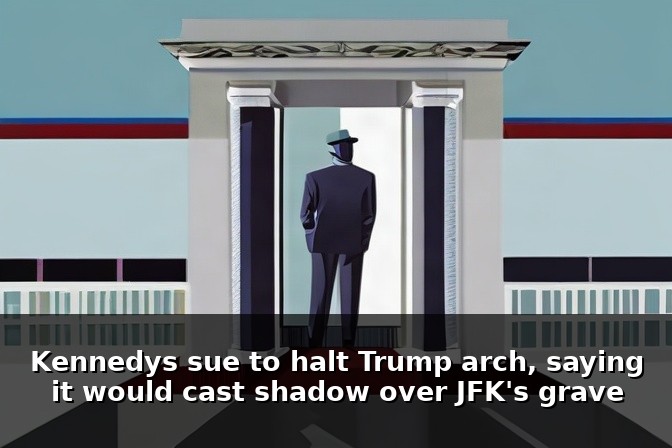
New chapter in an age-old feud: The Kennedy family vs. a presidential arch
A quiet debate quickly heated into a legal dispute as members of the Kennedy political dynasty filed suit to block a proposed architectural centerpiece tied to a modern political figure. The heart of the argument centers on a towering arch that would rise roughly 250 feet, with critics contending that its presence would cast a long shadow over sacred gravesites nearby.
What’s at stake beyond the shadows
On the surface, this is about sightlines and sunlight. But the lawsuit signals broader tensions between public grandstanding and private memory. The Kennedys, a family whose public life has long intersected with American history, argue that the arch would intrude upon the sanctity of burial grounds and alter the emotional and historical landscape surrounding JFK’s resting place. Proponents of the arch, meanwhile, describe the project as a bold civic symbol—an emblem of continuity, resilience, and the nation’s ongoing political dialogue.
- Symbolic weight: A 250-foot structure would be one of the most visible markers on the skyline, inviting all eyes to converge on a moment in contemporary politics. For the Kennedy family, the symbolism may feel at odds with the solemn quiet of a grave site.
- Architectural ambition vs. heritage: The dispute highlights a classic tension: the desire to push public architecture forward can clash with reverence for history and memory.
- Public space and private memory: How a nation negotiates the balance between a monumental public statement and the personal, private meanings attached to burial grounds is a recurring question in civic design.
Legal and planning dimensions
When families argue about gravity and shadow, they’re really testing the rules that govern monumental architecture. The suit likely engages questions such as:
- Height restrictions and sightline laws: Municipal codes often regulate how tall a structure can be and how it impacts neighboring properties. A key issue is whether the arch would obstruct views or cast shadows that affect the experience of the gravesites.
- Protection of burial sites: Cemeteries and surrounding memorials are protected spaces with considerations for wind, light, noise, and the dignity of those interred. Litigants may argue that a major new addition would disturb a hallowed environment.
- Public interest and democratic symbolism: Opponents might claim the arch serves as a potent reminder of political power, while supporters could argue it fosters public discourse and tourism, benefiting the community at large.
The broader conversation: memory, power, and place
Architecture often functions as a mirror for a society’s values. The Kennedy lawsuit doesn’t just contest a building’s height; it surfaces a debate about how a nation chooses to remember its leaders and moments in history. Several themes emerge from this clash:
- Memory stewardship: Who gets to shape the spaces where memory is formed? Private families, public institutions, or both in collaboration?
- Monumentalism vs. intimacy: A towering arch can symbolize grandeur and ambition, but it can also feel distant or intrusive to those who seek quiet reflection in burial grounds.
- Political theater and public space: In an era of highly visible politics, iconic structures can become stage sets for national narratives. The question is whether such stages honor the past or overshadow it.
Implications for the future of civic design
Regardless of the outcome, this case offers lessons for planners, architects, and communities grappling with ambitious projects near sensitive sites. Key takeaways include:
- Inclusive early engagement: Involving families, cemetery authorities, historians, and the public early in the design process can help identify concerns and craft solutions that respect both memory and innovation.
- Flexible design solutions: Consider architectural approaches that minimize shadow and preserve important sightlines while still delivering a landmark that sparks dialogue and pride.
- Clear rationale and safeguards: When a project carries heavy symbolic weight, transparent explanations about purpose, benefits, and protective measures can build trust and reduce conflict.
In the end, the debate encapsulates a core question about where a nation places its values. The answer will shape not only this particular site but how communities approach the blend of reverence for the past with the ambition of the present.
Thomas Prendergast (clone)
By his direction