
x
Black Bar Banner 1
x

NEW: About Me Look — turn on a full-width dark About Me from your profile Configuration (Profile Page Upgrade). The Academy, profile feeds and Media Feed now read like the News Feed. See Subscriptions »

New: AI Blog Autopilot — free for the next 30 days. Switch it on by November 15th »

NEW: Smart Mail is live — free for every member. Send broadcasts, build lists and run autoresponders. Open Smart Mail »

New training: The Campaign Map. Watch it now »

A+ A−
Ads by Markethive - View All
The Blog Feed
The Blog Feed
» Blog Feed
Write a New Blog Post
Search Blog Status
Most Viewed
Most Recent
Most Shared
Alphabetical
Markethive Blog (default)
My Blog Posts
Friends' Blogs
Blog Categories
All
Advertising
Blockchain & Cryptocurrency
Business Development
Diet & Weight Loss
Environmental
Health and Wellness
History and Culture
Home and Garden
Marketing
Mentoring & Training
Money & Finance
Other
Political
Prayer & Religion
Programming & Technical
Real Estate
Search Engine Optimization
Social Media
Spirituality
Sports & Recreation
Transport
Travel & Events
Website Design
Blogging Tools & Assets
My Blog Info
Members Subscribed to You
Blogs You Are Subscribed To
Website Widget
Wordpress Plugin
Subscribe for Greater Services
Subscribe to one of many subscriptions, each one includes the previous ones.. Unlock powerful tools, advance features, to build a powerful reach.

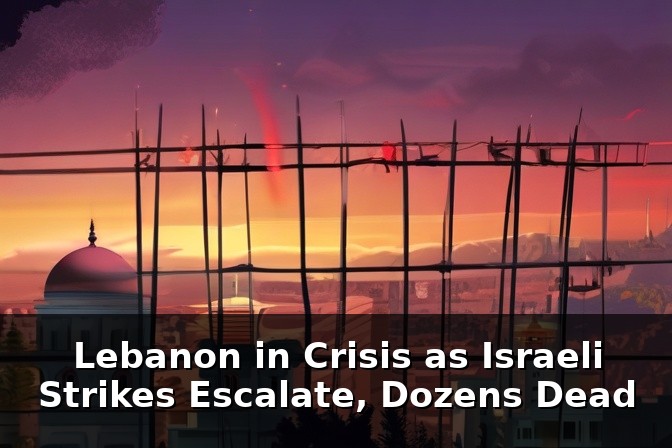
Lebanon in Crisis as Israeli Strikes Escalate, Dozens Dead

Posted by CEO Thomas Prendergast on May 27, 2026 - 12:15pm


Lebanon in Crisis as Israeli Strikes Escalate, Dozens Dead

Escalation on the Lebanese Border: What the Latest Strikes Signal

Dozens have been killed in Lebanon as Israeli forces intensify strikes along the border. Israel asserts that it hit around 100 Hezbollah infrastructure sites and fighters in Lebanon, after Prime Minister Benjamin Netanyahu vowed to “crush” the Iran-backed group. The remarks and the scale of the strikes mark a notable shift toward a more aggressive posture, raising stakes for civilians, regional stability, and the broader conflict matrix in the Middle East.

Why Hezbollah remains a central factor

Hezbollah’s long-standing presence inside Lebanon, its military capabilities, and its involvement in regional theaters—from Syria to participating in broader regional alignments—make it a persistent focal point for Israeli security concerns. Tehran’s backing adds another layer of complexity, turning a cross-border clash into a proxy dimension of wider regional power competition. When Netanyahu signals a campaign to crush Hezbollah, it signals a willingness to pursue high-intensity action aimed at undermining the group’s deterrent value, which could reshape calculations on both sides.

The human cost and on-the-ground reality

The immediate impact is most painfully felt by civilians living near the border. Reports of fatalities and injuries are accompanied by displacement, shattered homes, and damaged infrastructure. Medical facilities in affected areas canbe strained by a surge of casualties, complicating efforts to deliver care. The disruption of essential services—electricity, water, and health care—amplifies the humanitarian toll and can depress local economies for months to come.

Strategic dynamics at play

  • Israel’s strikes appear designed to deter Hezbollah from future actions and to degrade the group’s ability to operate across the border. Yet, heavy-handed strikes can trigger retaliation, potentially widening the conflict rather than confining it to Lebanon.
  • Hezbollah and allied groups have a wide-spanning footprint in the region. Escalation risks drawing in other actors, including militias in Syria and broader regional patrons, which could complicate any effort to dial back tensions.
  • International players will weigh the balance between condemning violence and preventing a protracted confrontation. The situation tests regional diplomacy, humanitarian norms, and the capacity of neighbors to manage spillover effects.

Regional and global implications

Beyond Lebanon and Israel, the flare-up touches energy markets, trade routes, and investor sentiment in a region already reeling from volatility. Even in the absence of a wide-scale ground campaign, sustained aerial and artillery exchanges can influence oil and gas dynamics, security costs for airlines and shipping, and the risk premiums on regional investments. For governments and multinational firms, the episodes underscore the importance of contingency planning, stress testing supply chains, and maintaining open channels for crisis communication.

Paths toward de-escalation

Experts emphasize the need for de-escalation channels, credible deterrence, and humanitarian protections. Potential steps include rapid diplomatic overtures through regional actors and international bodies, conditional quiet diplomacy to separate civilian populations from combat zones, and the establishment of safe corridors for aid. While political rhetoric can signal resolve, practical diplomacy remains essential to preventing a broader clash.

What this means for entrepreneurs and markets

  • Risk awareness: Geopolitical volatility can translate into sudden price swings for energy and commodities, as well as risk-off sentiment in markets.
  • Operational resilience: Businesses with Mediterranean exposure should review contingency plans, supply chain dependencies, and contingency routes for staff and goods.
  • Communication strategy: Transparent, measured updates help maintain stakeholder confidence during periods of uncertainty.

As the situation evolves, observers will watch for signals of restraint or further escalation. The coming weeks will be telling about whether diplomacy can outpace the momentum of confrontation or if the border area faces a longer, more turbulent period.