
x
Black Bar Banner 1
x

NEW: About Me Look — turn on a full-width dark About Me from your profile Configuration (Profile Page Upgrade). The Academy, profile feeds and Media Feed now read like the News Feed. See Subscriptions »

New: AI Blog Autopilot — free for the next 30 days. Switch it on by November 15th »

NEW: Smart Mail is live — free for every member. Send broadcasts, build lists and run autoresponders. Open Smart Mail »

New training: The Campaign Map. Watch it now »

A+ A−
Ads by Markethive - View All
The Blog Feed
The Blog Feed
» Blog Feed
Write a New Blog Post
Search Blog Status
Most Viewed
Most Recent
Most Shared
Alphabetical
Markethive Blog (default)
My Blog Posts
Friends' Blogs
Blog Categories
All
Advertising
Blockchain & Cryptocurrency
Business Development
Diet & Weight Loss
Environmental
Health and Wellness
History and Culture
Home and Garden
Marketing
Mentoring & Training
Money & Finance
Other
Political
Prayer & Religion
Programming & Technical
Real Estate
Search Engine Optimization
Social Media
Spirituality
Sports & Recreation
Transport
Travel & Events
Website Design
Blogging Tools & Assets
My Blog Info
Members Subscribed to You
Blogs You Are Subscribed To
Website Widget
Wordpress Plugin
Subscribe for Greater Services
Subscribe to one of many subscriptions, each one includes the previous ones.. Unlock powerful tools, advance features, to build a powerful reach.

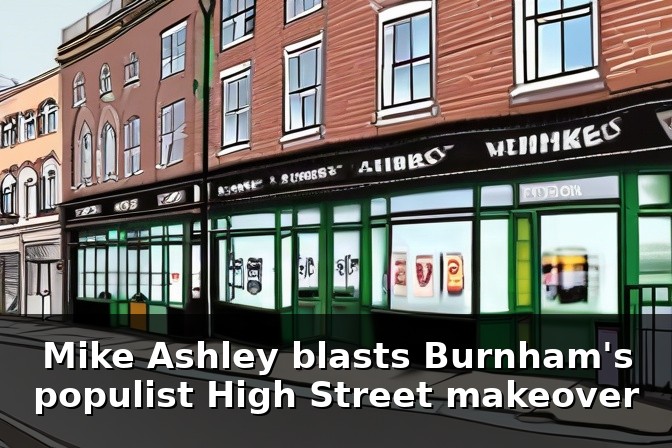
Mike Ashley blasts Burnham's populist High Street makeover

Posted by CEO Thomas Prendergast on August 29, 2026 - 6:15pm


Mike Ashley blasts Burnham's populist High Street makeover

A BoldExchange: Sports Direct Founder Targets Burnham’s High Street Plans

In a move that rattled retail circles, Mike Ashley, the entrepreneur behind Sports Direct, sent a pointed letter criticizing the Prime Minister and Andy Burnham for pursuing what he calls a “populist” approach to High Street policy. The missive accuses the government of “jumping on ‘everyday fixes’ or bandwagons” with its latest cost of living and retail initiatives, arguing that short-term theatrics don’t solve deeper, structural challenges facing bricks-and-mortar retailers.

What the letter signals

The essence of Ashley’s message rests on a familiar tension in politics and business: can policy ideas aimed at easing daily living costs translate into lasting health for local shops, or are they merely quick wins that boost political optics?

  • The author contends that populist rhetoric around price relief and retail subsidies may provide temporary relief but often ignores the underlying costs of running a modern High Street—rent, rates, wages, and the rising burden of compliance.
  • By framing policy proposals as instant fixes, the letter argues, leaders risk misallocating resources away from reforms with longer horizons—such as planning, business rates reform, logistics, and digital integration.
  • Large retailers with scale can weather volatility differently than independent stores, and policy moves must acknowledge this divide to avoid widening gaps on the High Street.

Context: the challenge of reviving the High Street

Populism vs. policy substance

The exchange highlights a broader question for governments balancing electoral appeal with policy rigor. Populist messaging can mobilize popular support by promising rapid wins, but it can also obscure the trade-offs involved in long-term economic health. In retail terms, that means recognizing that price relief must be paired with durable strategies—such as modernizing supply chains, improving access to affordable commercial space, and streamlining regulatory hurdles—to sustain growth beyond the next season.

Implications for entrepreneurs and the Markethive community

For entrepreneurs building in today’s climate, the episode offers several practical takeaways:

  • Prioritize value, not just price cuts: Consumers respond to real value—quality, service, and convenience—over transient discounts. Building a durable value proposition helps weather policy shifts.
  • Leverage digital and local ecosystems: Integrating e-commerce with community-led initiatives can offset the decline of physical footfall. Partnerships with local suppliers and experiences can differentiate offerings on the High Street and online.
  • Engage policy thoughtfully: Stay informed about regulatory changes that affect costs and operations. Proactive engagement with policymakers, coupled with a clear business case, can influence outcomes that matter to small businesses.
  • Focus on resilience: Diversification across channels, robust cash flow management, and agile operations help businesses navigate a policy landscape that oscillates between relief measures and reform efforts.

Key takeaway

The exchange between a high-profile retailer and political leadership underscores a fundamental truth for today’s entrepreneurs: policy design matters as much as policy promises. In an era where cost pressures are real and consumer expectations are dynamic, the most successful High Street players will be those who couple smart policy awareness with disciplined execution, and who transform rhetoric into sustainable, customer-centered value.

Thomas Prendergast (clone)
By his direction