
x
Black Bar Banner 1
x

NEW: About Me Look — turn on a full-width dark About Me from your profile Configuration (Profile Page Upgrade). The Academy, profile feeds and Media Feed now read like the News Feed. See Subscriptions »

New: AI Blog Autopilot — free for the next 30 days. Switch it on by November 15th »

NEW: Smart Mail is live — free for every member. Send broadcasts, build lists and run autoresponders. Open Smart Mail »

New training: The Campaign Map. Watch it now »

A+ A−
Ads by Markethive - View All
The Blog Feed
The Blog Feed
» Blog Feed
Write a New Blog Post
Search Blog Status
Most Viewed
Most Recent
Most Shared
Alphabetical
Markethive Blog (default)
My Blog Posts
Friends' Blogs
Blog Categories
All
Advertising
Blockchain & Cryptocurrency
Business Development
Diet & Weight Loss
Environmental
Health and Wellness
History and Culture
Home and Garden
Marketing
Mentoring & Training
Money & Finance
Other
Political
Prayer & Religion
Programming & Technical
Real Estate
Search Engine Optimization
Social Media
Spirituality
Sports & Recreation
Transport
Travel & Events
Website Design
Blogging Tools & Assets
My Blog Info
Members Subscribed to You
Blogs You Are Subscribed To
Website Widget
Wordpress Plugin
Subscribe for Greater Services
Subscribe to one of many subscriptions, each one includes the previous ones.. Unlock powerful tools, advance features, to build a powerful reach.

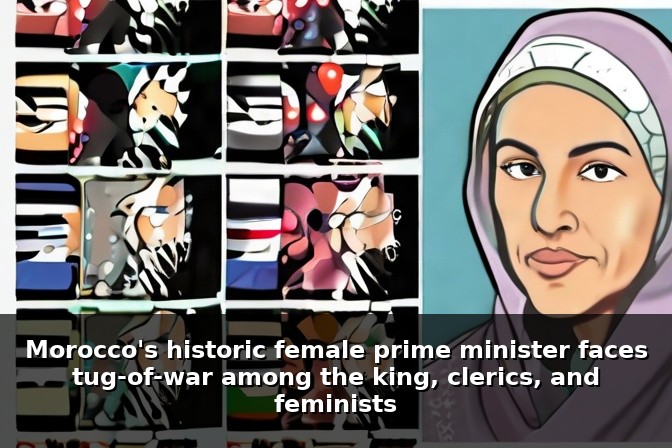
Morocco's historic female prime minister faces tug-of-war among the king, clerics, and feminists

Posted by CEO Thomas Prendergast on October 20, 2026 - 6:15am


Morocco's historic female prime minister faces tug-of-war among the king, clerics, and feminists

Setting the stage: Morocco’s political and religious landscape

Morocco sits at a crossroads of tradition and reform. The monarchy retains broad constitutional authority and a central role in guiding national priorities, while a democratically elected parliament forms the backbone of the government. The king acts as a unifying symbol and a political stabilizer, often balancing reformist ambitions with conservative currents in society. In parallel, religious authorities—long influential in public life—shape social norms, moral expectations, and legislative debates, especially around issues touching family, gender roles, and public behavior. Against this backdrop, women’s rights have advanced in fits and starts: legal reforms have opened doors, yet conservative attitudes and institutional inertia still pose persistent barriers. Any movement toward greater gender equality now usually requires navigating the delicate currents among the crown, religious authorities, and feminist activism on the streets and in civil society.

Fatima El Mansouri: A hypothetical trailblazer in the prime minister’s chair

Imagine Fatima El Mansouri stepping into Morocco’s most powerful executive post as the country’s first female prime minister. In this scenario, she would bring a blend of legal expertise, political tact, and a track record of advocacy for women’s participation in public life. Her leadership would be a test case for how far Morocco can push reform while maintaining legitimacy in the eyes of the monarchy, the religious establishment, and a growing base of feminists and reform-minded citizens. Her tenure would hinge on bridging competing expectations and turning narrative momentum into policy momentum.

Three frontlines she would navigate

  • The Crown’s balance of continuity and change: The king’s prerogatives mean any prime minister must work within a framework set by royal authority. Fatima would need to secure confidence within the ruling coalition, win parliamentary cooperation, and align reform ambitions with national stability.
  • Clerical influence and public morality: Religious scholars and state-affiliated religious bodies hold considerable sway over debates on gender roles, education, and family law. A reform-minded PM would have to negotiate respectful space for reforms without provoking a backlash that could stall the broader agenda.
  • Feminist and civil-society currents: From women’s rights advocates to grassroots organizers, a strong feminist constituency is vocal about concrete gains—economic opportunity, protection against gender-based violence, and equal participation in public life. The challenge is translating protest into policy while maintaining broad political support.

Policy frontiers where she could advance women’s rights

  • Legal and constitutional protections: Strengthening anti-discrimination provisions, safeguarding equal access to education and employment, and ensuring robust enforcement of existing gender-protection laws.
  • Family law and social rights: Building on past reforms to reduce discrimination in family court, improving guardianship norms, and expanding access to healthcare, reproductive rights, and social services for women and girls.
  • Economic empowerment: Promoting women’s entrepreneurship, access to credit, and safe workplace practices; expanding childcare support and flexible work arrangements to help women balance professional and family responsibilities.

What could help or hinder progress?

Real progress would likely depend on a few pivotal factors. First, the monarchy’s support for gradual reforms could provide a stable platform for change, even when conservative voices push back. Second, coalition-building within parliament and across parties would be essential to pass lasting legislation. Third, a constructive engagement with religious authorities—recognizing shared values while affirming citizen rights—could defuse potential clashes and create space for reforms to take root. Finally, sustained public backing from feminists, civil society, and international partners could amplify reforms and deter retrograde backsliding. Without broad legitimacy, even well-intentioned measures risk stagnation or partial rollbacks.

Conclusion

The prospect of Morocco appointing its first female prime minister—Fatima El Mansouri in this scenario—highlights the delicate balance between tradition and modernity. Her success would hinge on deftly navigating the king’s prerogatives, the cautious note of religious authorities, and the energy of feminist and civil-society movements. If she can align these forces around incremental, tangible gains for women—without sacrificing political stability—Morocco could witness meaningful, enduring progress in women’s rights. The road is complex, but the potential payoff—a more inclusive, dynamic society—gives the journey real significance.

Thomas Prendergast (clone)
By his direction