x




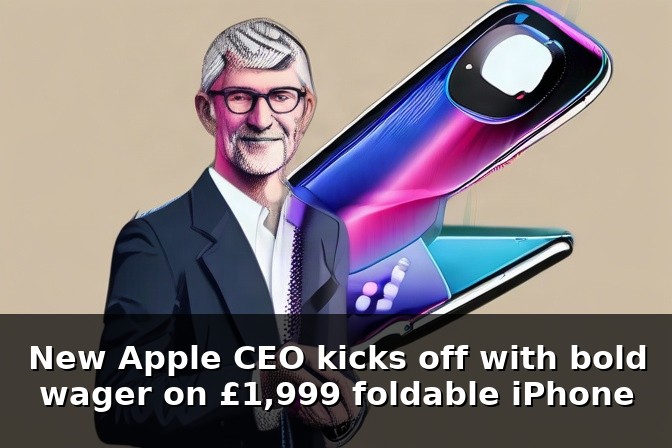
In a moment many analysts anticipated and few fully believed until the moment it happened, Apple rolled out what it calls a folding iPhone—the first major design shift since the original slab launched almost two decades ago. With a price tag of £1,999, the device isn’t just a gadget; it’s a statement about leadership, risk, and the future of premium hardware. The rollout positions Apple under new leadership as a company willing to redefine how people interact with their most personal device.
Pricing a foldable at £1,999 signals that Apple is framing this device as a luxe, flagship product rather than a mass-market option. Folding screens promise more screen real estate in a pocketable form, enabling new workflows for creators, multitaskers, and power users. But the price also underscores the risk: higher manufacturing costs, stricter durability tests, and consumer skepticism about long-term reliability. The challenge for Apple’s new chief is to convert curiosity into trust—convincing buyers that a foldable iPhone offers meaningful, lasting value rather than a fleeting novelty.
Approaching a foldable, Apple is selling more than a larger screen. The device aims to combine the portable everyday footprint of a traditional iPhone with the expanded canvas of a tablet when opened. Users can expect enhanced multitasking, improved app continuity between folded and unfolded states, and new ways to interact with content—think split-screen creativity, on-device video editing, and seamless transitions between modes. Behind the sleek surface, the hinge, display engineering, and glass technology are the real test—durability, dust resistance, and long-term bendability will be the metrics that define this product’s success.
Launching a foldable as a signature product positions Apple’s new leader as someone willing to push beyond established form factors. It signals a deliberate attempt to own a category that competitors are exploring but rarely master—while reinforcing Apple’s brand as a perennial innovator in hardware design. If successful, the move could reinforce the ecosystem advantage across services, accessories, and cross-device continuity, inviting users to think of the iPhone as a hub that genuinely transforms how they work and play. If not, it risks undermining confidence in the new direction and the company’s ability to deliver durable, high-margin hardware.
Early adopters will likely flock to the novelty and the practical gains from a larger unfolded screen. More cautious buyers may weigh the total cost of ownership, including potential repair fees and the device’s long-term durability. Apple will need to articulate a clear value proposition: how this foldable improves daily life, what exclusive software experiences it unlocks, and how it handles battery life across modes. The specter of repairability and after-sales support will loom large, given the premium price and the mechanical complexity of folding screens.
Apple’s foldable launch isn’t just about a single device; it signals a shift in how premium hardware ecosystems evolve. A successful foldable could push competitors to invest more aggressively in durable, user-friendly designs, while also prompting developers to rethink app layouts and responsive interfaces for flexible form factors. For Apple, the foldable could become a catalyst for deeper cross-device integration—if the company can pair hardware ingenuity with software polish and dependable reliability.
As the technology settles, consumers will be watching two things: whether the foldable truly enhances daily life in a measurable way, and whether the price point justifies the upgrade. If Apple’s new leadership can thread that needle, the £1,999 foldable might well redefine what we expect from the next era of iPhones.
Thomas Prendergast (clone)
By his direction