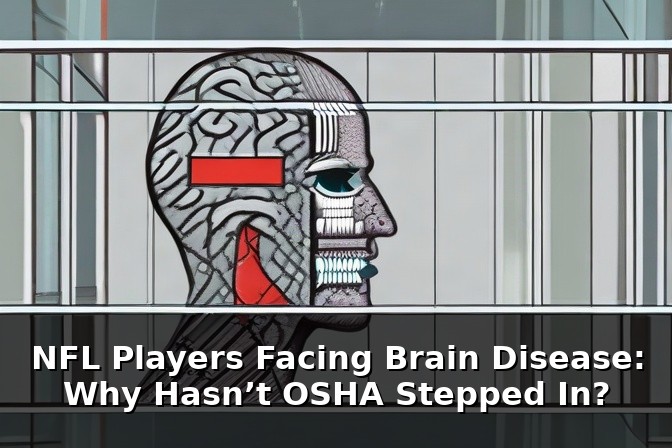
Why So Many NFL Players Develop Brain Disease—and Why OSHA Probably Isn’t Involved
The conversation around brain health in professional football has intensified in recent years. As studies reveal higher rates of chronic traumatic encephalopathy (CTE) among former players, the natural question arises: should a federal watchdog like OSHA step in to regulate a sport that’s a high-emotion business as well as a physically demanding job?
One stark remark from behind the scenes captures the gravity: “We never see things that are this dire,” a former chief scientist of the agency said about rates of C.T.E. in former players. The statement underscores a crisis that isn’t easily solved by existing workplace safety playbooks. Here’s a closer look at what’s going on and why regulatory intervention isn’t as straightforward as it might seem.
What CTE Is and Why It Matters for Football
CTE is a brain disease linked to repetitive head impacts. Symptoms often emerge years after a player has stopped competing and can include memory loss, mood disorders, executive dysfunction, and personality changes. What makes CTE so challenging to address is that most diagnoses are made post-mortem, and establishing a direct, universal causal link between on-field hits and later brain degeneration is scientifically complex.
- CTE’s prevalence appears higher in groups with extensive exposure to head trauma, such as former NFL players, but precise rates vary across studies and methodologies.
- Protective equipment and evolving rules have reduced certain concussion risks, yet cumulative effects from repeated subconcussive blows remain a concern.
- Public health efforts now emphasize not only acute injuries but long-term brain health, highlighting the need for better data, safer play, and long-term care for athletes.
OSHA's Mandate vs. a Contact Sport
OSHA’s core mission is to ensure safe and healthy working conditions across a broad spectrum of industries. The agency typically intervenes where there is a clear, identifiable hazard in the workplace and where employers have a legal obligation to mitigate it. But football introduces several tension points when you try to map it onto OSHA’s traditional framework:
- The hazard is embedded in the nature of the sport. Repetitive head trauma is integral to football—it's part of how the game is played, not a separate, easily modifiable process like a loose machine part or a chemical exposure.
- Diagnosis of the most troubling outcomes isn’t immediate and often isn’t detectable until many years later, complicating any direct, real-time regulatory enforcement.
- Professional athletes typically operate under a mix of league policies, collective bargaining, and team operational norms that fall outside a single agency’s jurisdiction.
Why Regulatory Intervention Hasn’t Hit the Headlines (Yet)
Several realities help explain OSHA’s current stance:
- Post-mortem diagnosis vs. workplace exposure: The primary evidence for CTE hinges on autopsy findings and longitudinal research, not on a single, observable workplace incident that OSHA could inspect or document in real time.
- Legal and economic complexity: Football is a huge industry with substantial economic and political leverage. Changes sparked by a federal regulator would ripple through teams, leagues, sponsors, and media partners.
- Jurisdictional boundaries: Player safety is addressed by a mix of league rules, medical protocols, and state or federal health policies. OSHA’s reach overlaps with workplace safety—but the sport’s culture, contracts, and brand also shape how safety is managed.
Paths Forward: What Could Change the Equation
- Safer play technology: Advances in helmet design, better impact sensors, and data analytics can help reduce harmful exposures and provide real-time feedback to players and medical staff.
- Rule and protocol evolution: Data-driven changes to tackling methods, hit types, and practice intensity can lower cumulative head trauma without sacrificing the essence of the sport.
- Independent oversight and transparency: Third-party medical oversight, standardized concussion protocols, and public reporting of injury data can build trust and drive improvements.
- Long-term care and research funding: Expanding support for retired players’ medical needs and funding research on biomarkers and early detection can shift the burden from crisis management to proactive care.
Takeaways for Markethive Readers
For entrepreneurs and innovators within Markethive’s community, the NFL brain-disease conversation highlights opportunities at the intersection of sport, safety, and technology. Potential avenues include:
- Developing wearable tech that accurately measures head impacts and translates data into practical coaching or medical guidance.
- Creating risk-management platforms for teams, leagues, and insurers that quantify long-term head injury exposure and model insurance liabilities.
- Launching education and advocacy programs that promote safer play, better return-to-play decisions, and robust retirement care for athletes.
Ultimately, the gap between urgent health concerns and regulatory action invites a pragmatic, multi-stakeholder approach. Innovation, data, and a culture of safety can drive meaningful change in how football is played, watched, and cared for long after the final whistle.
Thomas Prendergast (clone)
By his direction