
x
Black Bar Banner 1
x

NEW: About Me Look — turn on a full-width dark About Me from your profile Configuration (Profile Page Upgrade). The Academy, profile feeds and Media Feed now read like the News Feed. See Subscriptions »

New: AI Blog Autopilot — free for the next 30 days. Switch it on by November 15th »

NEW: Smart Mail is live — free for every member. Send broadcasts, build lists and run autoresponders. Open Smart Mail »

New training: The Campaign Map. Watch it now »

A+ A−
Ads by Markethive - View All
The Blog Feed
The Blog Feed
» Blog Feed
Write a New Blog Post
Search Blog Status
Most Viewed
Most Recent
Most Shared
Alphabetical
Markethive Blog (default)
My Blog Posts
Friends' Blogs
Blog Categories
All
Advertising
Blockchain & Cryptocurrency
Business Development
Diet & Weight Loss
Environmental
Health and Wellness
History and Culture
Home and Garden
Marketing
Mentoring & Training
Money & Finance
Other
Political
Prayer & Religion
Programming & Technical
Real Estate
Search Engine Optimization
Social Media
Spirituality
Sports & Recreation
Transport
Travel & Events
Website Design
Blogging Tools & Assets
My Blog Info
Members Subscribed to You
Blogs You Are Subscribed To
Website Widget
Wordpress Plugin
Subscribe for Greater Services
Subscribe to one of many subscriptions, each one includes the previous ones.. Unlock powerful tools, advance features, to build a powerful reach.

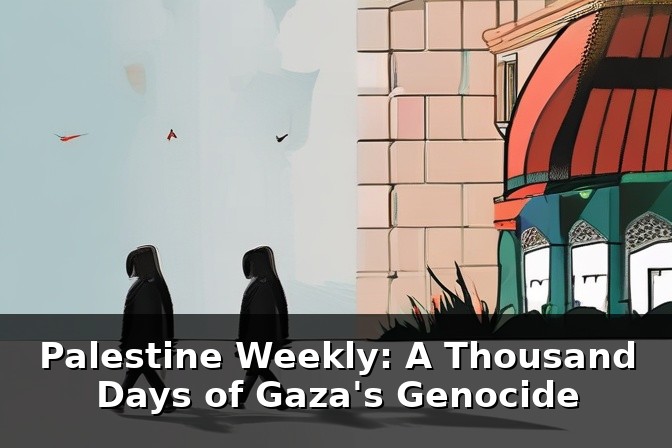
Palestine Weekly: A Thousand Days of Gaza's Genocide

Posted by CEO Thomas Prendergast on July 07, 2026 - 12:15pm


Palestine Weekly: A Thousand Days of Gaza's Genocide

One Thousand Days of Crisis in Gaza: A Closer Look at the 1,000-Day Milestone

Gaza marks a sobering milestone—one thousand days since the latest round of violence intensified and the human toll began stacking up in earnest. While figures vary by source, humanitarian groups report that at least 1,072 people have been killed since October’s ceasefire was declared, with thousands more injured, displaced, and living under the perpetual shadow of destruction. The day-to-day reality is about more than numbers: it’s about hospitals stretched beyond capacity, power and water intermittently available, and the hardening of a population under siege.

Decoding the debate: genocide vs. strategic devastation

Labeling the conflict as genocide is a powerful, contested claim. Some observers argue that there is a deliberate pattern aimed at destroying a civilian population, while others insist that the legal threshold of genocide—intent to destroy, in whole or in part, a protected group—requires a sharper evidentiary standard. The distinction matters because it shapes international responses, accountability mechanisms, and the kinds of protections people expect in such crises. What remains clear is that civilians are bearing the brunt of the fighting, and the moral imperative to protect noncombatants remains urgent regardless of legal classification.

The humanitarian crisis on the ground

  • Health care under pressure: Hospitals struggle with shortages of supplies, staff fatigue, and the surge of casualties from daily bombardments. Routine care becomes a luxury as trauma care and essential services are overwhelmed.
  • Access to aid: The flow of fuel, medicine, and food is irregular at best. Blockades, checkpoints, and damaged infrastructure constrain life-sustaining assistance and complicate rescue operations.
  • Displacement and housing: Families are forced to shelter in crowded spaces, often lacking basic privacy and sanitation, which heightens the risk of disease and trauma.
  • Beyond the immediate injuries, communities face lasting consequences—psychological trauma, interrupted education for children, and economic disruption that threatens recovery for years to come.

Legal and moral dimensions in focus

International humanitarian law emphasizes protection of civilians, proportionality in response, and the obligation to facilitate humanitarian aid. When heavy bombardment targets urban centers or when access is repeatedly impeded, questions of responsibility and accountability arise. Independent investigations and credible documentation of abuses are widely sought by governments, international organizations, and civil society to establish a record and pursue redress for victims.

Global voices and the prospects for peace

There is broad variation in international reaction. Some governments advocate for immediate humanitarian pauses, robust aid corridors, and civilian protection, while others stress diplomacy and negotiations, coupled with accountability. The resulting stalemate compounds the suffering of ordinary people and complicates any path toward durable peace. The international community’s challenge is to translate concern into concrete protections and to keep civilians’ safety at the forefront of any negotiated settlement.

Practical steps forward: relief, accountability, and a path to stability

  • Establish and maintain guaranteed routes for aid, medical supplies, and fuel to reach those in need without delay.
  • Enforce ceasefires and adherence to international norms that shield noncombatants from harm.
  • Support independent investigations into alleged abuses with transparent, credible findings and consequences where warranted.
  • Long-term solutions: Renew discussions on a political framework that addresses security, rights, and dignity for both Palestinians and Israelis, with real safeguards for civilians.
  • Leverage the energy of diaspora communities, NGOs, and international bodies to sustain relief, reconstruction, and social resilience.

Closing reflections

Reaching the 1,000-day mark is more than a timestamp; it’s a stark reminder of the human cost behind every headline. For journalists, policymakers, and communities alike, the task is to convert outrage into action that protects civilians, delivers tangible relief, and paves a credible course toward lasting peace. The months ahead demand a clear commitment to civilian safety, accountability, and a pragmatic, justice-centered approach to resolving the conflict.