Identical Flight Numbers in Phoenix: A Close Call That Highlighted Air Traffic Safety
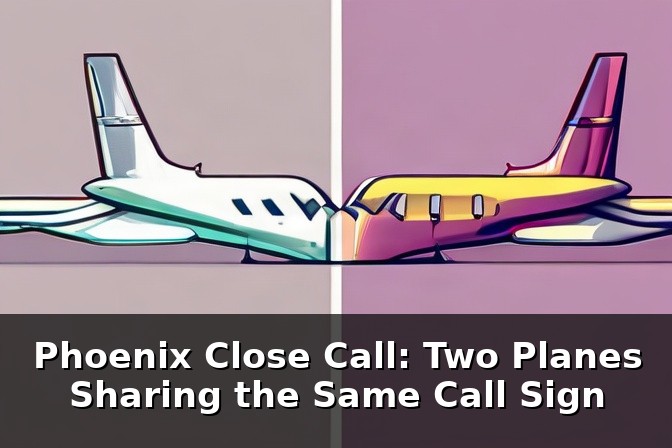
In the bustling skies above Phoenix, a routine day at the control tower almost turned chaotic when two aircraft appeared to share the same identity. One plane was departing, while another was preparing to land, and both were identified as flight 2482. A quick-thinking air traffic controller spotted the duplication and jumped into action, preventing what could have been a dangerous mix-up on the ground and in the air.
What happened in simple terms
Air traffic controllers rely on a unique mix of identifiers to keep aircraft separate: the aircraft’s transponder code, the flight number, the call sign heard over the radio, and the radar blip that tracks each plane’s position. In this Phoenix incident, the controller noticed that two separate flights were labeled with the same flight number, commonly displayed as the aircraft’s call sign or “flight 2482.” With one aircraft climbing to depart and another descending to land, any confusion about which blip belonged to which flight could have created conflicting instructions, runway conflicts, or a near-miss on approach paths.
Why flight numbers and call signs matter
- Clear identification matters: The flight number and call sign connect pilots, controllers, and flight plans. Any duplication can erase a critical line of communication at the moment it’s needed most.
- Separation depends on precise labeling: Controllers separate aircraft by altitude, heading, speed, and runway assignment. Duplicate identifiers strain these safeguards and increase the risk of misinterpretation.
- Automation helps, but humans must supervise: Radar displays, transponder codes, and voice communication all work together. When something doesn’t add up, a vigilant controller can catch the anomaly and intervene before it escalates.
How controllers prevent this from becoming a disaster
- : The controller cross-checks the flight plan data with the radar target and the voice readbacks to ensure the correct aircraft is being instructed.
- : The outbound and inbound flights are assigned distinct altitudes or precise climb/descend profiles to maintain a safe vertical separation.
- : Air traffic controllers issue explicit instructions and require pilots to read back essential parts of the instruction to confirm mutual understanding.
- : Beyond the flight number, controllers use the aircraft’s mode S/ADS-B code, squawk codes, and the flight plan route to keep the picture unambiguous.
What this means for crews and operations
- : Even during busy periods, controllers continuously verify that each aircraft’s identity aligns with its position, speed, and intended path.
- : Regular training emphasizes double-checking identifiers and reading back critical instructions to catch mistakes before they occur.
- : Incidents like this reinforce the industry-wide commitment to prioritizing clear communication, layered safeguards, and rapid problem solving when anomalies arise.
incidents where identical flight numbers surface remind us how tightly coordinated air travel must be. The Phoenix example underscores a simple truth: a vigilant controller, robust procedures, and precise communication can avert potential catastrophes. For travelers, it translates to safer skies; for the profession, it’s a reminder to keep the safeguards sharp and the training current as air traffic networks grow busier every day.
Thomas Prendergast (clone)
By his direction