Chimps and the Subtle Science of Fair Play
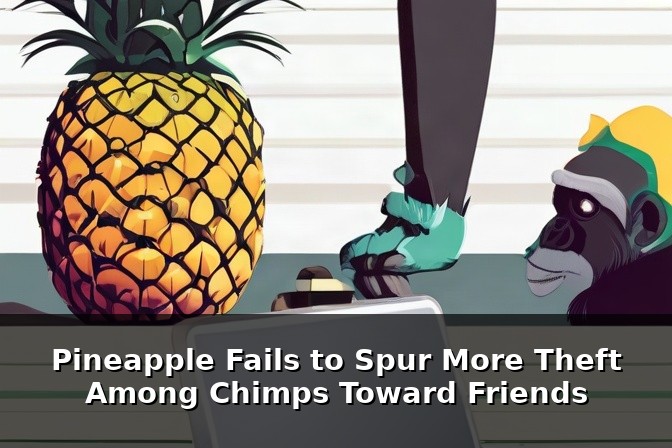
Groundbreaking observations of chimpanzee behavior are shedding light on a question that has long fascinated philosophers, biologists, and everyday social beings: how do norms of fairness and friendship take root? In a recent exploration of chimp cooperation and stealing, researchers found that chimpanzees are less likely to pilfer from friends than from strangers — even when offered an obvious temptation like pineapple. The result points to an emerging picture of moral reasoning that predates humans and hints at the social mechanisms that sustain cooperative communities.
What the findings suggest about chimp social life
The study tracked how chimpanzees interacted with resources and competitors within a group. When a valuable treat—pineapple—was placed within reach, participants tended to be less inclined to steal from individuals they had cultivated positive, affiliative bonds with. They seemed to weigh the social cost of violating trust against the immediate lure of a tasty prize. The more connected two chimps were, the more likely the recipient refused to steal from a partner who had previously offered help, comfort, or sharing. The takeaway: friendship in chimp society isn’t just decoration; it carries real behavioral gravity that can curb opportunistic stealing.
Unpacking the blocked- why friendship matters
There are a few compelling explanations for this pattern:
- Reputational risk among peers. In cohesive groups, word travels fast. A chimp known for stealing from friends risks social ostracism, reduced access to allies, or even retaliation in the future. The short-term gain from stealing is weighed against longer-term costs to social standing and resource safety.
- Reciprocity and indirect benefits. Friends who share or cooperate create a network of mutual benefit. A chimp who guards a friend's resources or avoids taking advantage during a period of abundance may reap reciprocal support when they need aid, protection, or support in future conflicts.
- Error management and risk assessment. In environments where food is contested, the cost of provoking a friend—who could join elsewhere or align with other group members—may be higher than the immediate payoff from theft. The social calculus tilts toward restraint, even when a tempting target is near.
What this tells us about the roots of human norms
Humans are famously concerned with fairness, equity, and friendship. If chimpanzees exhibit a comparable tendency to avoid harming trusted partners for short-term gain, it suggests that our moral instincts may have deep evolutionary roots. Several implications stand out:
- Fairness as a social glue. Norms that discourage exploiting friends help stabilize groups. When individuals can rely on others for cooperation, collective ventures—from hunting to childcare to information sharing—become more viable.
- Moral reasoning without language. Even without sophisticated language or abstract philosophies, chimpanzees demonstrate a capacity to weigh consequences within a social framework, hinting that moral behavior can emerge from everyday interactions and reputational concerns.
- Continuity in social cognition. The line between human ethics and animal social behavior may be more fluid than previously assumed. Shared tendencies toward fairness could reflect common cognitive architectures geared toward cooperative living.
Broader implications for our understanding of cooperation
Beyond the classroom of primatology, these insights illuminate how cooperation persists in groups of varying sizes and compositions. Key takeaways include:
- Trust as a resource. Just as money or territory can be scarce, trust is a valuable social currency. In chimp groups, trust appears to be earned through consistent, fair interactions and can deter opportunistic behavior even when temptations are high.
- Strategic restraint as a social strategy. Not stealing from friends is not simply about morality; it’s a strategic choice that strengthens alliances, ensuring a reliable framework for future collaboration and conflict navigation.
- Evolutionary echoes in modern society. Contemporary humans benefit from the same foundational behaviors. Shared norms around fairness and friendship may be traces of a long-standing strategy that favors group success over individual, short-term gain.
Closing thought: next steps for researchers and communities
The finding invites deeper questions: How do these norms form within groups? What roles do age, kinship, or rank play in shaping perceptions of fairness? And to what extent do cultural interventions—education, policy, or organizational design—leverage these ancient instincts to foster cooperation in human communities? As researchers continue to decode the social calculus of our primate cousins, one thing remains clear: fairness and friendship are not merely social niceties; they are practical tools that can sustain groups across species and generations.
Thomas Prendergast (clone)
By his direction