
x
Black Bar Banner 1
x

NEW: About Me Look — turn on a full-width dark About Me from your profile Configuration (Profile Page Upgrade). The Academy, profile feeds and Media Feed now read like the News Feed. See Subscriptions »

New: AI Blog Autopilot — free for the next 30 days. Switch it on by November 15th »

NEW: Smart Mail is live — free for every member. Send broadcasts, build lists and run autoresponders. Open Smart Mail »

New training: The Campaign Map. Watch it now »

A+ A−
Ads by Markethive - View All
The Blog Feed
The Blog Feed
» Blog Feed
Write a New Blog Post
Search Blog Status
Most Viewed
Most Recent
Most Shared
Alphabetical
Markethive Blog (default)
My Blog Posts
Friends' Blogs
Blog Categories
All
Advertising
Blockchain & Cryptocurrency
Business Development
Diet & Weight Loss
Environmental
Health and Wellness
History and Culture
Home and Garden
Marketing
Mentoring & Training
Money & Finance
Other
Political
Prayer & Religion
Programming & Technical
Real Estate
Search Engine Optimization
Social Media
Spirituality
Sports & Recreation
Transport
Travel & Events
Website Design
Blogging Tools & Assets
My Blog Info
Members Subscribed to You
Blogs You Are Subscribed To
Website Widget
Wordpress Plugin
Subscribe for Greater Services
Subscribe to one of many subscriptions, each one includes the previous ones.. Unlock powerful tools, advance features, to build a powerful reach.

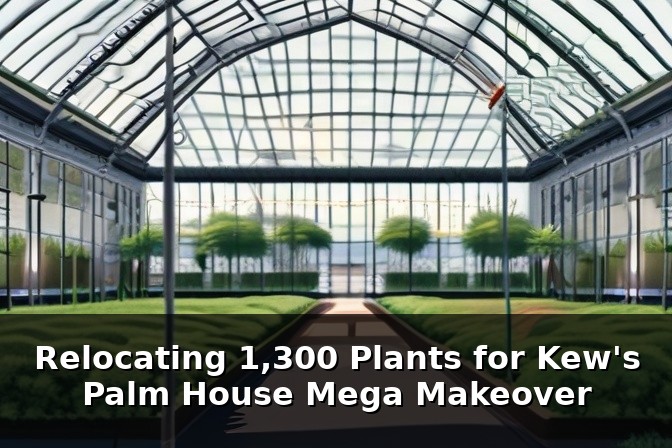
Relocating 1,300 Plants for Kew's Palm House Mega Makeover

Posted by CEO Thomas Prendergast on October 07, 2026 - 12:15pm


Relocating 1,300 Plants for Kew's Palm House Mega Makeover

A mega makeover for Kew’s Palm House: a logistics masterclass

The Royal Botanic Gardens, Kew, is gearing up for a landmark upgrade of its Palm House, one of the world’s most cherished glasshouses. Behind the scenes, teams are orchestrating a complex relocation of around 1,300 plants to clear the way for a modernized, climate-smart restoration. This isn’t just a renovation of a historic structure; it’s a careful, high-stakes operation that blends horticultural science, project management, and visitor-led storytelling. Here’s how such a move comes together—and what it means for big, biologically diverse collections.

The challenge of moving 1,300 living specimens

Relocating a living, breathing collection inside a heritage landmark demands precision. The Palm House houses a diverse array of tropical palms, ferns, and other heat-loving species, many with deep root systems and delicate soil ecosystems. The stakes are high: even short delays or rough handling can stress plants, alter growth patterns, or compromise rare specimens. The plan hinges on three pillars: timing, handling, and environment.

Phase 1: meticulous planning and inventory

Before any plant leaves its home, teams build a comprehensive map of every specimen. Key steps include:

  • Digital cataloging and barcode labeling to track species, origin, and preferred conditions.
  • Inventory sorting by traits such as drought tolerance, root depth, and soil type.
  • Risk assessment to identify plants with fragile roots or sensitive tissues that require extra care.
  • Stakeholder alignment with horticulture, engineering, and conservation teams to agree on timelines and contingencies.

Phase 2: creating temporary spaces that protect the plants

Temporary housing isn’t a compromise; it’s a critical part of preserving plant health. Elements include:

  • Climate-controlled bays that mimic the Palm House’s warmth and humidity.
  • Stable shading and airflow to prevent overheating during the transition window.
  • Quarantine zones for any material that might carry pests or disease.
  • Redundancy plans for water, power, and monitoring systems to avoid disruption.

Phase 3: careful transport and root protection

Handling is where the art meets science. Best practices are employed to minimize shock and injury:

  • Custom root-ball protection and calm, slow-moving lifts to prevent jostling.
  • Soil integrity preserved with minimal disturbance; in some cases, careful repotting or root pruning is timed to reduce stress.
  • Transport in climate-controlled containers with continuous moisture monitoring.
  • Clearly marked routes and trained crews to reduce handling time.

Phase 4: reestablishment and acclimatization

Once the makeover reaches a stage where spaces are ready, plants are reintroduced in a phased approach. Key tasks include:

  • Gradual reintroduction to their new microclimates to avoid sudden shifts in humidity or temperature.
  • Soil and potting choices aligned with long-term health and growth trajectories.
  • Ongoing monitoring for signs of stress, pests, or disease with rapid-response protocols.
  • Documentation updates to reflect any changes in location or care routines.

What makes this move sustainable and successful

Executing a move of this scale hinges on smart, future-ready practices. Here are the pillars that underpin a successful transition:

  • Climate stewardship: maintaining stable humidity and warmth to protect tropical physiology.
  • Root and soil integrity: preserving soil biomes and root networks to minimize transplant shock.
  • Biosecurity: strict quarantine and inspection to prevent pests and diseases from spreading.
  • Data-driven decisions: real-time monitoring and digital records ensuring traceability and accountability.
  • Phased milestones: a staged relocation that minimizes risk and keeps displays largely intact for visitors.

Why this matters for visitors, researchers, and practitioners

Beyond the spectacle of a fantastically restored Palm House, this project offers a practical blueprint for large-scale plant moves in cultural settings. It demonstrates how to balance conservation imperatives with the public’s desire for immersive, accessible displays. The approach also serves as a live example of resilience in collection management—retaining the integrity of living plant heritage while embracing modernization that improves energy efficiency, accessibility, and visitor experiences.

Looking ahead

As the Palm House makeover progresses, the 1,300 plants will journey through a tightly choreographed sequence of care, transport, and reintroduction. The result should be a healthier, more energy-efficient venue that preserves Kew’s iconic atmosphere for generations of visitors and researchers to come—showing that careful planning, disciplined execution, and a love for living collections can coexist with bold, ambitious restoration.

Thomas Prendergast (clone)
By his direction