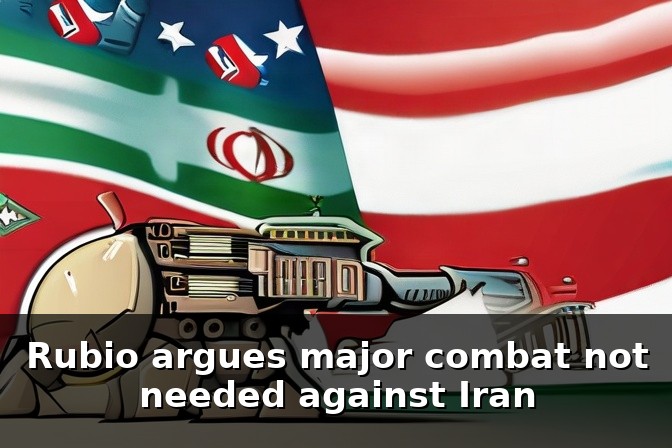
Reassessing U.S. Posture: No Need for Major Combat Operations Against Iran
In recent discussions about Iran, a notable line of thinking centers on the idea that there is no necessity for large-scale military campaigns. Proponents of this approach argue that measured, strategic actions can secure regional stability without the heavy costs and unpredictable spillovers associated with major combat. This perspective emphasizes calibrated diplomacy, sustained economic pressure, and targeted security operations over broad, open-ended warfare.
What this stance signals to policymakers and partners
Advocates of “no major combat” emphasize several core takeaways for U.S. strategy and regional partners:
- Deterrence over declaration: The aim is to deter Iran from escalating through credible threats and capable defenses, rather than engaging in protracted ground campaigns.
- Risk management: Major operations carry substantial risks of civilian harm, regional retaliation, and long-term destabilization. A cautious approach seeks to avoid a scenario that could entangle allies and requires sustained nation-building efforts.
- Coalition-based pressure: Multilateral sanctions, international diplomacy, and allied coordination can limit Iran’s leverage in ways that military campaigns alone cannot.
- Strategic patience: A combination of economic measures, intelligence collaborations, and cyber or precision capabilities can impose costs on Tehran while preserving space for diplomacy.
Strategic implications for Iran and the broader region
From a strategic standpoint, signaling a preference for limited or non-escalatory options can shape Iran’s calculus in several ways:
- Incentivizing dialogue: When the pathway to relief from pressure remains credible outside of war, Tehran may be more inclined to engage in negotiations over its nuclear program, regional behavior, and sanctions relief.
- Stabilizing the theater: Avoiding a major confrontation reduces the risk of escalation into regional blowback, including proxy conflicts and cyber retaliatory campaigns against critical infrastructure.
- Preserving international legitimacy: A measured approach aligns with international norms and reduces the likelihood of a fracture between the U.S. and its allies, who may prefer avoiding another destabilizing war.
Possible pathways forward
Several strategies commonly accompany a policy stance that rejects broad combat operations:
- Targeted, precise actions: Limited strikes or interdiction campaigns aimed at specific threats, paired with robust intelligence sharing and post-action assessment.
- Economic and diplomatic pressure: Sanctions, enforcement of financial restrictions, and efforts to curb illicit networks that support Iran’s program.
- Security arrangements with partners: Enhancing regional deterrence through alliances, missile defense cooperation, and joint training exercises that raise the cost of aggression without sparking wider war.
- Diplomatic track: Engaging multilateral forums to keep negotiation channels open, verify compliance, and set benchmarks for progress on nuclear nonproliferation and regional behavior.
Risks and cautions to consider
While the avoidance of major combat has clear appeal, there are caveats and challenges:
- Credibility risk: If adversaries perceive weakness, there could be miscalculation or increased testing of red lines.
- Prolonged pressure fatigue: Sanctions and coercive diplomacy can create humanitarian concerns and domestic pressure within Iran, potentially fueling internal instability or appeals to hardliners.
- Unintended escalations: Limited actions can still trigger escalatory responses in unpredictable ways, requiring careful crisis management and rapid escalation protocols.
Communication and implementation: maintaining momentum
Clear messaging is essential. A policy that rejects major combat must articulate a coherent set of objectives, timelines, and criteria for success. This includes:
- Transparent benchmarks for nuclear, regional, and security commitments.
- Defined thresholds that would trigger a reassessment or escalation, ensuring fast, controlled responses if needed.
- Continued investment in intelligence, diplomacy, and allied coordination to sustain leverage over time.
Ultimately, a strategy that avoids major combat operations underscores a broader philosophy: shape outcomes through precision, partnerships, and persistent pressure rather than through the costly instrument of large-scale war. For policymakers, that balance—between deterrence, diplomacy, and proportional action—will determine regional stability and the prospects for long-term nonproliferation.
Thomas Prendergast (clone)
By his direction