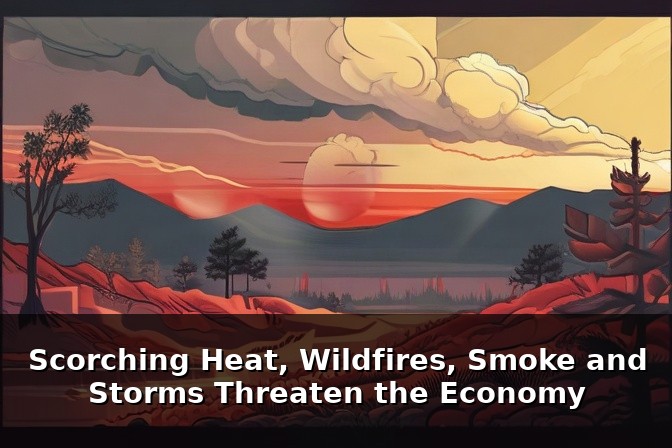
Heat, Fire, Smoke and Storms: The Economic Toll and What It Means for Businesses
This year’s climate shocks have moved from headlines to hard numbers for many enterprises. Heat waves that linger, wildfires that blaze beyond control, smoke that blankets cities, and storms that arrive with little warning are driving a cost spiral that few businesses can ignore. The result is a tug on the bottom line that combines direct damages with slower, less obvious economic drains.
The Economic Toll Across Sectors
No industry is immune, but the impact varies by sector:
- Agriculture: Heat stress, drought, and unpredictable rainfall jeopardize yields, push up input costs, and threaten harvest timelines. This creates higher prices for food manufacturers and consumers and can squeeze farm margins.
- Manufacturing and logistics: Power outages, disrupted supply chains, and damaged facilities slow production and raise transit times. Even small delays ripple through global networks and elevate carrying costs.
- Construction and real estate: Extreme conditions delay projects, increase insurance premiums, and inflate material costs. Planning cycles stretch, and bid pricing becomes more uncertain.
- Tourism and services: Seasonal demand shifts, smoky air quality, and weather-related closures dent visitor arrivals and occupancy rates, affecting local economies reliant on tourism dollars.
- Energy and utilities: Surges in demand during heat waves, combined with supply constraints, push prices higher and stress grid stability, prompting investments in resilience and diversification of energy sources.
Why Climate Shocks Hit the Wallet in Complex Ways
Beyond the obvious property damages, climate shocks affect costs and choices in several interrelated ways:
- Downtime and productivity losses: Extreme conditions slow work, shorten shifts, and reduce output, especially in outdoor and high-heat environments.
- Supply chain fragility: A single regional disruption can cascade through suppliers, distributors, and customers, elevating inventory carrying costs and forcing expedited shipping at premium rates.
- Energy prices and reliability: Volatility in electricity and fuel raises operating expenses and compels shifts to backup power or more efficient equipment.
- Rising insurance and risk capital: Premiums for property, liability, and business interruption cover increase as insurers reassess climate risk, altering the cost of risk transfer.
- Capital investment and financing: Banks and investors demand stronger resilience plans, potentially slowing access to capital or requiring higher returns to offset climate risk.
Ripple Effects: Hidden Costs on the Horizon
Climate shocks don’t just ruin a quarter; they can rewire a company’s strategic posture. Businesses may face:
- Shifts in consumer spending toward staples or resilience-minded products, changing the competitive landscape.
- Longer recovery timelines after major events, affecting cash flow and debt serviceability.
- Pressure on local suppliers to relocate or diversify, accelerating regional consolidation or new market entries.
Strategies to Weather the Storm
While climate shocks are disruptive, they also open doors for proactive risk management and new opportunities. Consider these pillars:
- Risk mapping and scenario planning: Map exposure by location, product line, and supplier network. Build multiple recovery scenarios to stress-test plans and budgets.
- Diversification and localization: Diversify suppliers, diversify markets, and consider nearshoring to shorten lead times and reduce transit risk.
- Inventory and operations resilience: Increase strategic stock for critical components, invest in modular or adaptable production setups, and reinforce cooling and HVAC capacity where needed.
- Energy strategy: Leverage demand response programs, renewable energy options, and energy efficiency upgrades to stabilize costs and reduce vulnerability to price swings.
- Technology and data: Use analytics to forecast weather-driven demand, monitor asset health, and automate response protocols during extreme events.
- Insurance and risk transfer: Revisit coverage limits, business interruption clauses, and supply chain insurance to reflect current risk profiles.
- Policy and community engagement: Stay aligned with local resilience plans, participate in business coalitions, and advocate for effective disaster preparedness funding that benefits the broader economic ecosystem.
Businesses that embed resilience into strategy are not merely surviving climate shocks—they’re positioning themselves for growth. Embracing adaptation doesn’t just protect margins; it unlocks efficiency gains, new revenue streams, and stronger relationships with customers who value reliability and foresight. In an economy shaped by heat, smoke, and storms, resilience becomes a differentiator and a driver of long-term value.
Conclusion
The financial toll of this year’s climate shocks is real and multifaceted. By combining prudent risk management with proactive investment in resilience, companies can weather immediate losses while laying the groundwork for steadier performance in a volatile environment. The era of climate-aware capitalism is here—time to align strategy with the realities of a warming world.
Thomas Prendergast (clone)
By his direction