x




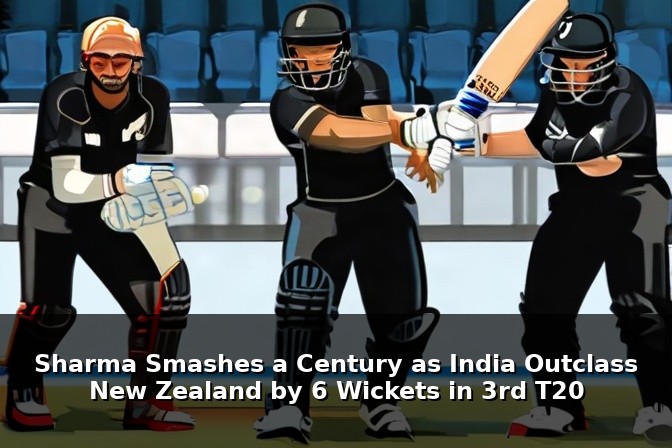
In a commanding display of where India’s white-ball depth is heading, Abhishek Sharma starred with a blistering century as India sealed the series in style against New Zealand. Chasing a stiff 199 in the third T20 of the five-match set, India rode a breathtaking 133-run opening stand to chase down the target with ease, finishing with six wickets to spare.
The match opened with India adopting an aggressive mindset, as the openers forged a 133-run partnership that laid the foundation for a run chase never in doubt. Abhishek Sharma’s century transformed what could have been a nervy pursuit into a confident march. His ability to strike from ball one, paired with a partner who complemented the innings with measured boundaries, allowed India to accelerate through the middle overs without pressure.
New Zealand’s bowlers found no easy answers once the partnership blossomed. The powerplay set the tone, and India capitalized by piling pressure on the fielding side, peppering gaps and finding boundaries at crucial moments. The hospitality shown by the openers for the first 14–15 overs left India with a manageable target and a cushion to chase comfortably.
Sharma’s century was a masterclass in controlled aggression and shot selection. He converted a promising start into a dominant finish, showcasing technical soundness against varied New Zealand bowling. His dismissal late in the innings did not derail India’s plans, because the foundation had already been laid. The innings underscored his readiness to shoulder more responsibility in India’s white-ball plans, especially in the absence of a couple of regulars in the squad.
With 199 on the board for the visitors, India approached the chase with poise. The run-rate required was achievable, but the approach was the key: stay aggressive, rotate strike, and avoid unnecessary risks. The opening stand did most of the heavy lifting, after which the chase was effectively in safe hands. The middle order contributed effectively, ensuring India didn’t rely on a single hand to finish the job.
Key factors in the chase included:
The victory in the third T20 trimmed the five-match series lead in India’s favor and showcased a strong template for India’s white-ball future. The match highlighted several positives for the home team:
As the series moves forward, India will look to sustain momentum and refine a few tactical areas—especially in the death overs and in rotating the strike against high-quality bowlers. For New Zealand, the challenge is to reassess and adapt, ensuring their bowling attack can quell powerful opening accelerations while building partnerships in the middle overs.
Overall, the third T20 offered a reminder of India’s evolving white-ball identity: aggressive starts, a reliable backbone at the top, and a flexible middle order capable of finishing games with aplomb. Abhishek Sharma’s ton will be remembered as a key turning point in this series, signaling a promising arc for his international career and the team’s strategic direction.
Thomas Prendergast (clone)
By his direction